Planning a major move requires a clear understanding of how the industry is regulated and how costs are calculated. Many homeowners find themselves asking what is the difference between interstate and intrastate when they begin gathering quotes for their relocation. Knowing these definitions helps you choose Montgomery, AL movers with the correct authority to transport your goods legally across city lines or over state borders without any unnecessary delays.
Speak with our relocation coordinators at (334) 610 1593 to secure a licensed crew for your upcoming state to state transition.
The core distinction lies in the physical boundaries crossed during the transportation of your household goods. While both types of moves involve professional packing and loading, the legal requirements and oversight vary significantly. When you grasp what is the difference between interstate and intrastate, you can better navigate the contracts and protections offered by your chosen service provider to ensure your family remains fully protected throughout the journey.
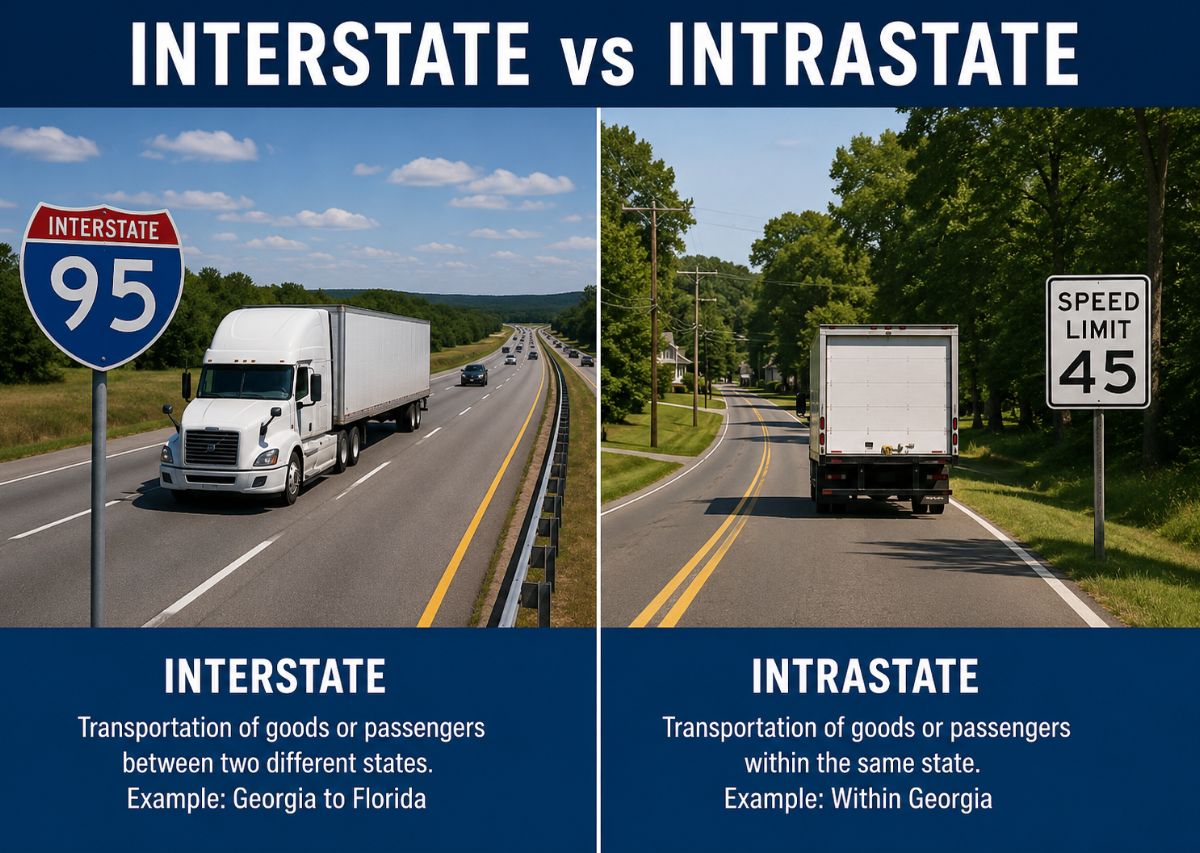
An intrastate move occurs entirely within the borders of a single state. Even if you are moving 450 miles from one corner of a large state to another, it remains under local jurisdiction. These moves are typically governed by state specific agencies that set rules for licensing and consumer protection to ensure every resident receives fair and professional service.
During this type of relocation, the moving company does not cross state lines at any point during the transit. This means the federal Department of Transportation rules might not apply in the same way they do for cross country trips. Understanding this part of what is the difference between interstate and intrastate helps you verify the specific permits your mover needs to hold.
An interstate move involves transporting household goods across state lines at any point during the process. This remains true even if the total distance is shorter than a local trip. For instance, moving between two neighboring cities that sit in different states is classified as interstate. This distinction is vital for understanding the federal oversight involved in your move.
Federal authorities regulate these transitions to maintain safety and standard pricing practices across the country. When you ask what is the difference between interstate and intrastate, you are essentially looking at the level of government oversight required. Interstate movers must have specific federal authority and insurance levels to legally carry your furniture across state borders.
Interstate movers are strictly regulated by federal agencies that oversee motor carrier safety and consumer rights. These companies must have a valid USDOT number and specific operating authority to function legally. This oversight ensures that movers follow specific guidelines for providing estimates, handling claims, and maintaining their fleet of trucks for the safety of everyone on the road.
In contrast, intrastate moves are overseen by state agencies, such as a Department of Public Safety or a Public Service Commission. Each state has its own set of rules regarding how movers can operate and what they can charge. Knowing what is the difference between interstate and intrastate helps you know which government agency to contact if you ever have a dispute.
The way your moving bill is calculated often changes based on the classification of the move. For an intrastate relocation, many companies charge by the hour or based on the number of workers and trucks required. This makes the total cost dependent on how efficiently the crew can load and unload your items at each specific location.
Interstate moves are generally priced based on the total weight of your shipment and the distance traveled. Some companies may also offer a flat fee based on the volume of the items. When you analyze what is the difference between interstate and intrastate, you will see that long distance transitions require much more detailed inventory management to ensure accurate final pricing.
Movers who perform interstate work must carry higher levels of insurance to comply with federal law. This includes bodily injury and property damage coverage that protects both the company and the customer. These high standards are in place because long distance travel involves more time on high speed highways and a greater risk of accidents during the journey.
Intrastate movers must follow state insurance requirements, which can vary from one region to another. Some states have very strict rules that mirror federal standards, while others may have more flexible options. Grasping what is the difference between interstate and intrastate helps you ask the right questions about how your belongings are covered—especially if you require specialized piano moving or handling of other high-value assets—during the loading and transit phases.
The paperwork you receive will look different depending on where you are moving. Federal law requires interstate movers to provide a document called Your Rights and Responsibilities When You Move. This pamphlet explains the federal protections you have regarding loss, damage, and delivery delays. It is a mandatory part of any move that crosses a state line.
For moves within a single state, the documentation is usually dictated by local consumer protection laws. You will still receive a contract and a bill of lading, but the specific terms and mandatory disclosures will be different. Understanding what is the difference between interstate and intrastate ensures you are looking for the correct legal documents before you sign anything.
If an item is damaged during a move across state lines, you have the right to file a claim under federal guidelines. Most interstate movers offer a specific valuation plan that determines how much you will be reimbursed for lost or broken items. There is a structured federal process for resolving these issues to protect consumers from unfair business practices.
Disputes for local moves are typically handled through state courts or state regulatory boards. Because the rules vary by state, the process for filing a claim can be very different from one place to another. This is a key part of what is the difference between interstate and intrastate that every homeowner should understand before their items are packed onto the truck.
While distance alone does not determine the classification, it certainly impacts the logistics. A move of 450 miles within one state requires significant fuel and labor planning. However, because it is intrastate, the company might be able to complete the entire job using the same crew and truck without the need for specialized long distance driver logs or weigh stations.
Interstate moves often involve more complex logistics, including stopovers and driver changes to comply with federal hours of service rules. The planning process is much more involved to ensure the truck arrives within the designated delivery window. Knowing what is the difference between interstate and intrastate allows you to set realistic expectations for your delivery timeline and budget.
Not all movers have the legal authority to perform both types of moves. Some small local businesses only hold the permits required for work within their home state. If you are moving across the country, you must ensure your chosen partner has the federal credentials to operate. Asking what is the difference between interstate and intrastate helps you filter your options early.
A professional company with a long history of service will be able to explain their credentials clearly. They will show you their USDOT number and provide you with the correct estimates based on your destination. Choosing a partner who understands these legal distinctions is the best way to ensure your relocation is handled professionally, safely, and within the bounds of the law.
Regardless of the distance, preparation is the foundation of a successful relocation. You should always begin by decluttering your home to reduce the total weight or volume of your shipment. This simple step can save you a significant amount of money, especially on long distance trips where the weight of your goods directly impacts the final price.
Understanding the technical aspects of the moving industry empowers you as a consumer. When you can explain what is the difference between interstate and intrastate, you are less likely to be taken advantage of by unlicensed operators. You will know which questions to ask and which documents to demand before any of your furniture is loaded into a truck.
A professional crew brings the strength and skill needed to turn a difficult day into a manageable experience. By choosing a company that respects the law and prioritizes safety, you can focus on the excitement of your new home. Whether you are moving across town or across the nation, consulting with long distance moving experts and having the right information is the first step toward a perfect and stress free transition.
With a heritage of trust and reliability, Wise Guys Moving provides the local community with honest and professional residential services. We offer comprehensive packing, secure transportation, and careful unloading for every client. Our team differentiates itself through total transparency regarding federal and state regulations. Let our experts handle the heavy lifting while you enjoy a smooth transition to your brand new home.
Contact: sales@wiseguysmove.com | (334) 610 1593

A move is classified as interstate if the truck crosses a state line at any point during the trip. An intrastate move stays entirely within the borders of a single state. Understanding what is the difference between interstate and intrastate helps you identify the correct regulations for your move.
Interstate movers must follow federal insurance requirements which often provide higher levels of protection. Intrastate moves follow state laws which can vary. Knowing what is the difference between interstate and intrastate allows you to ask for the specific coverage needed to protect your goods.
These moves involve federal taxes, higher insurance costs, and long distance fuel expenses. They are also subject to stricter safety regulations and weight based pricing. When you look at what is the difference between interstate and intrastate, the added logistics of long travel impact the final price.
Every company performing interstate work must have an active USDOT number and federal operating authority. You can check these credentials on the official federal database. Understanding what is the difference between interstate and intrastate ensures you verify the right licenses before you hire.
Only if they have the specific federal authority required by the Department of Transportation. Many local companies only have state permits for local work. Grasping what is the difference between interstate and intrastate helps you ensure your mover is legally allowed to cross the state border.