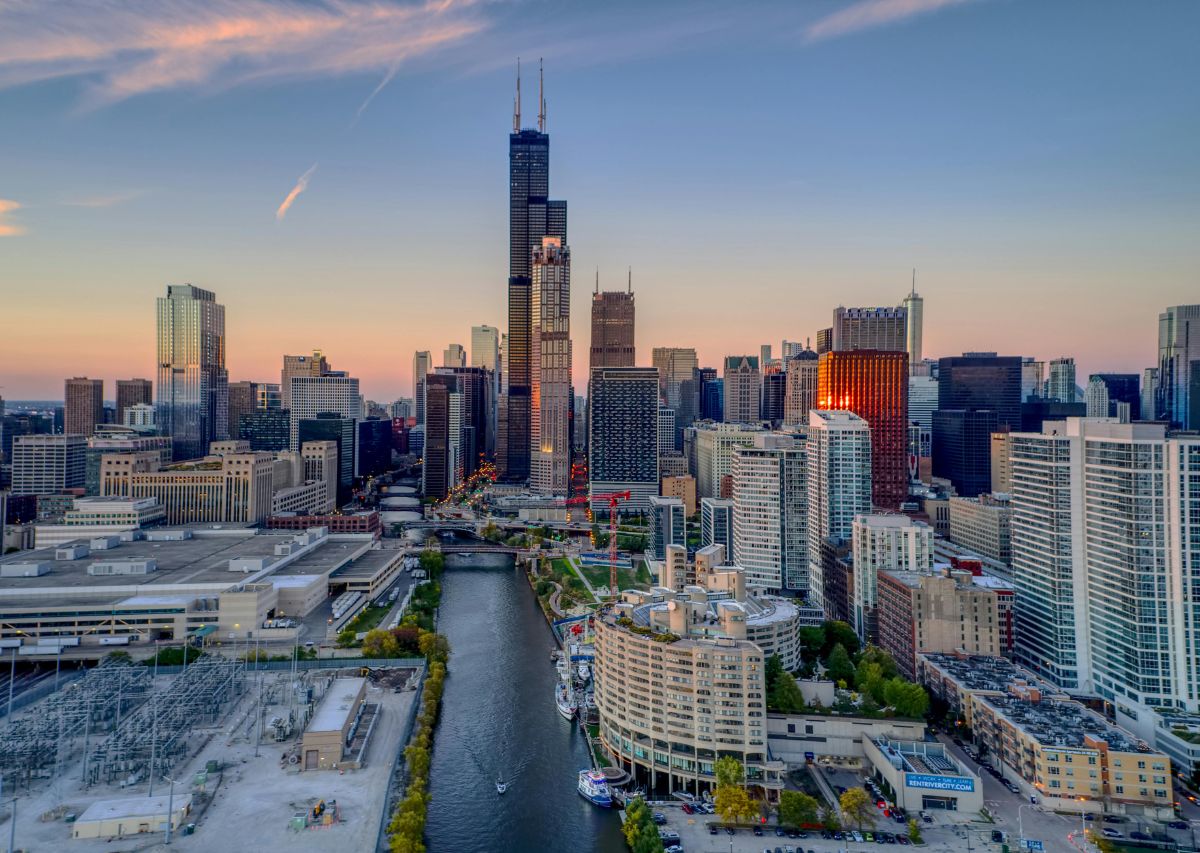
Chicago is a massive, pulsing heart in the American Midwest, sitting firmly on the southwestern shores of Lake Michigan. Known globally as the Windy City, it boasts a skyline defined by architectural marvels like the Willis Tower and 875 North Michigan Avenue. With a population of nearly 2.7 million people, it stands as the third-largest city in the United States, offering a blend of high-energy urban living and distinct, tight-knit neighborhood charms.
The climate is defined by four very clear seasons, ranging from humid, sun-drenched summers to brisk, snowy winters that test the mettle of every resident. Chicago’s claim to fame is its world-class deep-dish pizza, its historic jazz and blues roots, and its legendary sports culture. Beyond the food and music, it is a global hub for finance, culture, and industry.
When you move to Chicago, you are entering a city of neighborhoods. From the polished streets of the Gold Coast to the artistic murals of Pilsen, every corner offers a different personality. The city is famous for its "L" train system, its massive public park network, and a lakefront that feels more like an ocean than a body of fresh water. Whether you are drawn by the booming job market or the incredible museum campus, Chicago provides an scale of opportunity that few other American cities can match. It is a place built on grit, innovation, and a deep sense of community pride.
Transitioning to a major metropolis requires heavy lifting and careful coordination. Before you pack your first box for your move to Chicago, let Wise Guys Moving handle the logistics. Our team specializes in organized, local moving services designed to take the weight off your shoulders. We focus on clear communication and careful handling so you can focus on exploring your new neighborhood.
Understanding the local weather is essential before you move to Chicago. The city experiences a humid continental climate. Summers are warm and often humid, with temperatures regularly hitting the 80s. This is the peak time for street festivals and lakefront activities. Fall is arguably the most pleasant season, featuring crisp air and vibrant foliage, making it an ideal time for physical labor and moving furniture.
Winters are the city's most famous trait. Temperatures often drop below freezing, and snowfall is a regular occurrence from December through March. Spring is unpredictable; it can be rainy and chilly one day and pleasantly warm the next. If you are looking for the best time to move to Chicago, aim for May, June, September, or October. During these months, the weather is mild enough to carry boxes without the risk of heatstroke or slipping on black ice. Avoid moving in January if possible, as the lake-effect snow and sub-zero wind chills can make unloading a truck a grueling and potentially dangerous experience for those not used to the cold.
The cost of living is a major factor for anyone planning to move to Chicago. While it is more expensive than many Midwestern towns, it remains significantly more affordable than coastal giants like New York or San Francisco. The median home value in Chicago typically hovers around $350,000, though this varies wildly by neighborhood. Renters can expect to pay roughly $2,200 for a one-bedroom apartment in popular areas, which is higher than the national average but offers a high level of urban walkability and access.
When compared to the rest of Illinois, Chicago sits at the top of the price scale. However, the value comes from the sheer density of amenities. Property taxes in Cook County can be quite high, so buyers should calculate those into their monthly mortgage estimates. For those looking to save money, exploring "up-and-coming" neighborhoods further from the Loop can provide more square footage for your dollar. Utilities, especially heating in the winter, should be a planned expense. Despite these costs, the city’s high wages often balance out the daily expenses, making a move to Chicago a sustainable financial choice for many professionals and families.
Chicago possesses one of the most diverse economies in the world. No single industry dominates more than 14% of the workforce, which provides a level of stability during national economic shifts. The top employment sectors include professional and business services, manufacturing, and healthcare. As a global financial hub, the city is home to the Chicago Board of Trade and numerous major banking headquarters.
If you are relocating your business to the area, navigating the skyline requires a partner experienced in commercial moving to minimize downtime. Major local employers include United Airlines, Abbott Laboratories, and the University of Chicago. Additionally, the tech scene has grown rapidly, with many startups choosing to anchor themselves in the West Loop. Commute trends show that while many residents work in the downtown Loop area, there is a massive "reverse commute" to the suburbs where many corporate campuses are located.
Getting from Point A to Point B is a unique experience here. Chicago is famous for its grid system, which makes it one of the easiest cities in the world to navigate by car or on foot. The Chicago Transit Authority (CTA) operates the "L" trains and an extensive bus network that runs 24/7 on major routes.
The city has a high walkability score, particularly in the downtown areas and the North Side. For those who prefer two wheels, the Divvy bike-sharing program is accessible throughout the city. If you move to Chicago and need to travel internationally, you are served by two major airports: O’Hare International, one of the busiest in the world, and Midway International, which is closer to downtown and often more convenient for domestic flights. While traffic on the Kennedy and Dan Ryan expressways can be heavy, the robust public transit system means many residents choose to live entirely car-free, saving on insurance and high parking fees.
Beyond the main downtown attractions, the area around Chicago offers hidden gems that give the region its character. Within a 100-mile radius, you can find the Illinois Beach State Park in Zion, which offers 6.5 miles of sandy shoreline and dunes. For history buffs, the Pullman National Historical Park on the South Side provides a look into a planned industrial town that changed American labor history.
If you enjoy art and nature, the Morton Arboretum in Lisle features 1,700 acres of trees and outdoor sculptures. For those willing to drive a bit further, the Starved Rock State Park offers canyons and waterfalls that feel worlds away from the flat Midwest plains. The city itself is home to smaller, specialized museums like the National Museum of Mexican Art in Pilsen or the American Writers Museum on Michigan Avenue. These spots offer a quieter, more intimate look at the cultures and stories that make the city move. Exploring these hidden gems is the best way to feel like a true local after you move to Chicago.
Planning is the key to a successful relocation. When you prepare to move to Chicago, start by decluttering your current home. Shipping items you don't need only increases your costs. For packing, use high-quality boxes and heavy-duty tape; Chicago's humidity and wind can be tough on flimsy materials. Label every box by room and include a list of contents on the side to make unpacking easier.
If you are moving into a high-rise, you must book your elevator time weeks in advance. Many buildings have strict rules about when movers can operate. You also need to consider parking permits for the moving truck, as Chicago streets are notoriously tight. Choosing between long-distance moving and local options depends on your starting point, but always opt for a company with experience in urban logistics. Storage can also be a lifesaver if your new apartment isn't quite ready; look for climate-controlled units to protect your wooden furniture from the lake's damp air. Taking these steps ensures that when you finally move to Chicago, the process is as organized as possible.
Ready to start your new chapter? A move to Chicago is an exciting journey, and Wise Guys Moving is here to ensure your belongings arrive safely. We provide customized estimates and professional service to make your transition smooth. Call us today at (334) 610 1593 or email sales@wiseguysmove.com to get your quote. Let us handle the heavy lifting while you get ready to enjoy the Windy City.

September and May are ideal. The weather is mild, avoiding the extreme winter cold and summer humidity, which makes loading and unloading much more comfortable for everyone involved.
Many residents live car-free thanks to the CTA. If you live near an "L" station, public transit and walking are often faster and cheaper than driving and parking.
You can purchase city stickers and residential zone permits through the City Clerk’s office. You will need proof of residence and your vehicle registration to complete the application.
Like any large city, safety varies by neighborhood. Most residents feel very secure by staying aware of their surroundings and choosing well-traveled routes during their daily commutes and activities.
Invest in a high-quality, knee-length parka, waterproof boots with good traction, and thermal layers. The wind chill near the lake requires serious gear to stay warm and dry.