When homeowners sketch out their moving plan room by room, the dining room rarely triggers much anxiety — but knowing how to pack and move a dining room the right way can prevent some of the most heartbreaking losses of any relocation. The dining room is a deceptively high-stakes space: it holds the china set passed down through generations, crystal stemware that shatters if a single box shifts wrong, a table that weighs more than most appliances, and chairs with legs that snap under careless loading. Treat it like an afterthought, and you may arrive at your new home with a cracked heirloom platter and a dining table that wobbles permanently.
Whether you are relocating across Auburn or moving to an entirely new city, this guide walks you through every step of packing and moving your dining room safely and efficiently. When you are ready to leave the hard work to the professionals, call Wise Guys Moving at (334) 610-1593 or get a free moving quote today.
The dining room presents a set of moving challenges that are genuinely different from every other room in the house. Unlike the kitchen — where the primary concern is volume and appliance weight — or the living room — where oversized furniture and electronics dominate — the dining room combines fragile heirlooms, formally matched sets that cannot be partially replaced, and furniture built more for aesthetics than for easy disassembly.
Think about what a typical dining room actually contains: a large dining table with extension leaves, a full set of chairs, a china cabinet or hutch (often loaded with dishes inside), crystal and glassware, formal dishware and serving platters, silverware and flatware sets, table linens, centerpieces, candelabras, and decorative art or mirrors hung on the walls. Many of these items have been accumulated over years or decades and carry both monetary and sentimental value that cannot be recouped with a store receipt.
A rushed dining room pack almost always produces the same results: broken china, chipped glassware, a table leg that cracked under poor wrapping, or a hutch that shifted in transit and shattered its glass doors. A deliberate, category-by-category plan eliminates those outcomes. Aim to begin packing your dining room at least one week before moving day — and start with the items you use least, saving everyday dishes for the final days.
Dining room furniture tends to be large, heavy, and often constructed of solid wood or veneer that scratches and dents easily. Moving it without preparation is how tables get gouged, chair legs get snapped, and hutch glass gets cracked.
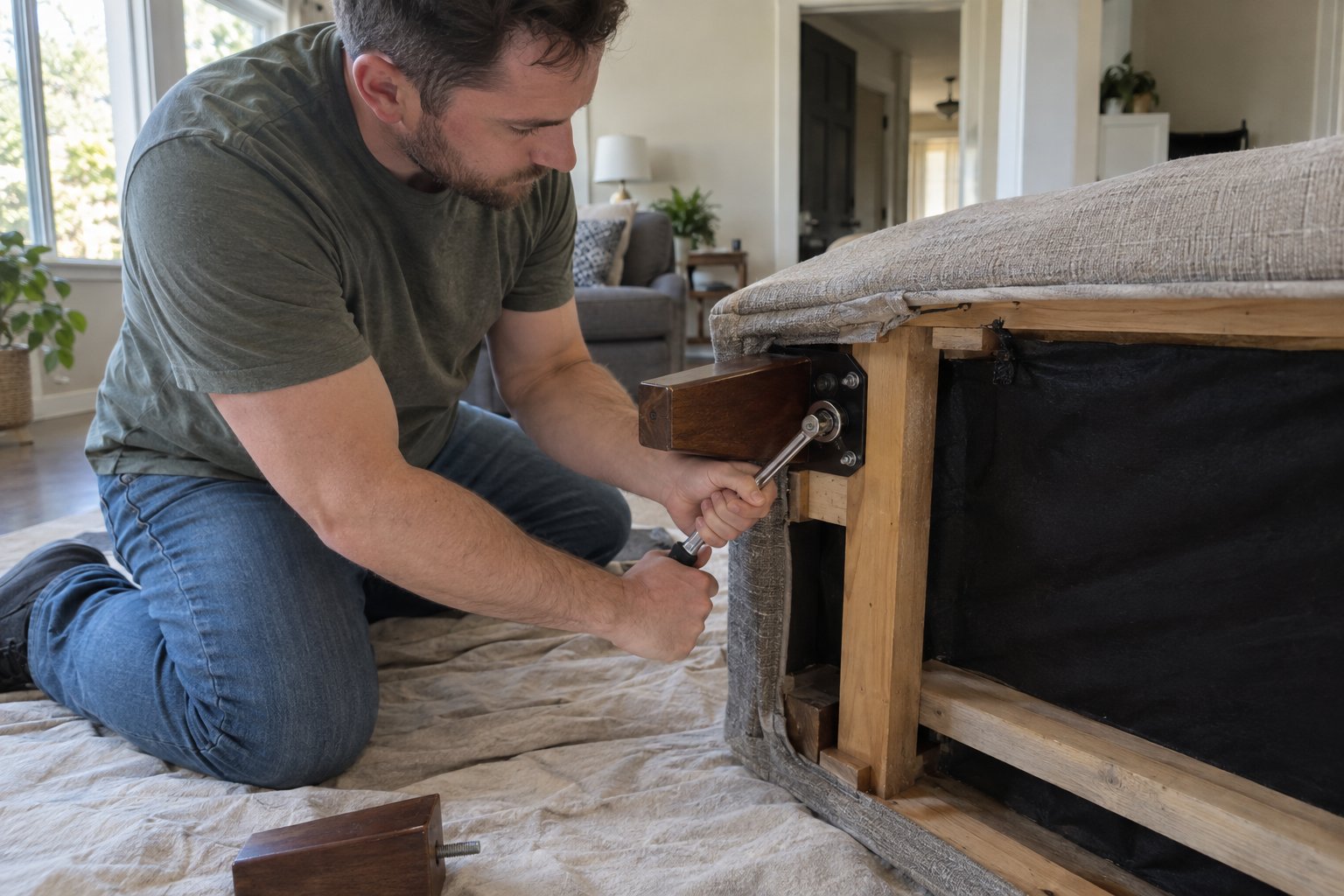
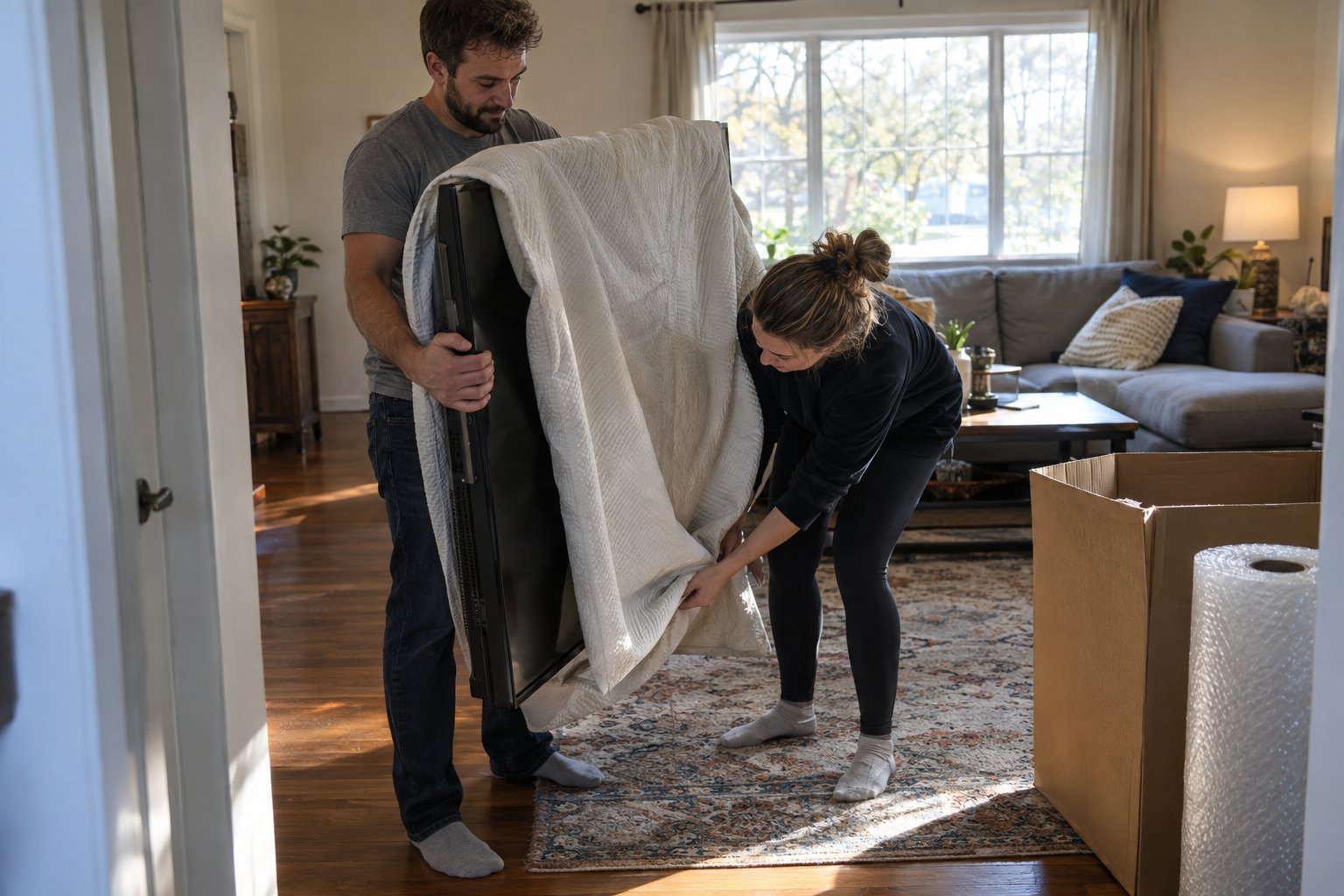
Before moving day, remove all extension leaves from the table and wrap each leaf separately in moving blankets or thick furniture pads. Tape the padding securely without letting tape touch the wood surface directly — tape residue can lift veneer or leave adhesive marks. If your table legs are removable, take them off and wrap them individually, then bundle them together and label them clearly. For tables with fixed legs, flip the table upside down onto a moving blanket on the floor, wrap the entire piece, and secure it with stretch wrap or moving straps.
Never slide a dining table across flooring unpadded — even on carpet, the risk of leg damage is real. Always carry it lifted, with at least two people.
Dining chairs are awkward to move in groups because they do not stack reliably and their legs are vulnerable to snapping under lateral pressure. Wrap each chair individually in a moving blanket, paying extra attention to the leg joints and any ornate carved backs. If your chairs have upholstered seats, cover them with plastic stretch wrap to protect against scuffs, moisture, and dirt during transit. Stack wrapped chairs seat-to-seat if space requires, but never stack more than two or three high without a solid base underneath.
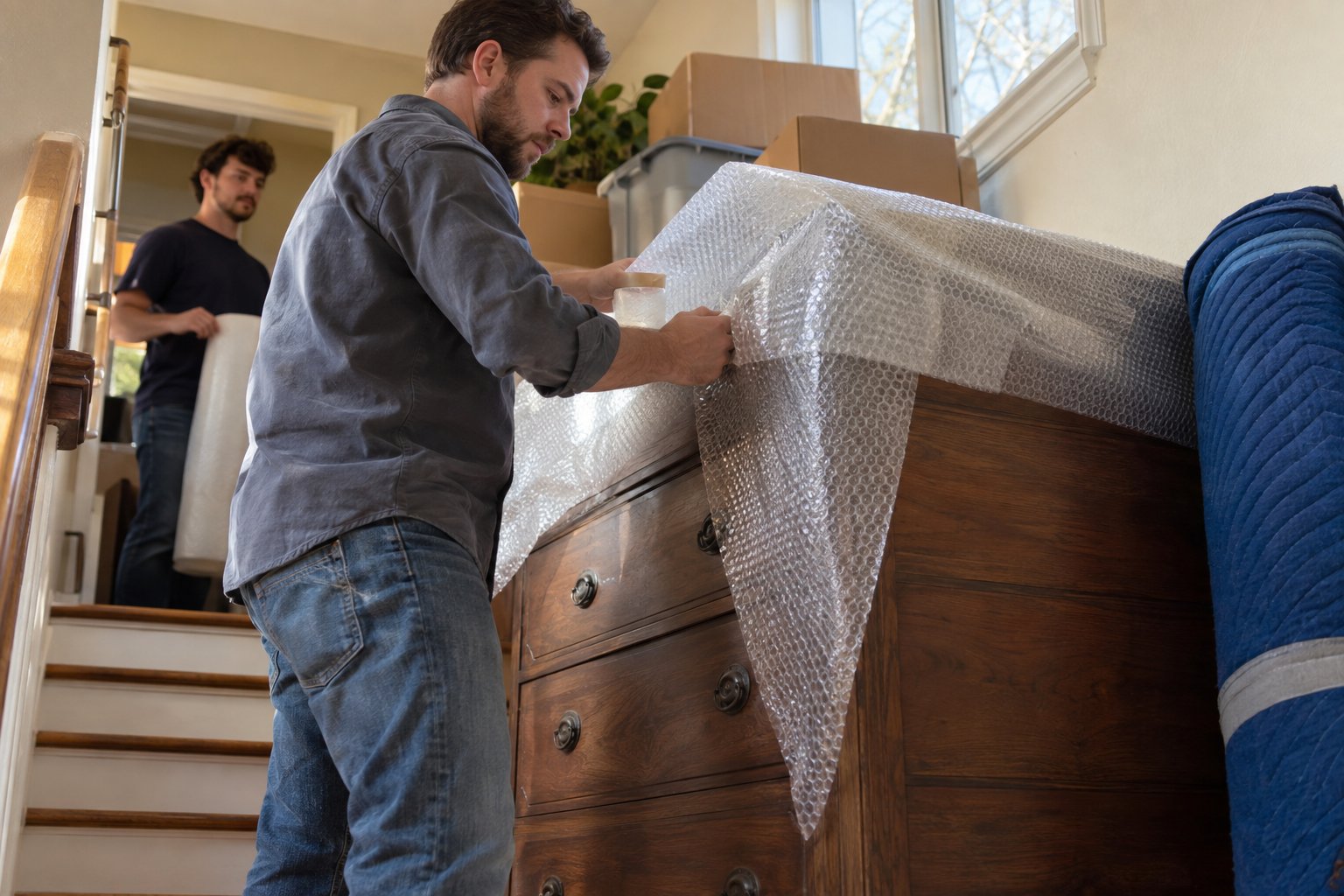
A china cabinet or hutch is one of the most complex pieces of furniture to move safely. Start by emptying it completely — never attempt to move a hutch with dishes or glassware still inside, regardless of how securely they seem to be sitting. Remove any glass shelves and wrap them individually in packing paper and bubble wrap, clearly marked "FRAGILE — GLASS SHELF." If the cabinet has glass doors, tape a large X of painter's tape across each pane to help hold shards in place if a crack does occur, then wrap the entire door section in bubble wrap. Disassemble the hutch from its base if the two sections separate, and move each piece independently.
This is the most painstaking part of packing a dining room — and also the most important. China and crystal are not just fragile; they are often irreplaceable. A set that has been in a family for generations cannot be reordered from a catalog.
Use clean, unprinted packing paper — never newspaper, which transfers ink. Place a sheet of packing paper flat on your work surface, set one plate in the center, fold all corners over the plate, and wrap it snugly. Then wrap that bundle in a second sheet of paper for double protection. Stack plates vertically on their edges inside a sturdy box, not flat — plates packed flat are far more likely to crack when pressure is applied from above. Pad the bottom of the box with at least two inches of crumpled packing paper, place plates on edge, and fill all remaining gaps with crumpled paper. The box should feel firm with no shifting when you gently shake it.
For serving platters and large bowls, the same principle applies: double-wrap, pack on edge where possible, and pad heavily. Label every box containing china as "FRAGILE — CHINA — THIS SIDE UP."
Crystal stemware is among the most fragile items in any home. Each piece should be wrapped individually, starting at the base and rolling toward the rim in overlapping layers of packing paper. For extra security, stuff the interior of each glass with crumpled paper before wrapping the outside. Use cell boxes — also called dish packs with dividers — whenever possible, as the individual cardboard cells prevent glasses from making contact with each other. If cell boxes are unavailable, wrap each glass in multiple layers and ensure no two glasses can touch inside the box. Never fill a stemware box to the point where you need to force the lid shut — overpacking is a primary cause of breakage.
Formal silverware sets should be kept in their original storage chest if possible — the felt-lined slots protect each piece from scratching and tarnishing. If you no longer have the original chest, wrap individual pieces in soft cloth or acid-free tissue and bundle silverware sets together with a rubber band (not directly around the silver). Place wrapped bundles in a small, clearly labeled box. Never pack silverware loose in a large box where it can shift and scratch against itself or other items.
Dining room décor and textiles may not be as fragile as china, but they benefit from a thoughtful packing approach that keeps them clean, wrinkle-free, and easy to locate at your new home.
Wash and dry all table linens before packing — moving linens that have not been laundered means arriving at your new home with musty-smelling tablecloths. Fold linens neatly and place them in wardrobe boxes or large boxes with lids, layered with tissue paper between formal pieces to prevent creasing. Avoid using garbage bags for linens; they trap moisture and can cause mildew.
Wrap each decorative item in packing paper and bubble wrap individually. For candelabras with multiple arms, wrap each arm separately before wrapping the whole piece, and cushion it inside a box with plenty of crumpled paper on all sides. Any items made of glass, ceramic, or resin should be treated with the same care as china — double-wrapped, labeled fragile, and packed with no empty space inside the box.
Dining room mirrors and artwork should be packed in purpose-built mirror boxes — flat cardboard boxes that telescope to fit the piece. Wrap the artwork or mirror first in packing paper, then in bubble wrap, before sliding it into the box. Fill any gaps with packing paper so the piece cannot shift. Stand mirror boxes upright during transport, never flat. Label each box with the room it came from and whether it contains glass.
Even the best packing job can be undone by poor loading technique on moving day. A few simple steps on the day of the move protect everything you packed so carefully.
The dining room is one of the spaces where professional moving experience pays off most clearly. The china, crystal, and formal sets that live in a dining room are exactly the kind of items that are irreplaceable — and professional movers arrive with the right materials, the right boxes, and the practiced hands to handle them correctly.
Wise Guys Moving has helped countless Auburn-area families relocate their most valuable possessions without a single broken heirloom. From properly wrapping a solid-wood dining table to carefully padding and securing a china cabinet in the truck, the experience that comes with professional movers is simply not something you can replicate on your first or second move. When the stakes are high — and in the dining room, they often are — calling in the professionals is not a luxury. It is the smart choice.
Ready to protect your dining room during your next move? Call Wise Guys Moving at (334) 610-1593 or request a free moving quote online and let us do the heavy lifting — carefully.
Plan to begin packing your dining room at least one week before moving day. Start with formal china, crystal, and decorative items you use infrequently, and save everyday items for the final few days. If you have a large china collection or a full hutch to disassemble, give yourself closer to two weeks to avoid rushing through the most fragile categories.
Pack china plates on their edges — vertically — not flat. Flat-stacked plates crack far more easily when weight is applied from above. Double-wrap each plate in clean, unprinted packing paper, pad the bottom of the box with at least two inches of crumpled paper, and fill all gaps so nothing can shift. Label every box 'FRAGILE — CHINA — THIS SIDE UP' on all visible sides.
No — never move a china cabinet or hutch with dishes, glassware, or any items inside. The shifting weight during transit can cause internal damage to both the cabinet and everything inside it. Empty the cabinet completely, wrap glass shelves and doors separately, and pack all contents in individual boxes before moving the cabinet itself.
Remove all extension leaves and wrap each separately in moving blankets. Remove the legs if they are designed to detach, and wrap each leg individually. For tables with fixed legs, place the table upside down on a moving blanket, wrap the entire piece, and secure with stretch wrap or moving straps. Never let tape touch bare wood directly, as it can lift veneer or leave residue.
For most dining rooms — especially those containing formal china, crystal stemware, heirloom pieces, or large solid-wood furniture — hiring professional movers is strongly worth considering. Professional movers bring the right packing materials, cell boxes for glassware, furniture pads, and the experience to load and secure fragile items correctly. The cost of professional help is almost always less than the cost of replacing a broken heirloom set.

Plan to begin packing your dining room at least one week before moving day. Start with formal china, crystal, and decorative items you use infrequently, and save everyday items for the final few days. If you have a large china collection or a full hutch to disassemble, give yourself closer to two weeks to avoid rushing through the most fragile categories.
Pack china plates on their edges — vertically — not flat. Flat-stacked plates crack far more easily when weight is applied from above. Double-wrap each plate in clean, unprinted packing paper, pad the bottom of the box with at least two inches of crumpled paper, and fill all gaps so nothing can shift. Label every box 'FRAGILE — CHINA — THIS SIDE UP' on all visible sides.
No — never move a china cabinet or hutch with dishes, glassware, or any items inside. The shifting weight during transit can cause internal damage to both the cabinet and everything inside it. Empty the cabinet completely, wrap glass shelves and doors separately, and pack all contents in individual boxes before moving the cabinet itself.
Remove all extension leaves and wrap each separately in moving blankets. Remove the legs if they are designed to detach, and wrap each leg individually. For tables with fixed legs, place the table upside down on a moving blanket, wrap the entire piece, and secure with stretch wrap or moving straps. Never let tape touch bare wood directly, as it can lift veneer or leave residue.
For most dining rooms — especially those containing formal china, crystal stemware, heirloom pieces, or large solid-wood furniture — hiring professional movers is strongly worth considering. Professional movers bring the right packing materials, cell boxes for glassware, furniture pads, and the experience to load and secure fragile items correctly. The cost of professional help is almost always less than the cost of replacing a broken heirloom set.