Moving a fish tank takes more planning than almost any other household item because you are relocating a living ecosystem, not just glass and furniture. The fish, the bacteria in your filter, and the tank itself all need different handling, and rushing any one of them can mean a cracked aquarium or a dead fish population by the time you unpack. Here is how to move a fish tank the right way, from the days before moving day through getting everything running again in your new home.
Start preparing your fish tank move at least one to two weeks before moving day, not the night before. Fish and beneficial bacteria are sensitive to sudden change, so a rushed move increases the risk of shock, illness, or a filter that has to re-cycle from scratch in the new home.
In the week leading up to the move, cut back on feeding slightly so there is less waste in the water and less stress on the fish during transport. If you are traveling a long distance, ask your vet or local fish store about a few days' supply of an ammonia-neutralizing water conditioner, since fish will be sitting in bagged water longer than usual. This is also the point to source doubled plastic bags, a cooler or insulated box, battery-powered air pumps if you have a long trip, and clean five-gallon buckets with lids.
Fish should always travel with you in your own vehicle, never in a moving truck. Trucks are not temperature controlled, ride rougher than a car, and may sit for hours during loading, all of which can kill fish that would otherwise survive the trip fine.
Draining a tank correctly protects both your fish and the beneficial bacteria that keep the water safe. Work in this order: catch the fish first, save a portion of the tank water, then remove decorations and substrate before draining the rest.
Fish travel best in a dark, temperature-stable, low-motion environment, so treat their bags like fragile cargo rather than an afterthought in the back seat. Place sealed fish bags inside an insulated cooler or box lined with towels to block light and cushion sudden stops.
Keep the cooler in the passenger area of the car, never the trunk, so temperature stays closer to room level and you can check on it during stops. In hot or cold weather, a few reusable ice packs or warm packs placed against the cooler's exterior (not touching the bags directly) help buffer temperature swings. Avoid opening the bags until you reach the new home, and try to keep total transit time under 8 to 12 hours where possible; beyond that, plan an overnight stop where fish can go into a temporary aerated container.
An empty aquarium is surprisingly easy to crack or chip if it flexes during transport, so it needs rigid support and padding on every side. Never move a tank with any water, gravel, or decorations still inside, even "just a little" water adds enough weight and shifting force to stress a seam.
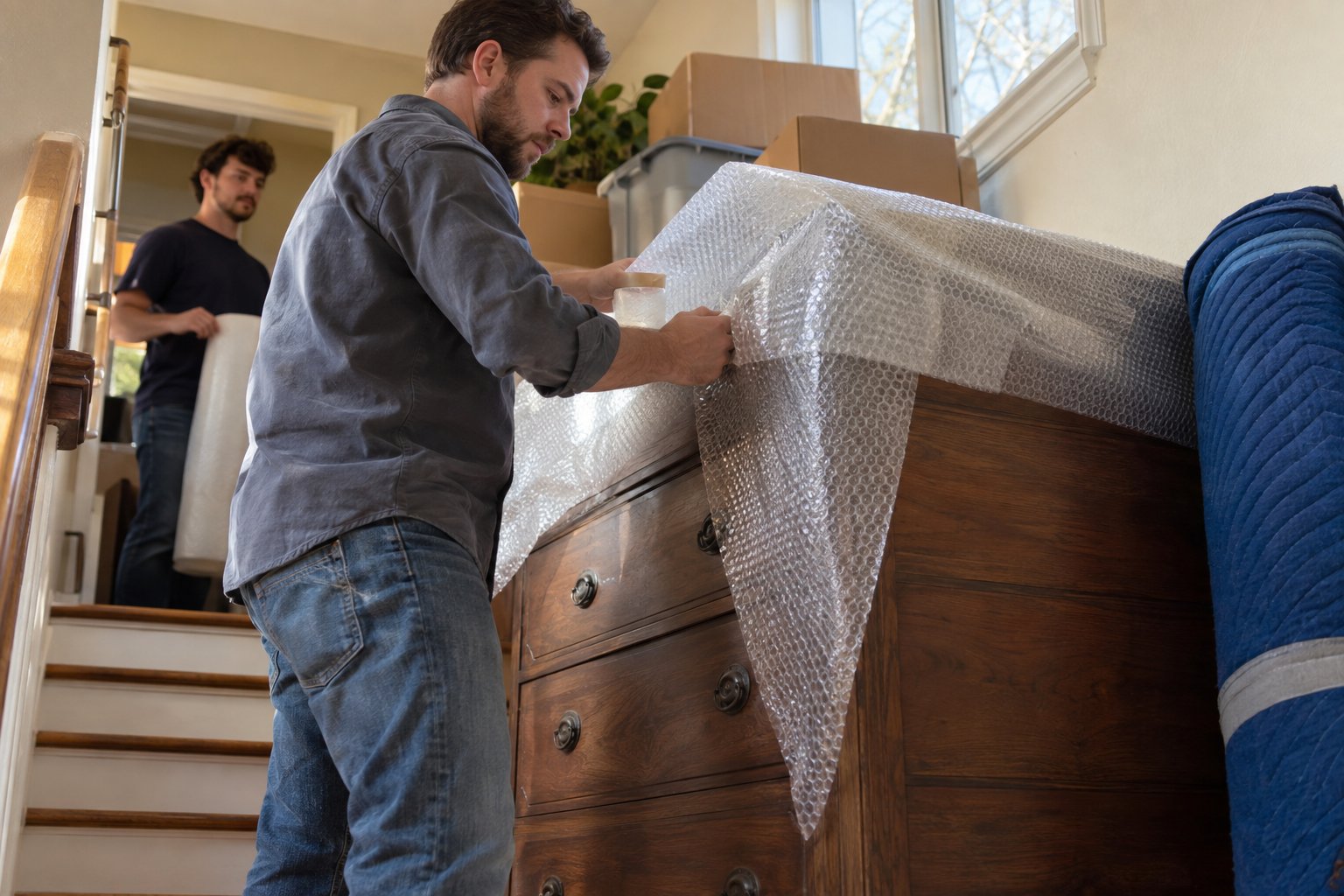
Wrap the tank in moving blankets or bubble wrap, paying extra attention to the corners and edges where glass is most likely to chip. Stand the tank on its base, never on its side or upside down, and secure it so it cannot slide or tip in the vehicle. For tanks over 40 gallons, consider whether the trip is better handled by professional movers experienced with fragile, heavy items, since a cracked large tank is expensive to replace and risky to lift alone.
Set the tank back up as close to its original condition as possible to avoid making your fish adjust twice. Place the tank on a level, stable surface first, since an uneven base is one of the most common causes of cracked tanks weeks after a move.
Test the water within the first day or two after the move, since a spike in ammonia is the main warning sign that the bacteria colony took a hit during transport. If levels are off, do a partial water change and hold off on new feeding for a day.
Consider professional help when the tank is large, the trip is long distance, or you are already stretched thin coordinating the rest of the move. A cracked 75-gallon tank or a stressed, dying fish population is a costly outcome to risk over a task that specialty movers handle regularly.
If your move includes other fragile or oversized items alongside the aquarium, it often makes sense to fold the tank into your broader careful handling plan for fragile belongings rather than treating it as a separate errand. For local moves, having an experienced local crew handle the furniture and boxes frees you up to personally manage the fish and tank, which is the part that should never be delegated to a truck.
The aquarium should be one of the last things you break down and one of the first things you reassemble, not squeezed in randomly between boxes. If you are still working out your broader schedule, a solid move timeline helps you slot in tank draining and setup at the right moments instead of rushing it on moving day itself.
Once the tank and fish are handled, the rest of the move can proceed on a normal schedule. If you have not yet locked in a moving company for the rest of the household, request a free moving quote and mention the aquarium so the crew knows to build extra time and care into the load.
No, you should never transport a tank with water, gravel, or decorations still inside. Even a small amount of water adds enough shifting weight to stress the seams and can crack the glass or acrylic during transit.
Most fish tolerate bagged transport for several hours without issue, and many owners safely keep fish bagged for up to 8 to 12 hours with proper insulation and minimal handling. For longer trips, plan an overnight stop where fish can go into an aerated temporary container.
You can usually avoid a full re-cycle if you keep the filter media wet and save several gallons of the original tank water to reintroduce beneficial bacteria. Skipping this step often forces the tank to restart its nitrogen cycle, which is riskier for the fish.
It is best to feed lightly in the days before the move and skip feeding entirely on travel day. Less food in the system means less waste building up in the bagged water during transport.
Yes, as long as you buffer temperature swings with ice packs or warm packs placed against the outside of the cooler, not directly on the bags, and keep the fish in the climate-controlled passenger area rather than the trunk.

No, you should never transport a tank with water, gravel, or decorations still inside. Even a small amount of water adds enough shifting weight to stress the seams and can crack the glass or acrylic during transit.
Most fish tolerate bagged transport for several hours without issue, and many owners safely keep fish bagged for up to 8 to 12 hours with proper insulation and minimal handling. For longer trips, plan an overnight stop where fish can go into an aerated temporary container.
You can usually avoid a full re-cycle if you keep the filter media wet and save several gallons of the original tank water to reintroduce beneficial bacteria. Skipping this step often forces the tank to restart its nitrogen cycle, which is riskier for the fish.
It is best to feed lightly in the days before the move and skip feeding entirely on travel day. Less food in the system means less waste building up in the bagged water during transport.
Yes, as long as you buffer temperature swings with ice packs or warm packs placed against the outside of the cooler, not directly on the bags, and keep the fish in the climate-controlled passenger area rather than the trunk.