When homeowners work through their room-by-room moving plan, the home gym almost always gets left until the very last moment — but knowing how to pack and move a home gym the right way can save you from damaged equipment, stripped bolts, irreplaceable rubber flooring that tears during removal, and a moving truck packed so dangerously that free weights shift and destroy everything around them. A home gym is one of the most physically demanding spaces in the house to relocate: it combines extreme weight, oversized dimensions, mechanical complexity, and delicate electronic components all under one roof.
Whether you are relocating across Auburn or moving to an entirely new city, this guide walks you through every step of packing and moving your home gym safely and efficiently. When you are ready to leave the hard work to the professionals, call Wise Guys Moving at (334) 610-1593 or get a free moving quote today.
The home gym presents a category of moving challenges that are entirely different from any other space in the home. Unlike the garage — where the primary concern is hazardous materials and power tools — or the basement — where moisture and bulk dominate the risk profile — the home gym combines extreme concentrated weight, motorized machines with proprietary components, tension-based cable systems, and fragile electronics into one uniquely demanding environment.
Think about what a typical home gym actually contains: a treadmill or elliptical with a folding frame and motor, a power rack or squat cage bolted to the floor, a cable pulley machine, a set of dumbbells ranging from five to one hundred pounds or more, a barbell and weight plate collection, a weight bench, resistance bands, kettlebells, foam rollers, exercise mats, rubber or interlocking foam floor tiles, a wall-mounted TV or tablet holder, Bluetooth speakers, and a fan or small HVAC unit. Each of these categories carries its own risk. Free weights stacked loosely in a moving box will break through the cardboard before the truck reaches the end of the driveway. A treadmill belt that is not protected will attract dust, debris, and scuffs that degrade the motor over time. A cable machine disassembled without labeling its tension components will take hours to reassemble correctly at the new home.
A rushed home gym pack almost always produces the same bad outcomes: dented weight plates that damage truck floors, snapped resistance cables, torn rubber flooring, and machines that arrive with missing hardware no longer available from the manufacturer. Plan to begin working on your home gym at least three to four days before moving day — it requires significantly more time and physical effort than most homeowners expect.
Before you touch a single barbell or disconnect a single cable machine, the most valuable thing you can do is take a full inventory of your home gym and make honest decisions about what is genuinely worth the effort and cost of moving.
Start by identifying your major machines and their approximate replacement cost. A quality treadmill, cable crossover, or power rack can easily represent several hundred to several thousand dollars. These items are clearly worth careful packing and professional handling. On the other end of the spectrum, worn resistance bands with frayed edges, cracked foam rollers, and inexpensive adjustable dumbbells may cost more to move carefully than they would to replace. Be honest about condition before you commit to wrapping and boxing something fragile and low-value.
Free weights — barbells, dumbbells, and weight plates — deserve special attention. They are heavy, dense, and move unpredictably when improperly packed. Many homeowners underestimate just how much their weight collection weighs in total. A standard set of Olympic plates alone can exceed several hundred pounds. Factor this into your moving plan early so you are not scrambling to find the right vehicle capacity on moving day.
Home gym packing requires materials you may not already have on hand. At minimum, gather the following before you begin: heavy-duty moving blankets or furniture pads, stretch wrap or shrink wrap film, high-quality packing tape, small zip-lock bags for screws and hardware, permanent markers for labeling, rope or ratchet straps for securing items in the truck, and ideally the original packaging for any major machines. If you still have the original box and foam inserts for your treadmill or elliptical, use them — factory packaging is engineered to protect that machine's specific geometry better than any improvised alternative.
Disassembly is where most home gym moves go wrong. Machines that seem straightforward to take apart become puzzles on the other end when hardware has been mixed together in an unlabeled bag and cables have been disconnected without a reference photo.
Before removing a single bolt or unplugging a single cable, take a full series of photographs of each machine from multiple angles. Photograph the back of your treadmill console so you can see how the power cord routes. Photograph the pulley configuration on your cable machine from above and from the side. Photograph the J-hook positions on your power rack. These images cost nothing and will save hours of frustrated reassembly. Store them in a dedicated folder on your phone so they are easy to find on moving day.
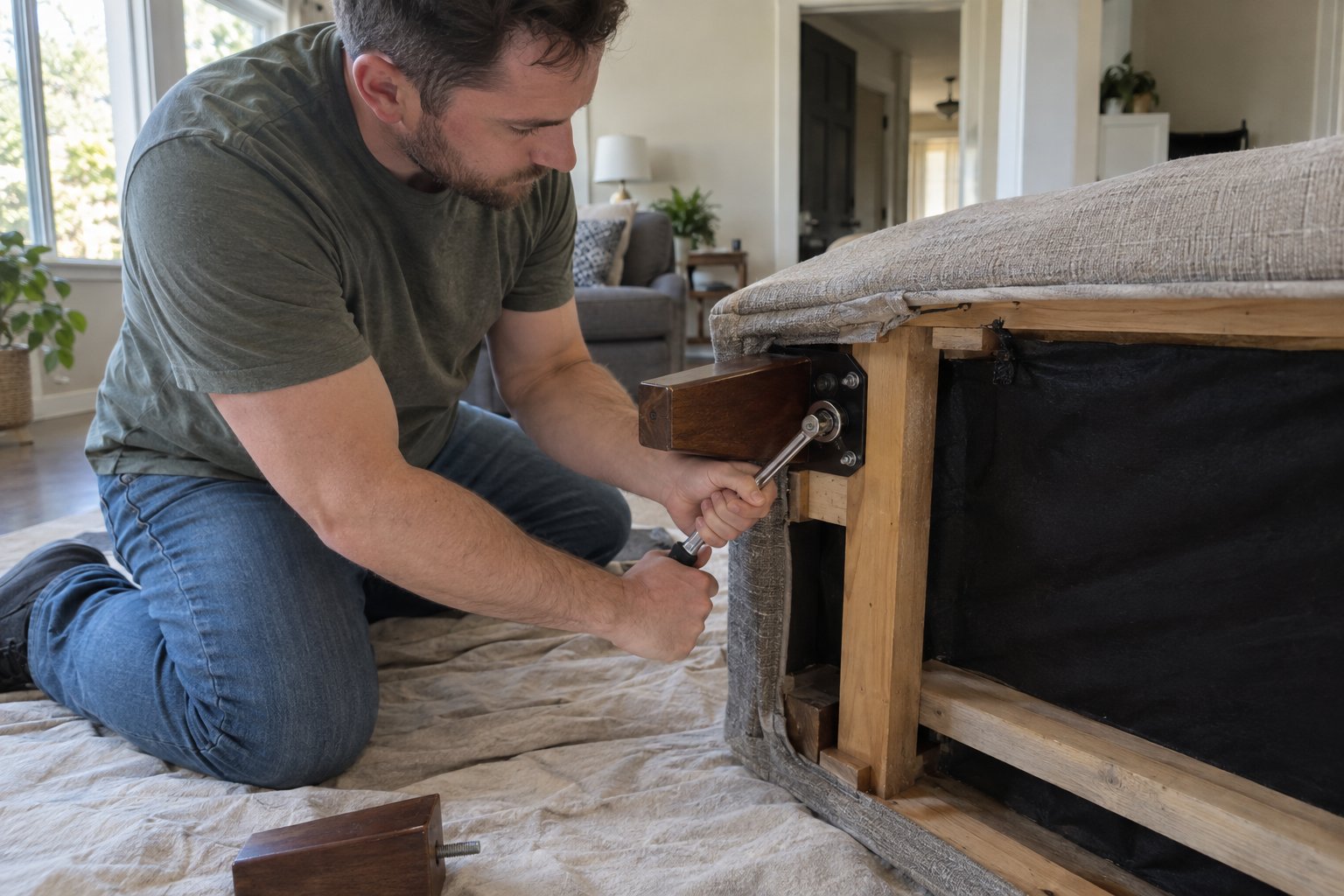
As you remove bolts, pins, and hardware from each machine, immediately place them in a labeled zip-lock bag and tape that bag to the machine itself. Do not consolidate hardware from multiple machines into one bag — this almost guarantees missing pieces and stripped threads during reassembly. Use a permanent marker to write the machine name and the section of the machine the hardware came from directly on the bag.
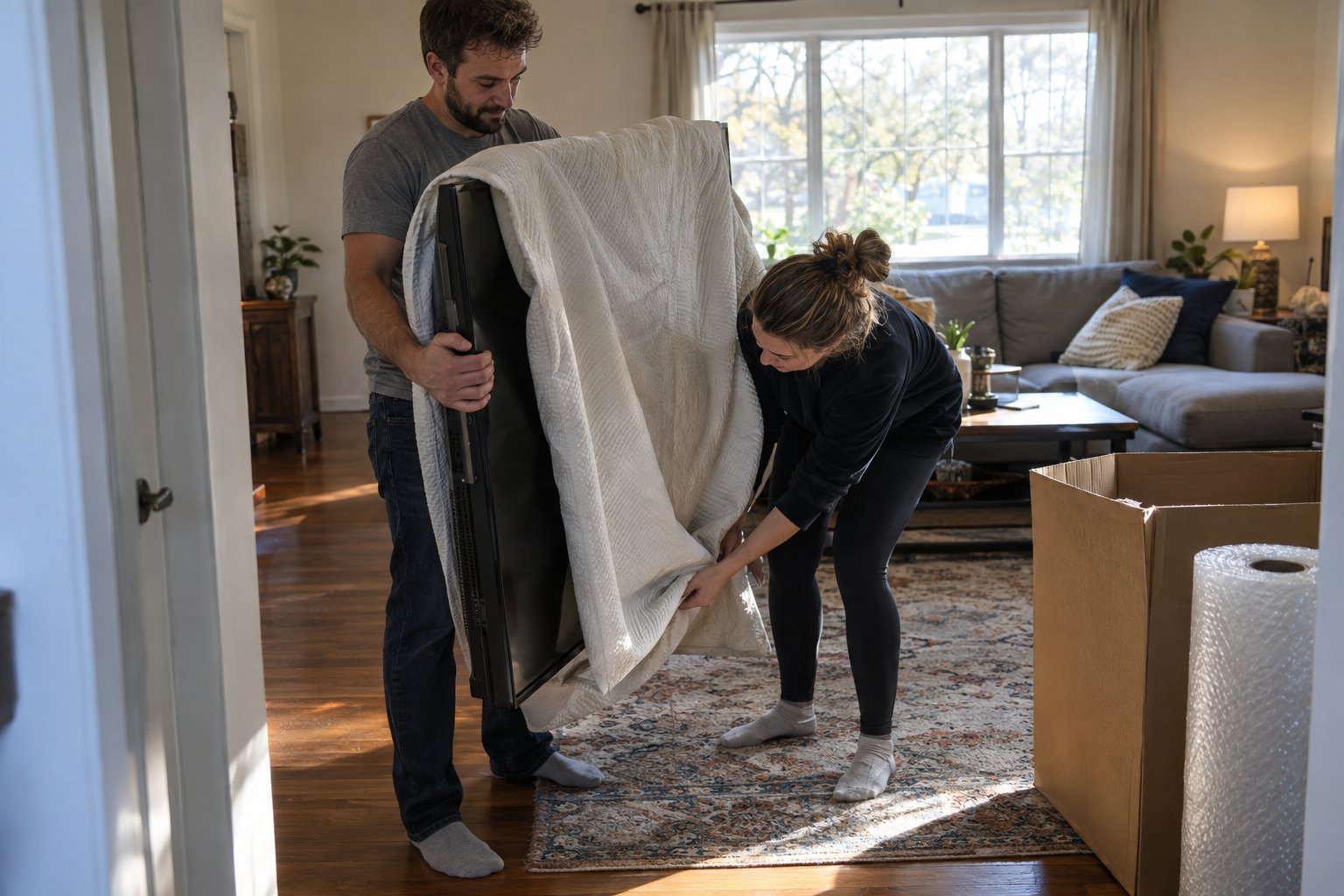
Treadmills, ellipticals, and rowing machines with motorized components require extra caution. Before moving a treadmill, fold the deck if it has a folding design and secure the folded position with a strap or bungee cord so it cannot spring open during transport. Protect the belt and deck surface with a moving blanket taped in place. Disconnect and coil the power cord, securing it with a twist tie rather than letting it drag. If the console has a detachable mount, remove it and pack it separately with padding.
Free weights are among the most dangerous items to move incorrectly. Their density means that even a small box packed with weight plates can be impossibly heavy for a single mover and can tear through standard cardboard instantly.
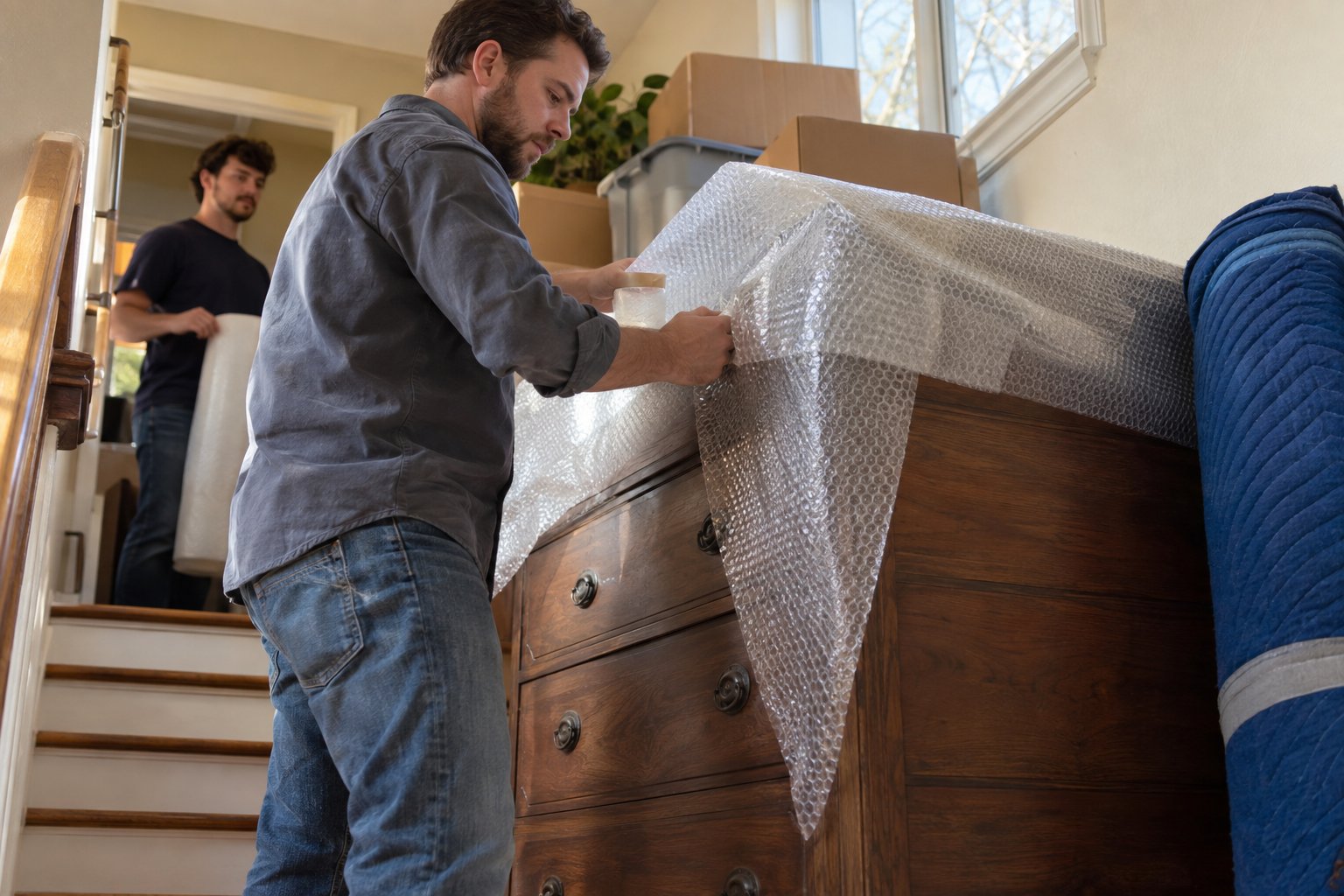
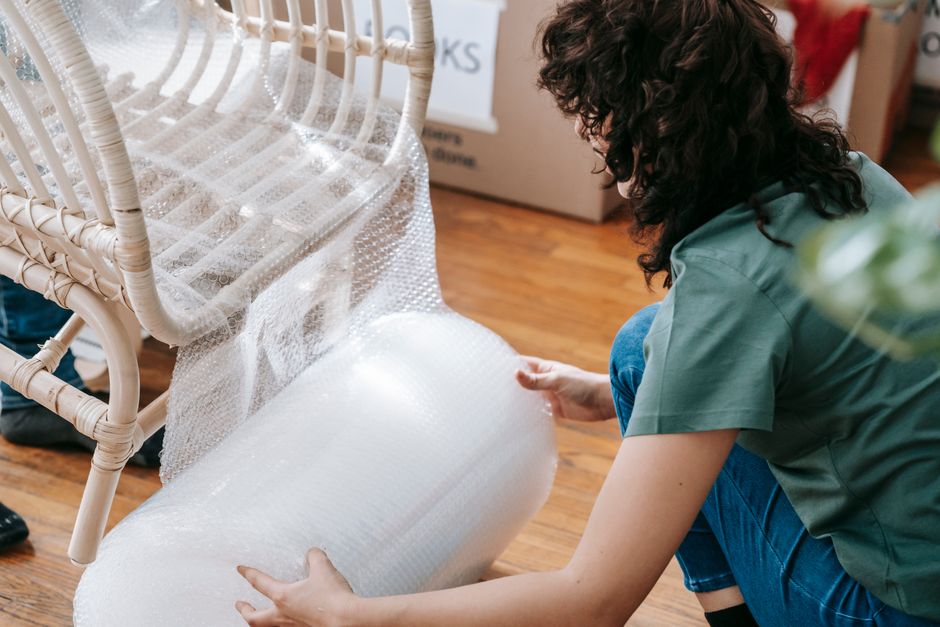
The cardinal rule of packing free weights is: use smaller boxes than you think you need. A small or medium-sized box filled with weight plates is already extremely heavy. Packing them into a large box creates a load that is not only dangerous to lift but also structurally unstable. Use double-walled cardboard boxes, fill no box with more weight than you can lift comfortably, and seal every box with two or more layers of tape along the bottom seam. Wrap individual plates with stretch wrap or bubble wrap to prevent them from scraping against each other and chipping.
Dumbbells are best packed in pairs with their heads facing opposite directions to reduce dead space. Wrap each pair in a moving blanket or bubble wrap before placing them in the box. Never leave dumbbells loose in a truck — they will roll, shift, and cause damage to other items. If you are using a moving truck, consider placing your weight collection along one wall and securing it with ratchet straps rather than stacking boxes.
Olympic barbells are long, heavy, and nearly impossible to box. Wrap the entire shaft in stretch wrap to protect the knurling, then wrap the ends and collars in moving blankets. Transport barbells horizontally in the truck — never lean them against a wall, where they can shift and fall. If you have a barbell storage rack, keep the barbells on the rack during transport if the rack itself is being moved, and secure the entire rack with moving straps.
Home gym flooring — whether rubber tiles, rolled rubber mats, or interlocking foam panels — is often the most overlooked element of a gym move. These surfaces are heavy, awkward to carry, and surprisingly easy to damage during removal and transport.
If your gym uses interlocking rubber or foam tiles, begin removal from the outer edges and work inward. Prying tiles from the center outward stresses the interlocking tabs and causes them to crack or deform, making reassembly at the new location difficult or impossible. Clean the underside of each tile before packing to remove accumulated dust and debris that could scratch your new floor surface. Stack tiles flat, not on edge, and wrap stacks in stretch wrap to keep them aligned.
Wall-mounted pull-up bars, mirror panels, TV mounts, and storage racks should be the last items removed from the gym. This preserves their use during the packing process and ensures the wall anchors and hardware are still accessible for reference. Photograph each mounting configuration before removal, fill wall holes with spackling compound if required by your lease or sale agreement, and pack all wall hardware in labeled bags taped to the corresponding equipment.
The loading order in the moving truck matters significantly when moving a home gym. Heavy, dense gym equipment loaded incorrectly can shift during transit and cause serious damage to itself, to other household items, and to the truck itself.
Load your heaviest items — power racks, cable machines, and large weight collections — first, positioning them low against the front wall of the truck. Place free weight boxes and heavy plate boxes on the floor, never stacked high. Wrap all machines in moving blankets before loading to protect surfaces. Use ratchet straps to secure large machines to the truck's wall anchor points so they cannot slide or tip in transit. Lighter gym accessories, resistance bands, small equipment, and flooring tiles can load on top of or around secured heavy items.
A well-loaded gym is a slow-loaded gym. Rushing this stage is how expensive machines get scratched, consoles get cracked, and weight plates end up rolling loose across the truck floor. Take the time to do it right.
For most home gym moves, professional movers provide a meaningful advantage over DIY. The sheer weight of a typical home gym — which can easily exceed a thousand pounds when you count machines, free weights, and flooring — requires the right equipment, the right vehicle, and the right number of experienced people. Attempting to move a fully loaded power rack or a commercial-grade treadmill without professional moving equipment is a genuine injury risk.
Wise Guys Moving has the equipment and experience to handle heavy gym equipment safely, including appliance dollies rated for high-weight loads, furniture straps, and loading ramp systems designed for oversized items. If your gym includes bolted-down equipment, a particularly large machine, or specialty flooring that requires careful removal, a professional team will save you time, protect your investment, and reduce the risk of injury significantly.
Ready to make your home gym move simple? Call Wise Guys Moving at (334) 610-1593 or request a free quote online and let our team handle the heavy lifting.
Fold the deck if it has a folding design and secure the folded position with a strap before moving. Protect the belt and deck surface with a moving blanket, disconnect and coil the power cord, and if the console is detachable, pack it separately with padding. Always keep the treadmill upright during transport rather than laying it flat, and use an appliance dolly rated for its weight.
Standard cardboard moving boxes are generally not strong enough for heavy free weights. Use small, double-walled boxes and fill them only as heavily as you can comfortably lift. Seal the bottom seam with multiple layers of heavy-duty tape and wrap individual plates in stretch wrap or bubble wrap to prevent chipping. Never pack free weights in a large box — the combined weight will almost always break through the bottom.
Yes. Power racks are almost always easier and safer to move when fully disassembled. Photograph every component and connection point before you begin, place all bolts and hardware in labeled zip-lock bags taped to the corresponding section, and wrap each upright and crossbar in moving blankets. Reassembly is straightforward with your photos and labeled hardware as a reference.
Remove interlocking rubber or foam tiles starting from the outer edges and working inward to avoid stressing the interlocking tabs. Clean the underside of each tile before packing. Stack tiles flat, wrap stacks in stretch wrap to keep them aligned, and avoid loading heavy items on top of the stack. Rolled rubber mats should be transported rolled, not folded, to prevent permanent creasing.
For most home gyms, professional movers are well worth the investment. A fully equipped home gym can easily exceed a thousand pounds when you combine machines, free weights, and flooring. Professional moving companies have appliance dollies, ratchet straps, loading ramps, and trained teams experienced in handling heavy and oversized equipment safely. Attempting a heavy gym move without the right equipment is one of the more common causes of moving-day injuries.

Fold the deck if it has a folding design and secure the folded position with a strap before moving. Protect the belt and deck surface with a moving blanket, disconnect and coil the power cord, and if the console is detachable, pack it separately with padding. Always keep the treadmill upright during transport rather than laying it flat, and use an appliance dolly rated for its weight.
Standard cardboard moving boxes are generally not strong enough for heavy free weights. Use small, double-walled boxes and fill them only as heavily as you can comfortably lift. Seal the bottom seam with multiple layers of heavy-duty tape and wrap individual plates in stretch wrap or bubble wrap to prevent chipping. Never pack free weights in a large box — the combined weight will almost always break through the bottom.
Yes. Power racks are almost always easier and safer to move when fully disassembled. Photograph every component and connection point before you begin, place all bolts and hardware in labeled zip-lock bags taped to the corresponding section, and wrap each upright and crossbar in moving blankets. Reassembly is straightforward with your photos and labeled hardware as a reference.
Remove interlocking rubber or foam tiles starting from the outer edges and working inward to avoid stressing the interlocking tabs. Clean the underside of each tile before packing. Stack tiles flat, wrap stacks in stretch wrap to keep them aligned, and avoid loading heavy items on top of the stack. Rolled rubber mats should be transported rolled, not folded, to prevent permanent creasing.
For most home gyms, professional movers are well worth the investment. A fully equipped home gym can easily exceed a thousand pounds when you combine machines, free weights, and flooring. Professional moving companies have appliance dollies, ratchet straps, loading ramps, and trained teams experienced in handling heavy and oversized equipment safely. Attempting a heavy gym move without the right equipment is one of the more common causes of moving-day injuries.