When families sit down to plan a move room by room, the kids' room almost always sparks the most emotional friction — but knowing how to pack and move a kids' room the right way can transform what feels like a logistical nightmare into a smooth, even positive experience. A child's bedroom is deceptively complex: it combines bulky furniture, hundreds of small loose items, fragile keepsakes, and a young person who may be anxious or resistant about leaving their space behind. Get it wrong, and you risk a chaotic moving day, lost beloved toys, and a child who feels blindsided by the change.
Whether you are relocating across Auburn or moving to an entirely new city, this guide walks you through every step of packing and moving a kids' room safely and efficiently. When you are ready to leave the hard work to the professionals, call Wise Guys Moving at (334) 610-1593 or get a free moving quote today.
The kids' room presents a category of moving challenges you simply will not encounter anywhere else in the house. Unlike the living room — where the primary concern is large furniture and electronics — or the bathroom — where liquids and glass dominate the risk profile — the kids' room layers emotional stakes directly on top of logistical ones. A lost stuffed animal or a favorite book buried in an unlabeled box can derail an entire moving day in ways that a missing spatula never will.
Think about what a typical kids' room actually contains: a bed frame and mattress, a dresser, a bookshelf packed with books and figurines, a toy chest or storage bins overflowing with loose pieces, art supplies, puzzles with hundreds of parts, clothing, backpacks, sports equipment, posters and wall décor, nightlights, and a rotating cast of "must-have" items that your child insists cannot be packed first. Each category carries its own risk. Small toy pieces scatter and get lost in transit. Flat-pack furniture assembles and disassembles in ways that are easy to forget. Artwork on the walls gets scratched by improperly wrapped frames.
A rushed kids' room pack almost always produces the same outcomes: a missing irreplaceable toy discovered only after the truck has left, a bookshelf that shifts and damages itself because it was moved fully loaded, or a child who arrives at a new home feeling overwhelmed because nothing familiar is immediately accessible. A deliberate, category-by-category approach eliminates all of that. Plan to begin packing the kids' room at least one week before moving day — starting with seasonal and rarely used items, and saving the comfort objects your child needs every day for the very last box.
Before a single box is taped shut, the most important step in moving a kids' room is the conversation you have with your child. Research consistently suggests that children handle transitions better when they feel informed and involved rather than surprised. Announce the move as early as is practical, explain what is happening in age-appropriate terms, and give your child a role to play in the process.
Let your child help decide which items go into which boxes — especially when it comes to toys and books. Give them a "first night box" that they pack themselves and that travels with you (not on the truck) so they arrive at the new home with their most important comfort items already in hand. This single step eliminates more moving-day meltdowns than any other technique.
For older children and teenagers, assign them real responsibility: their own packing checklist, their own tape gun, their own labeled boxes. Ownership over the process dramatically reduces resistance to it.
A move is the best natural opportunity to declutter a kids' room. Involve your child in sorting toys and clothes into three piles: keep, donate, and discard. Frame donations positively — their outgrown items will go to children who need them. Most kids respond well to this framing and will willingly let go of items they have clearly outgrown. Fewer items means fewer boxes, a lighter truck, and an easier setup at the new home.
The sheer volume of small, loose items in a kids' room is what makes it genuinely difficult to pack efficiently. A haphazard approach leaves you with boxes that are too heavy, items that shift and break in transit, and a destination that looks like a toy explosion when you open each box.
Building sets, board games, puzzle pieces, action figure accessories, and craft supplies are the most problematic category in any kids' room move. The rule here is simple: keep sets together and sealed before they go into a box. Use resealable zip-lock bags to contain all the pieces of a single toy or game, label each bag with a marker, and then pack the bags into a medium-sized box. Never dump loose small pieces directly into a box — they will scatter, mix together, and arrive as an unsortable pile.
For toys that have original boxes, pack them back into those boxes if possible. The original packaging is engineered to protect the item during transit and stacking.
Books are heavy — far heavier than they look when a shelf is full of them. Always pack books in small boxes, not large ones. Place books flat or spine-down (never spine-up, which stresses the binding), and do not overfill. A box of books should be liftable by one person. Fill any gaps with packing paper or soft stuffed animals to prevent shifting. Label the box clearly with "BOOKS — HEAVY" on the side panel.
Stuffed animals are both high-sentimental-value and surprisingly space-inefficient to pack. Use large, clean garbage bags or specialty wardrobe bags for stuffed animals — they compress safely without damage and take up far less truck space than boxes. Alternatively, use large clear plastic bins so your child can see their stuffed animals and feel reassured they made the trip.
Separate and contain any liquids — glue, paint, glitter glue — before they go near anything else. Double-bag all liquid supplies in zip-lock bags and pack them upright in a small box lined with a plastic bag. Dry supplies like crayons, markers, and colored pencils can go into zip-lock bags or pencil pouches, then into a labeled box. Never pack open containers of paint or glue without sealing them first.
Kids' room furniture presents its own set of challenges. Much of it is lighter than adult furniture, which encourages careless handling — but lightweight flat-pack furniture can actually be more fragile than solid hardwood pieces because the joinery and materials are less robust.
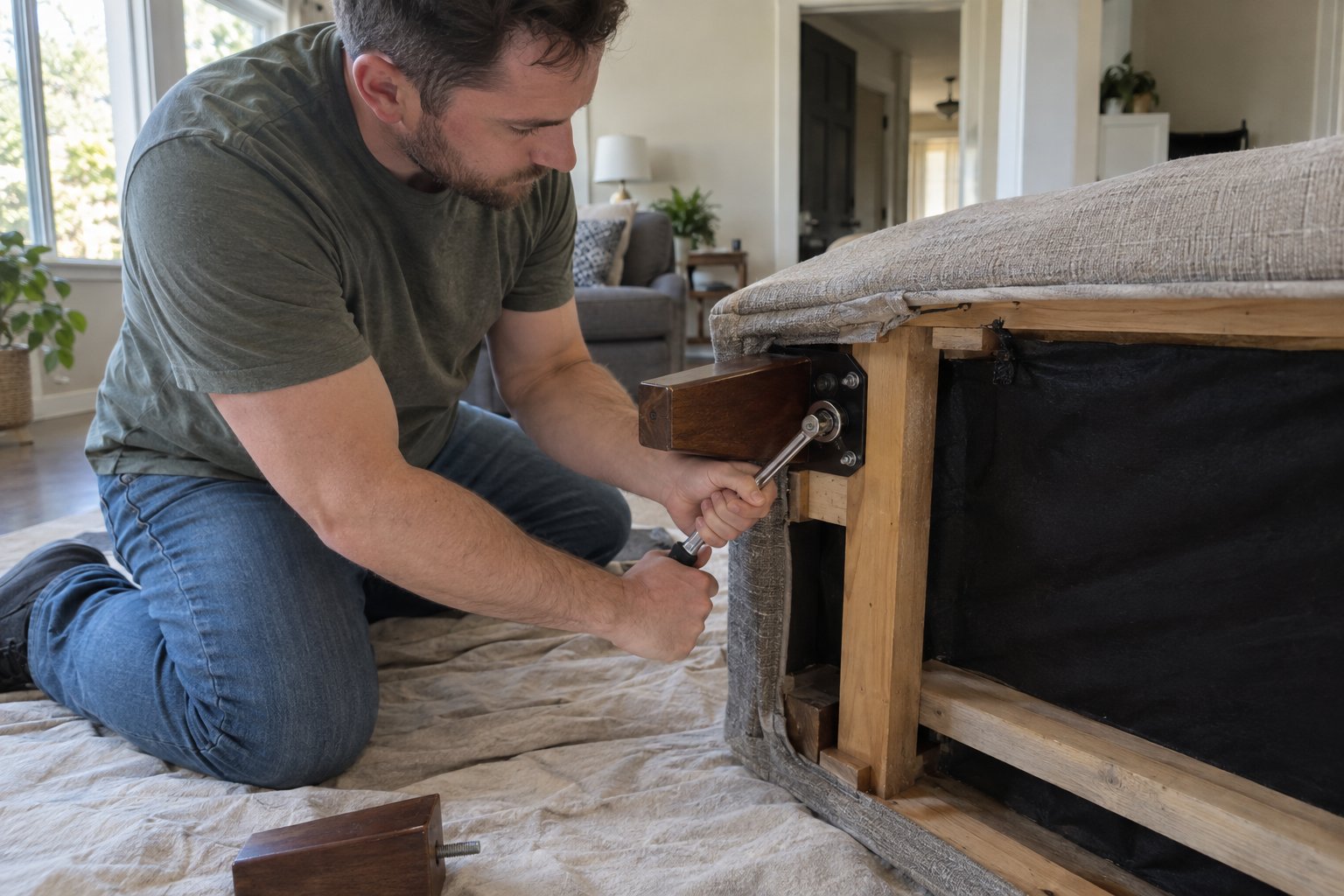
Disassemble all bed frames before moving day. Keep all hardware — bolts, screws, slats — in a labeled zip-lock bag and tape that bag directly to the headboard so nothing gets separated. Wrap the headboard and footboard in moving blankets or furniture pads and secure with stretch wrap. Do not let tape touch painted or laminate surfaces directly — adhesive can lift the finish.
Bunk beds deserve special attention: they are taller than standard doorways when assembled and must always be fully disassembled. Follow the manufacturer's instructions if available, photograph the assembly before disassembly, and label every component clearly.
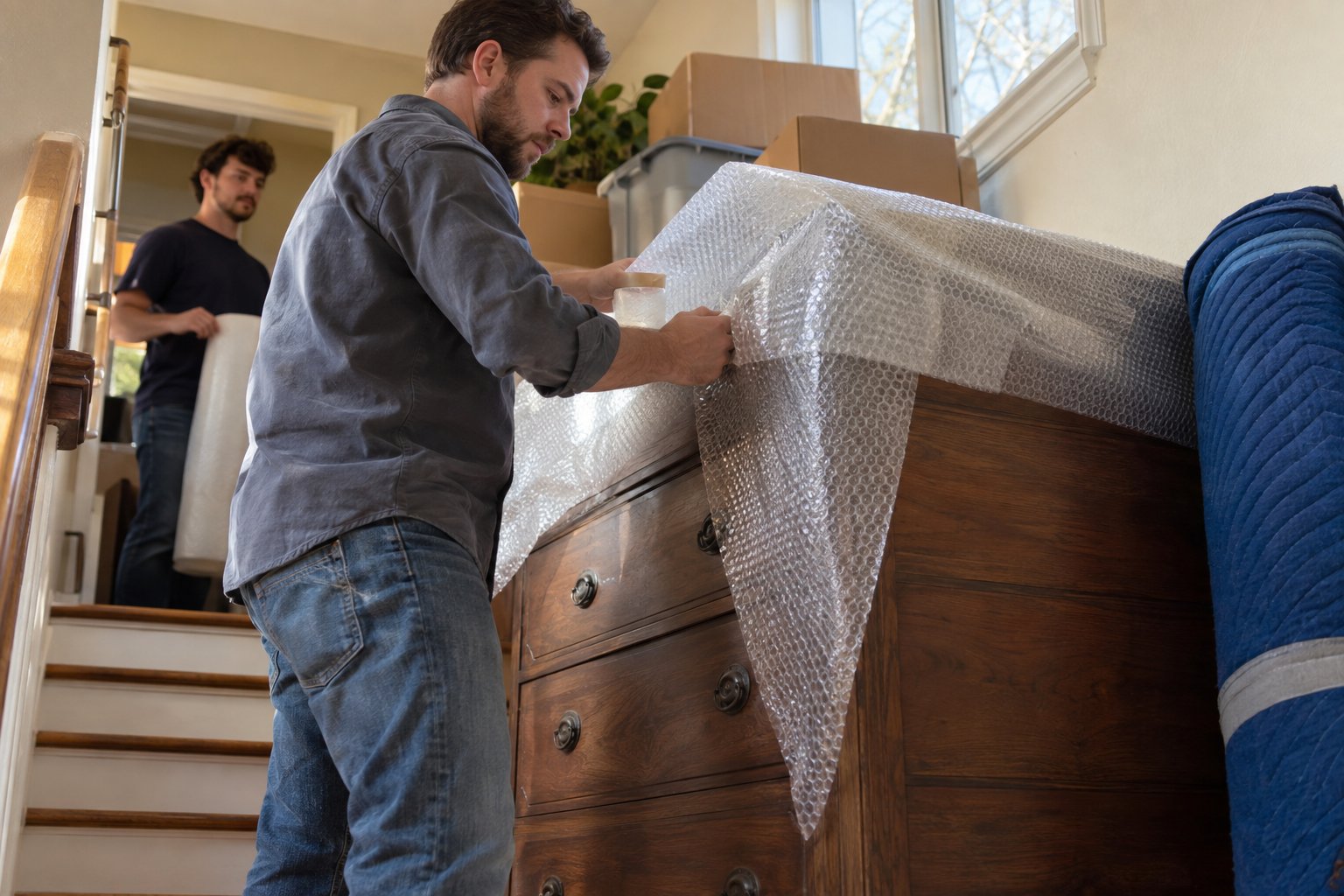
Empty all drawers before moving any dresser. A dresser moved with full drawers is dramatically heavier than it appears and the drawers can slide open mid-carry, injuring movers and damaging the frame. Remove drawers individually, wrap them in stretch wrap to keep them closed during transit, and load the dresser frame separately. For small plastic storage bins and cubbies, stack them nested together and wrap the whole stack.
Remove all items from bookshelves before moving them — even lightweight items. A bookshelf is not structurally designed to carry its load while being tilted or carried; the backing panel can bow or detach under load. If the bookshelf is a flat-pack unit, consider disassembling it entirely and carrying it flat rather than standing upright. Wrap shelves in moving blankets and rubber-band or tie them together for easy carrying.
One of the most effective things you can do to help a child settle into a new home is to prioritize their room on move-in day. When a child walks into their new bedroom and sees their familiar bed, their books on the shelf, and their stuffed animals on the pillow, the anxiety of the move begins to dissolve almost immediately. A familiar environment signals safety.
Label all kids' room boxes clearly — not just "Kids' Room" but specifics like "Bookshelf — Books" or "Toy Bins — Building Sets" — so the room can be reassembled quickly and logically. Set up the bed first so there is always a place to sleep, even if other unpacking takes days. Let your child arrange their own décor and toy placement in the new room: the act of making decisions about the new space builds ownership and comfort far faster than any other approach.
Ready to take the stress out of moving day? Wise Guys Moving is Auburn's trusted moving team for families, students, and homeowners. Call (334) 610-1593 or get a free moving quote and let us handle the heavy lifting while you focus on what matters most.
Plan to begin packing a kids' room at least one week before moving day. Start with seasonal clothes, rarely used toys, and books your child does not reach for daily. Save comfort items — favorite stuffed animals, bedtime books, daily-use toys — for the last box packed and the first box opened at the new home.
Place all small pieces from a single toy or game into a labeled resealable zip-lock bag before they go anywhere near a packing box. Never pour loose small pieces directly into a box. Pack the sealed bags into a medium-sized box and label the box clearly. This one habit eliminates the vast majority of lost-piece problems during a move.
No — always pack books in small boxes, not large ones. Books are much heavier than they appear when stacked, and a large box of books can easily exceed 60–70 pounds, making it unsafe to carry and likely to damage the box bottom. Small boxes full of books are manageable and far less likely to split or injure a mover.
Involve your child in the packing process early and give them real decisions to make — what goes in which box, how their new room will be arranged, what goes in their personal 'first night box.' Children who feel informed and in control handle transitions significantly better than those who feel the move is happening to them. Set up their room first on move-in day to create immediate familiarity.
It is not recommended. Drawers shift and slide open during a carry or on a moving truck, which dramatically increases the weight of the piece and creates a serious injury risk for movers. Remove all drawers, wrap them individually in stretch wrap to keep them closed, and load the dresser frame separately. Packing clothes from the drawers into a wardrobe box is an efficient alternative.

Plan to begin packing a kids' room at least one week before moving day. Start with seasonal clothes, rarely used toys, and books your child does not reach for daily. Save comfort items — favorite stuffed animals, bedtime books, daily-use toys — for the last box packed and the first box opened at the new home.
Place all small pieces from a single toy or game into a labeled resealable zip-lock bag before they go anywhere near a packing box. Never pour loose small pieces directly into a box. Pack the sealed bags into a medium-sized box and label the box clearly. This one habit eliminates the vast majority of lost-piece problems during a move.
No — always pack books in small boxes, not large ones. Books are much heavier than they appear when stacked, and a large box of books can easily exceed 60–70 pounds, making it unsafe to carry and likely to damage the box bottom. Small boxes full of books are manageable and far less likely to split or injure a mover.
Involve your child in the packing process early and give them real decisions to make — what goes in which box, how their new room will be arranged, what goes in their personal 'first night box.' Children who feel informed and in control handle transitions significantly better than those who feel the move is happening to them. Set up their room first on move-in day to create immediate familiarity.
It is not recommended. Drawers shift and slide open during a carry or on a moving truck, which dramatically increases the weight of the piece and creates a serious injury risk for movers. Remove all drawers, wrap them individually in stretch wrap to keep them closed, and load the dresser frame separately. Packing clothes from the drawers into a wardrobe box is an efficient alternative.