Of all the rooms in your home, the kitchen is consistently rated the most difficult to pack — and for good reason. Knowing how to pack and move a kitchen the right way can be the difference between arriving at your new home with intact dishes and fully functioning appliances versus a box full of broken glass and a refrigerator that no longer seals. Between fragile glassware, sharp knives, bulky small appliances, and perishable food, the kitchen demands more planning, more packing materials, and more careful labeling than almost any other room in the house.
Whether you are relocating within Auburn, moving to a new city, or preparing for a long-distance move, this guide walks you through every step of packing and moving your kitchen safely and efficiently. When you are ready to leave the hard work to professionals, call Wise Guys Moving at (334) 610-1593 or get a free moving quote today.
The kitchen presents a unique combination of challenges that no other room quite matches. It has fragile items that can shatter with a single wrong shift, heavy appliances that require special handling, sharp objects that can cause injury if packed carelessly, and perishable food that cannot simply be boxed up and forgotten about. On top of all that, most kitchens are packed with a surprising volume of items — cabinets, drawers, pantries, and counters filled with things accumulated over years.
Rushing through kitchen packing almost always leads to regret. A cracked glass baking dish is an inconvenience; a broken set of wedding china is a genuine loss. Taking a methodical, room-by-room approach to the kitchen — starting well before moving day — protects both your belongings and your sanity.
Plan to begin packing your kitchen at least one to two weeks before your move date. Start with the items you use least often and work toward the everyday essentials you will need right up until moving day.
Moving is one of the most powerful motivators to finally sort through the kitchen clutter that accumulates over years of daily use. Before you buy a single roll of packing paper or pull out a single cardboard box, spend time honestly evaluating what is worth bringing to your new home.
Food is one of the trickiest categories to manage during a kitchen move. In the weeks leading up to moving day, make a deliberate effort to cook down your pantry — use up canned goods, frozen items, and dry staples rather than packing them. Most moving companies will not transport perishable food, and non-perishables add surprising weight to boxes. Donate unopened, unexpired pantry items to a local food bank in Auburn rather than throwing them away. This is both practical and worthwhile.
Most households have at least a handful of small appliances that rarely see the light of day — the bread maker used twice, the juicer gathering dust at the back of the cabinet, the electric can opener replaced by a manual one years ago. Moving is the ideal moment to decide which gadgets genuinely earn their counter space in your new kitchen. Selling, donating, or discarding unused appliances before the move reduces weight, saves packing materials, and makes unpacking dramatically easier at the destination.
Take a hard look at duplicate items. Two sets of mixing bowls, three cast iron skillets, and mismatched mugs from a decade of office gift exchanges are common in most kitchens. Pare down to what you actually use. Fewer items mean fewer boxes, and fewer boxes mean lower moving costs — especially important for long-distance moves where volume and weight directly impact pricing.
Once you have decluttered, it is time to pack methodically. Kitchen packing goes most smoothly when you work category by category, using the right materials for each type of item.
Dishes and glassware are where most kitchen moving damage occurs. The key is generous cushioning and intentional packing technique.
Pots and pans are generally more durable than dishes but still benefit from careful packing. Nest smaller pans inside larger ones where possible, placing a layer of packing paper or a dish towel between each piece to prevent scratching. Cast iron cookware is extremely heavy — pack it in small, sturdy boxes and keep those boxes under 30 pounds to avoid injury during loading and unloading.
Glass bakeware should be wrapped individually, just like fragile dishes. A single unprotected glass casserole dish rolling against a cast iron pan during transit is a recipe for breakage.
Knives deserve special attention for safety. Never pack loose knives into a box where someone reaching in could be injured. Wrap each knife individually in several layers of packing paper and secure with tape. Alternatively, pack a knife block with the knives still inserted and wrap the entire block in paper or bubble wrap. Label any box containing sharp items clearly to warn movers and family members.
Whenever possible, use the original manufacturer's box for small appliances — these are designed to protect the item perfectly. If original boxes are not available, wrap each appliance securely in bubble wrap and pack in a box with ample cushioning on all sides. Remove any detachable parts (blender blades, coffee pot carafes, toaster crumb trays) and pack them separately with clear labeling. Tape power cords neatly to the body of the appliance or bundle them in a labeled plastic bag tucked in the same box.
Pack a separate "kitchen essentials" box or bag containing everything you will need for the first 24 to 48 hours in your new home. This should include a coffee maker or kettle, a couple of mugs, a pot, a pan, basic utensils, dish soap, a sponge, and paper plates and plastic cutlery as backup. Load this box last so it comes off the truck first, and keep it clearly labeled and accessible. Arriving at a new home without the ability to make a cup of coffee or heat a simple meal makes an already stressful day harder than it needs to be.
Built-in and freestanding appliances require planning well before moving day. Refrigerators, stoves, dishwashers, and microwaves all have specific preparation steps that, if skipped, can result in damage during transit or complications at the new home.
A refrigerator must be defrosted and completely dry before it can be safely moved. Plan to empty and unplug your refrigerator at least 24 to 48 hours before moving day. Clean the interior thoroughly and leave the doors open to allow any remaining moisture to evaporate. Remove and separately wrap glass shelves and produce drawers. Once the refrigerator is at your new home, allow it to stand upright for at least a few hours before plugging it in — this gives the compressor oil time to settle back into place after being transported horizontally.
Remove all burner grates, drip pans, and oven racks before moving day. Clean the stovetop and oven interior to prevent odors and grease from contaminating other items in the truck. For gas ranges, it is strongly recommended to have a licensed professional disconnect and reconnect the gas line rather than attempting this yourself.
Disconnect your dishwasher from both the water supply and drain lines and allow it to dry completely before moving. Most dishwashers can be moved by experienced movers without disassembly, but confirm this with your moving company ahead of time, particularly for built-in models that may require disconnection from cabinetry.
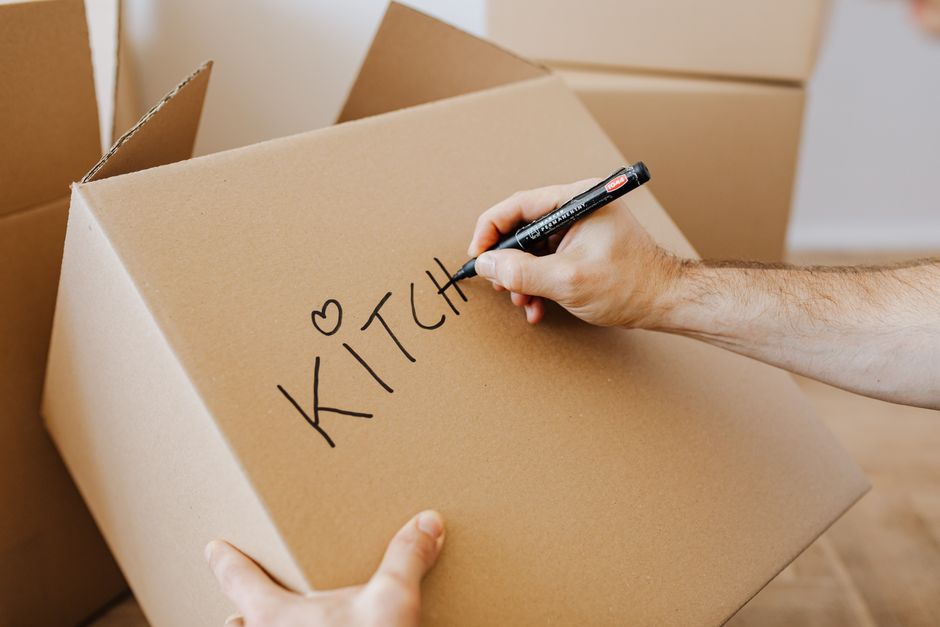
A well-labeled kitchen is an unpacking dream. Every box coming out of the kitchen should be clearly labeled with:
When loading the moving truck, heavy kitchen boxes (cast iron, large appliances, canned goods) belong on the floor of the truck against the walls for stability. Fragile boxes should be loaded last, stacked on top of soft items like linens, and never placed under heavy boxes. Communicate clearly with your movers about which boxes are fragile so they can handle them accordingly throughout the entire move.
A professional moving company with experience handling kitchen moves can make the entire process significantly less stressful. Experienced movers know how to handle fragile dish boxes, safely transport appliances, and load a truck so that your most delicate items arrive without damage. If you are dealing with a full kitchen move — especially one that involves large or built-in appliances — partnering with professionals is worth considering.
Wise Guys Moving has helped countless Auburn and East Alabama residents navigate the complexities of moving day. From packing fragile kitchenware to safely transporting refrigerators, our team brings the experience and care your belongings deserve. Call us at (334) 610-1593 or get a free moving quote and let us help make your next kitchen move a smooth one.
Start packing your kitchen at least one to two weeks before moving day. Begin with items you rarely use — specialty bakeware, seasonal serving pieces, extra small appliances — and work toward everyday essentials you will need right up until the move. Leaving yourself enough time prevents rushed packing, which is the leading cause of kitchen breakage during a move.
Pack dishes in double-walled dish pack boxes, wrapping each piece individually in packing paper or bubble wrap. Stand plates on edge vertically rather than stacking them flat — this dramatically reduces breakage risk. For glasses, stuff the inside of each glass with crumpled packing paper before wrapping the outside. Label every box 'FRAGILE' and 'THIS SIDE UP' on at least two sides.
Moving a refrigerator is possible without professionals but requires careful preparation. Defrost and dry the refrigerator completely at least 24 to 48 hours in advance, remove all glass shelves and drawers, and transport it upright whenever possible. After arrival, allow the refrigerator to stand upright for several hours before plugging it in so the compressor oil can settle. For most households, hiring professional movers for large appliances is the safer and more practical choice.
In most cases, it is best to avoid packing and moving food, particularly perishables. In the weeks before your move, cook down your pantry and use up frozen and refrigerated items. Donate unexpired, unopened non-perishables to a local food bank. Most professional moving companies will not transport perishable food, and moving non-perishables adds significant weight to your load.
Pack a dedicated kitchen essentials box containing the items you will need in the first 24 to 48 hours — a coffee maker or kettle, a pot, a pan, basic utensils, dish soap, and a few mugs or plates. Load this box last so it comes off the moving truck first, and label it clearly as 'Open First — Kitchen Essentials.' Having this box accessible makes your first night in your new home far more comfortable.

Start packing your kitchen at least one to two weeks before moving day. Begin with items you rarely use — specialty bakeware, seasonal serving pieces, extra small appliances — and work toward everyday essentials you will need right up until the move. Leaving yourself enough time prevents rushed packing, which is the leading cause of kitchen breakage during a move.
Pack dishes in double-walled dish pack boxes, wrapping each piece individually in packing paper or bubble wrap. Stand plates on edge vertically rather than stacking them flat — this dramatically reduces breakage risk. For glasses, stuff the inside of each glass with crumpled packing paper before wrapping the outside. Label every box 'FRAGILE' and 'THIS SIDE UP' on at least two sides.
Moving a refrigerator is possible without professionals but requires careful preparation. Defrost and dry the refrigerator completely at least 24 to 48 hours in advance, remove all glass shelves and drawers, and transport it upright whenever possible. After arrival, allow the refrigerator to stand upright for several hours before plugging it in so the compressor oil can settle. For most households, hiring professional movers for large appliances is the safer and more practical choice.