When moving day is on the horizon, most people focus their anxiety on the kitchen or the bedroom — but knowing how to pack and move a living room correctly is just as critical to a smooth relocation. The living room is often the largest room in the home, filled with oversized furniture, expensive electronics, fragile décor, and years of accumulated items that don't fit neatly into a single category. Getting it wrong means damaged sofas, cracked TV screens, and a chaotic unpacking experience at your new home.
Whether you are moving across Auburn or relocating to an entirely new city, this guide walks you through every step of packing and moving your living room safely and efficiently. When you are ready to leave the hard work to professionals, call Wise Guys Moving at (334) 610-1593 or get a free moving quote today.
The living room presents a unique set of challenges that catch many people off guard. Unlike the kitchen, which is densely packed but relatively contained, or the bedroom, which is personal but mostly predictable, the living room combines sheer size, a wide variety of item types, and items of significant monetary and sentimental value — all in one space.
Think about what a typical living room actually contains: a sectional sofa or full couch set, a large-screen television, an entertainment center or media console, bookshelves loaded with books and décor, lamps with fragile shades, framed artwork, rugs, throw pillows, cable boxes, gaming consoles, and assorted personal mementos. Each of these categories requires a different packing approach. Treating the living room as one undifferentiated mass of "stuff to box up" is a reliable path to breakage and regret.
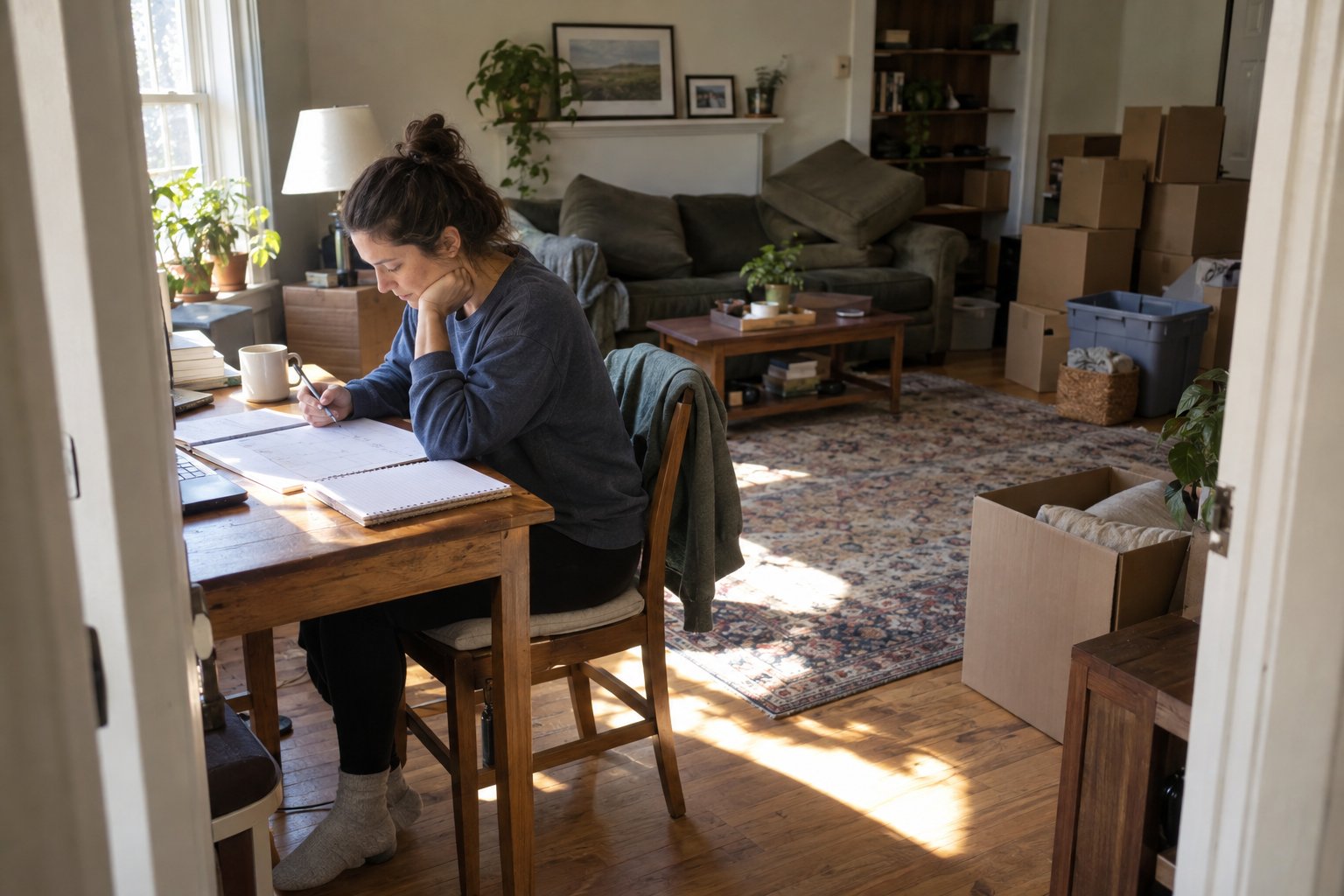
Start planning your living room move at least one to two weeks before moving day. The more time you give yourself, the more control you will have — and the less you will be frantically disassembling furniture the night before the truck arrives.
Before you reach for a single roll of bubble wrap or a sheet of packing paper, take a deliberate pass through your living room with an honest eye. Moving is one of the few moments in life when it truly makes sense to evaluate every item you own. Bringing unnecessary things to a new home just means unpacking unnecessary things — and finding space for items you do not actually need or want.
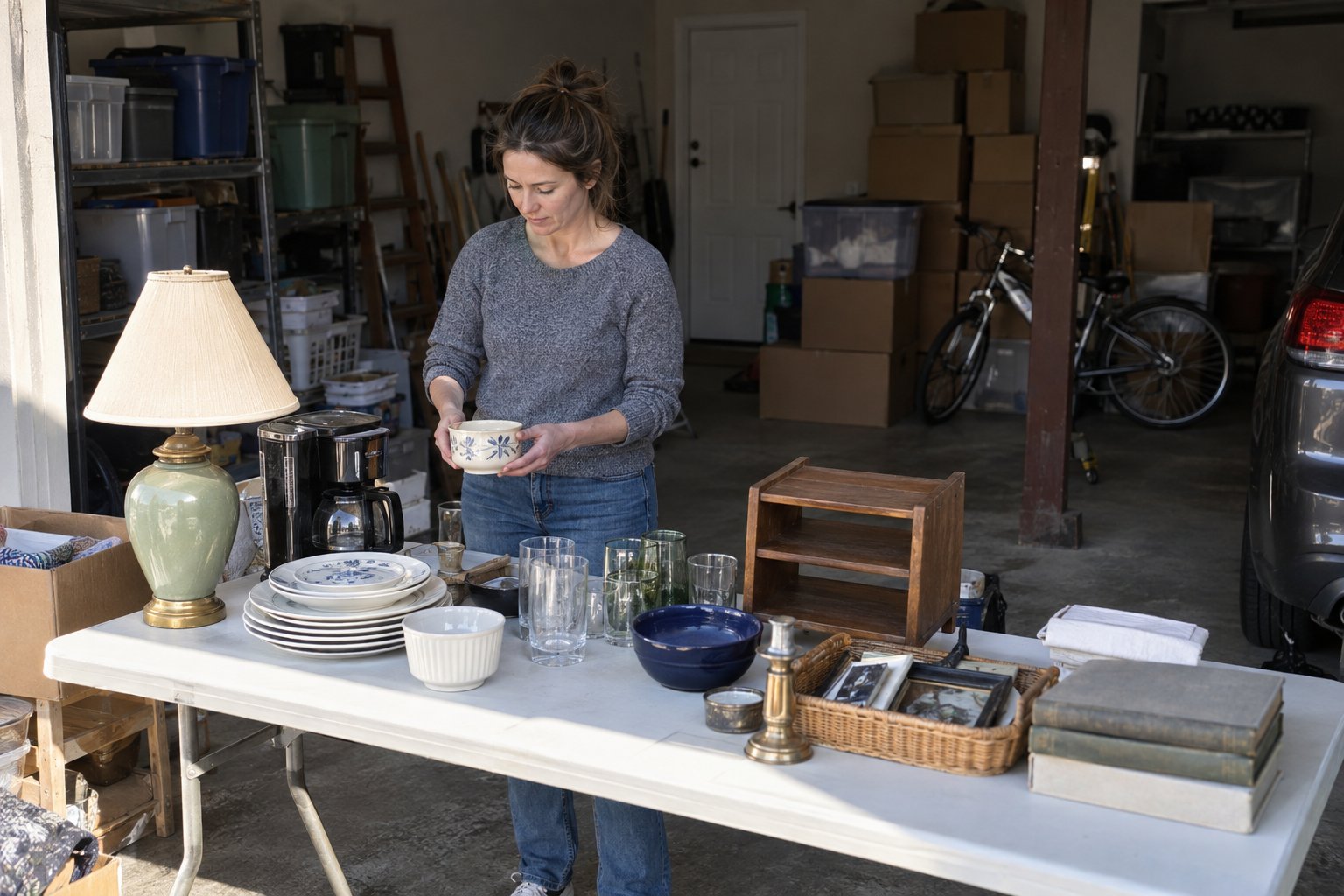
Living room furniture is large, heavy, and expensive to move. If you have a second sofa that rarely gets used, an armchair that does not fit your new space's floor plan, or a coffee table you have been meaning to replace for years, now is the time to make a decision. Selling large furniture pieces through local marketplace apps or donating them to organizations in the Auburn area reduces your move's weight and volume — which can meaningfully reduce your moving costs.
Bookshelves and entertainment centers tend to accumulate items that were placed there and forgotten. Old DVDs, books you have already read and will not revisit, outdated gaming accessories, and knick-knacks received as gifts are all fair candidates for donation or sale. Books in particular are deceptively heavy — a single box of books can weigh 50 pounds or more. Paring down your library before the move protects your back and your moving budget.
Most living rooms harbor a tangle of cables, chargers, remotes, and accessories for electronics that may no longer even be in service. Sort through these before packing begins. Discard or recycle cables for devices you no longer own, consolidate remotes, and make sure you know which cables belong to which device before everything goes into boxes. Labeling cables with masking tape and a marker before you unplug anything will save enormous frustration on the other end.
Once you have decluttered and you know what is making the move, it is time to pack strategically. The living room rewards a category-by-category approach rather than just filling boxes with whatever is nearest.
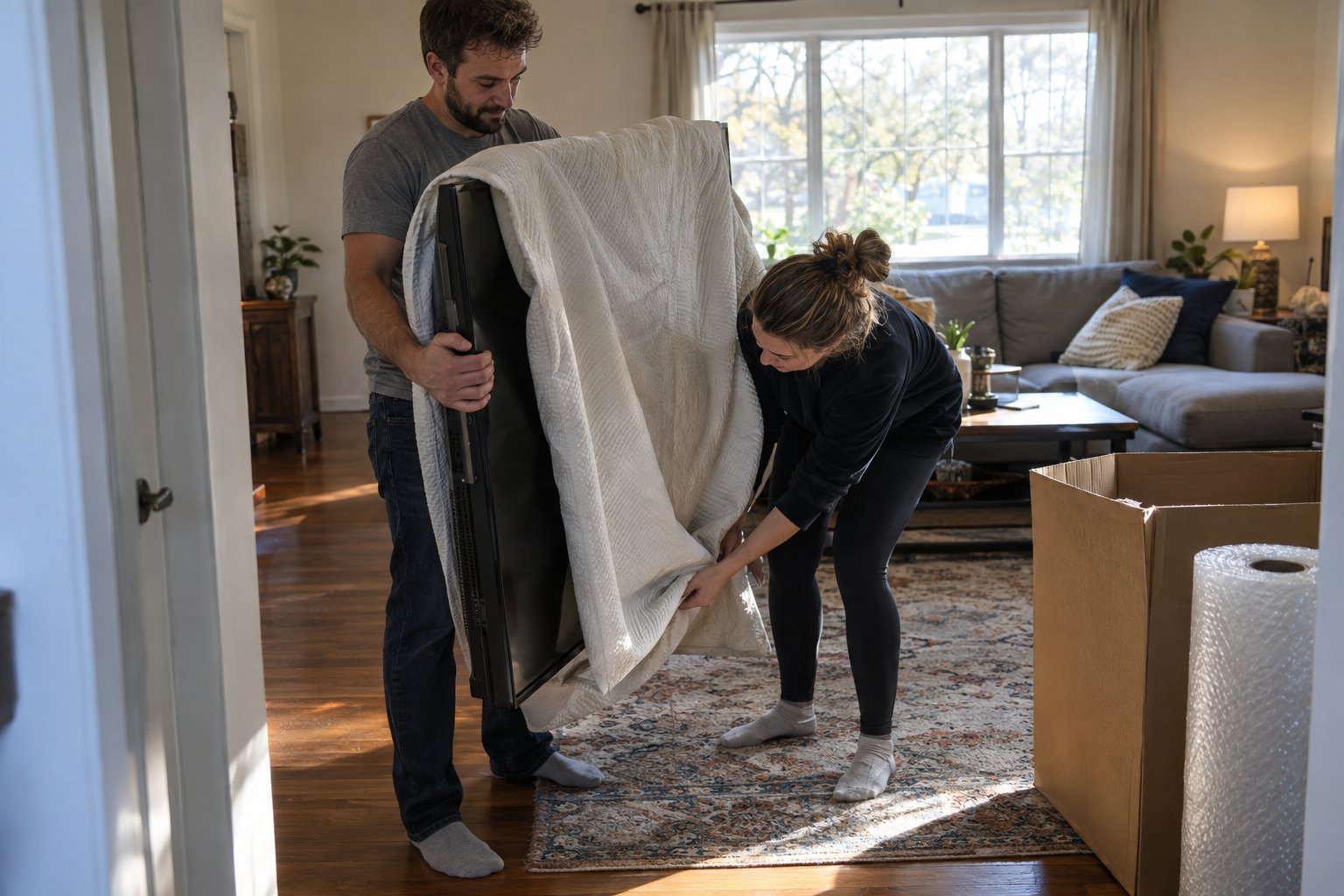
A flat-screen television is one of the most damage-vulnerable items in any home move. The ideal solution is to use the original manufacturer's box with the original foam inserts — if you still have it, keep it specifically for moves. If the original packaging is gone, use a specially sized TV moving box available at most moving supply stores. Wrap the screen in a soft moving blanket or anti-static bubble wrap before placing it in the box. Never lay a flat-screen TV face down on its screen during transport; always keep it upright or slightly tilted, screen facing inward against a padded surface.
Lamp bases and shades need to be packed separately. Remove lampshades and pack them independently — ideally in boxes where they can be the topmost item with nothing pressing down on them. Wrap lamp bases individually in packing paper or bubble wrap. If a base is tall and narrow, consider sliding it into a wardrobe box upright, padded by soft items on all sides. Label every lamp box clearly so movers know which end is up.
Framed artwork and mirrors are among the most break-prone items in a living room move. Use mirror boxes or picture boxes sized to fit the piece. Apply painter's tape in an X pattern across mirror glass before wrapping — if the glass does crack during transport, the tape helps hold the shards together and prevents them from scattering. Wrap each piece in packing paper, then a layer of bubble wrap, and mark the box "FRAGILE" on multiple sides. Stand framed pieces upright in the moving truck; never lay them flat with heavy boxes on top.
Use small boxes exclusively for books — large boxes packed with books become dangerously heavy and are far more likely to have their bottoms give out. Fill small boxes with books spine-down and pages facing outward for maximum stability. Mix heavy books with lighter items like throw pillows or folded blankets if needed to keep box weight manageable. Pack decorative shelving items in medium boxes with generous padding between each piece.
Roll area rugs tightly rather than folding them — folding creates creases that can be difficult to remove. Secure rolled rugs with rope or moving straps and wrap the outside with plastic stretch wrap to protect against dirt and moisture during the move. Throw pillows and blankets make excellent padding material inside boxes containing fragile items — use them strategically rather than giving them their own box.
Large furniture is where living room moves most often go wrong. Sofas get scratched squeezing through doorways. Entertainment centers collapse under their own weight when moved incorrectly. A little preparation makes an enormous difference.
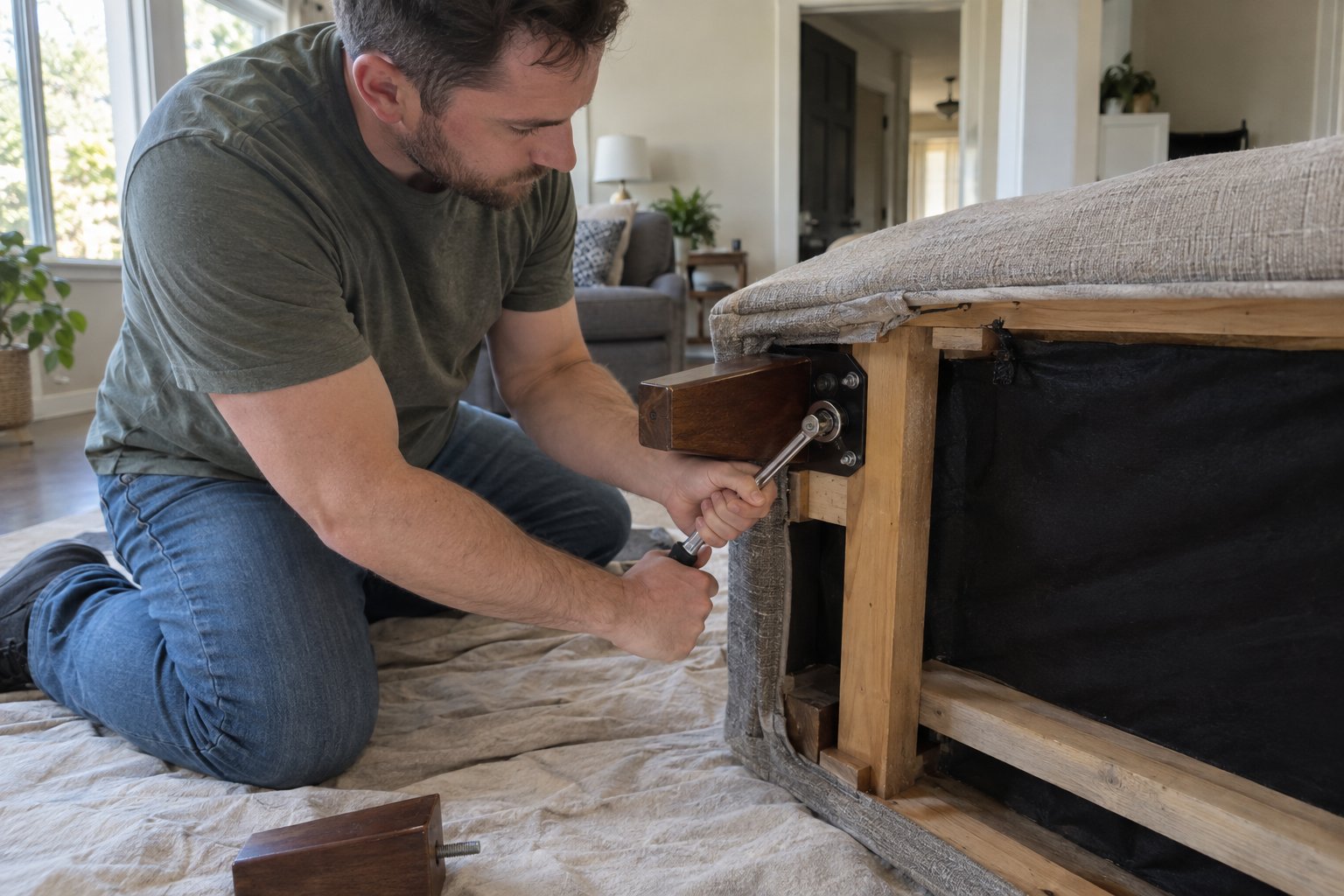
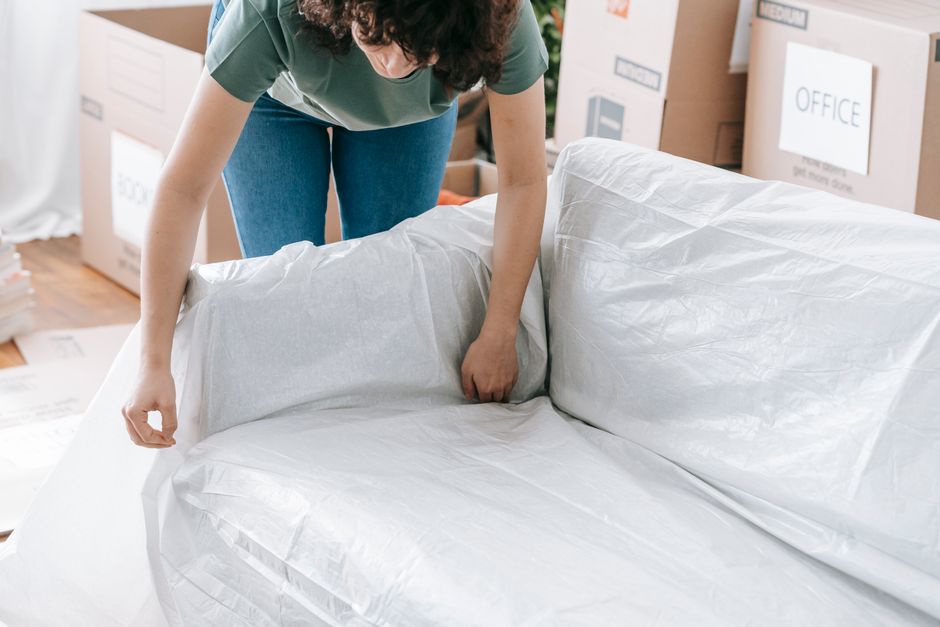
Before attempting to move a sofa, measure your doorways, hallways, and stairwells. Many sofas need to be tilted, turned on their side, or even partially disassembled — removing legs, for example — to fit through standard doorways. Wrap the entire sofa in moving blankets secured with stretch wrap to protect the fabric from snags, dirt, and scuff marks. For sectional sofas, disassemble all sections before moving — trying to maneuver a fully assembled sectional through a doorway is a recipe for frustration and damage.
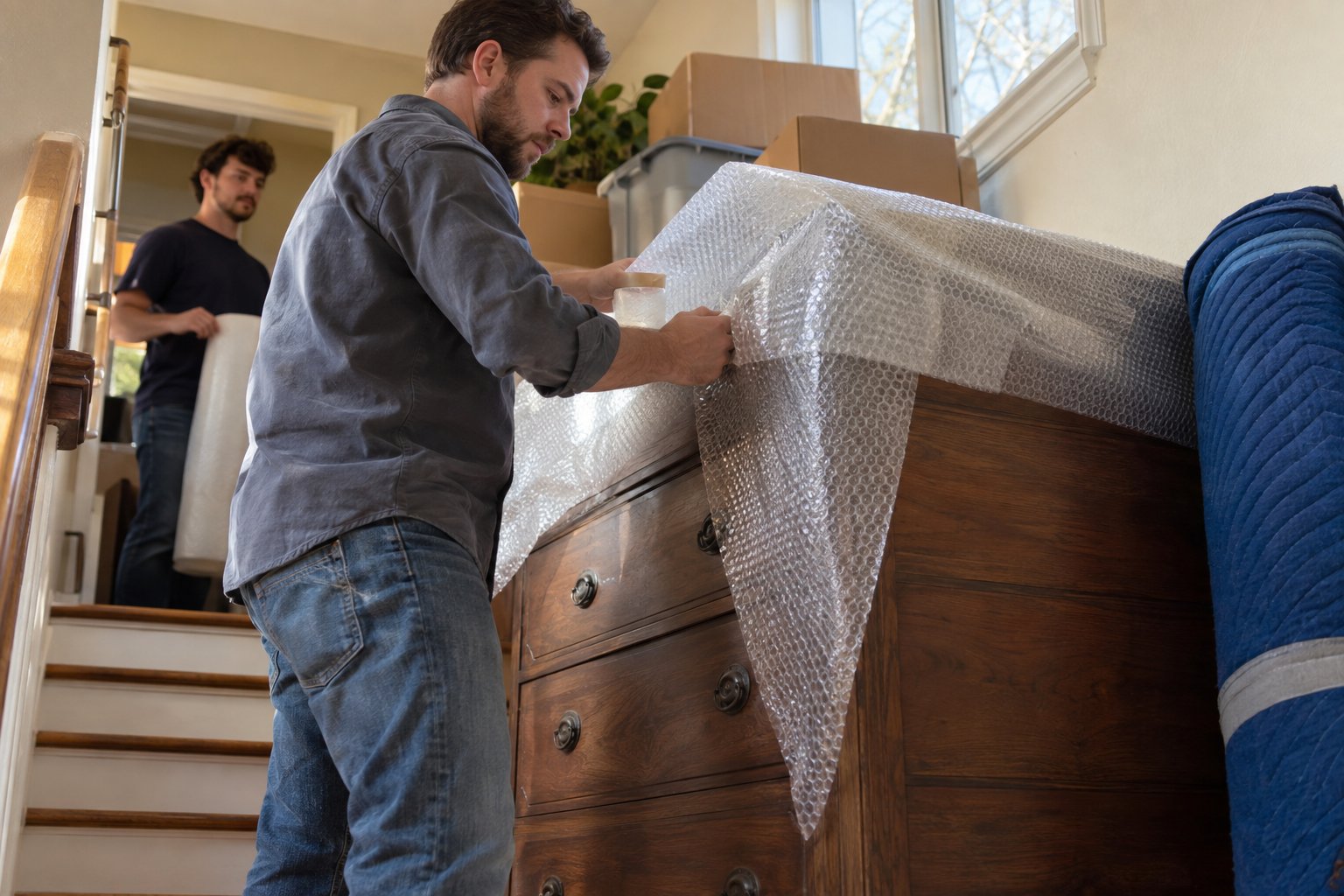
Remove all items from shelves before moving any entertainment center or media console. Attempt to disassemble where possible — many flat-pack furniture pieces can be broken down into panels that are far easier and safer to move than an assembled unit. Keep all hardware (screws, bolts, brackets) in a labeled zip-lock bag taped to the back of the piece. Wrap exposed surfaces in moving blankets and use furniture dollies to move heavy pieces across floors without dragging.
Always empty bookshelves completely before moving them. Even shelves that appear sturdy can warp, crack, or collapse when moved fully loaded. Lay taller bookshelves on their side for transport if they are not stable enough to stand upright safely in the truck. Protect corners with foam edge guards — bookshelf corners are notorious for gouging walls and doorframes during a move.
On moving day itself, a few final steps will make your living room portion of the move significantly easier.
If the thought of coordinating all of this feels overwhelming, you do not have to do it alone. Wise Guys Moving's professional team handles living room furniture with the care and experience it deserves. Call us at (334) 610-1593 or request your free moving quote to get started.
Even experienced movers make predictable mistakes when it comes to the living room. Being aware of them ahead of time puts you in a much stronger position.
Ideally, begin packing your living room one to two weeks before moving day. Start with items you use least frequently — decorative pieces, books, and extra throw pillows — and work your way toward everyday items like the remote controls and lamps you use nightly. This staged approach prevents last-minute chaos and gives you time to gather the right packing materials for each item type.
The safest way to move a flat-screen TV is in its original manufacturer's box with the original foam inserts. If you no longer have the original packaging, use a properly sized TV moving box from a moving supply store. Always wrap the screen in a soft blanket or anti-static bubble wrap, and keep the TV upright during transport — never lay it flat on its screen, which can crack the panel under the weight of other items.
It depends on your sofa and your home's layout. At minimum, remove all sofa legs to reduce the overall footprint. For sectional sofas, always separate all sections before attempting to move them. Measure your doorways, hallways, and stairwells in advance — many sofas need to be tilted on their side or maneuvered at an angle to clear a standard doorframe. Attempting to force an assembled sectional through a narrow doorway is a common cause of furniture and wall damage.
Yes — professional movers are trained and equipped to handle large, heavy, and awkward living room furniture safely. Wise Guys Moving's team has experience navigating sofas, entertainment centers, pianos, and other oversized items through tight spaces without damaging your furniture, walls, or floors. Hiring professionals is especially valuable for multi-story homes, narrow hallways, or moves involving very heavy or high-value pieces.
Use mirror boxes or picture boxes sized appropriately to the piece. Apply painter's tape in an X pattern across the glass surface — if the glass cracks during transport, the tape helps contain the shards. Wrap each piece in packing paper first, then a layer of bubble wrap. Stand framed pieces upright in the moving truck rather than laying them flat, and label every box 'FRAGILE' on multiple sides so movers know to handle it with care.

Ideally, begin packing your living room one to two weeks before moving day. Start with items you use least frequently — decorative pieces, books, and extra throw pillows — and work your way toward everyday items like the remote controls and lamps you use nightly. This staged approach prevents last-minute chaos and gives you time to gather the right packing materials for each item type.
The safest way to move a flat-screen TV is in its original manufacturer's box with the original foam inserts. If you no longer have the original packaging, use a properly sized TV moving box from a moving supply store. Always wrap the screen in a soft blanket or anti-static bubble wrap, and keep the TV upright during transport — never lay it flat on its screen, which can crack the panel under the weight of other items.
It depends on your sofa and your home's layout. At minimum, remove all sofa legs to reduce the overall footprint. For sectional sofas, always separate all sections before attempting to move them. Measure your doorways, hallways, and stairwells in advance — many sofas need to be tilted on their side or maneuvered at an angle to clear a standard doorframe. Attempting to force an assembled sectional through a narrow doorway is a common cause of furniture and wall damage.
Yes — professional movers are trained and equipped to handle large, heavy, and awkward living room furniture safely. Wise Guys Moving's team has experience navigating sofas, entertainment centers, pianos, and other oversized items through tight spaces without damaging your furniture, walls, or floors. Hiring professionals is especially valuable for multi-story homes, narrow hallways, or moves involving very heavy or high-value pieces.
Use mirror boxes or picture boxes sized appropriately to the piece. Apply painter's tape in an X pattern across the glass surface — if the glass cracks during transport, the tape helps contain the shards. Wrap each piece in packing paper first, then a layer of bubble wrap. Stand framed pieces upright in the moving truck rather than laying them flat, and label every box 'FRAGILE' on multiple sides so movers know to handle it with care.