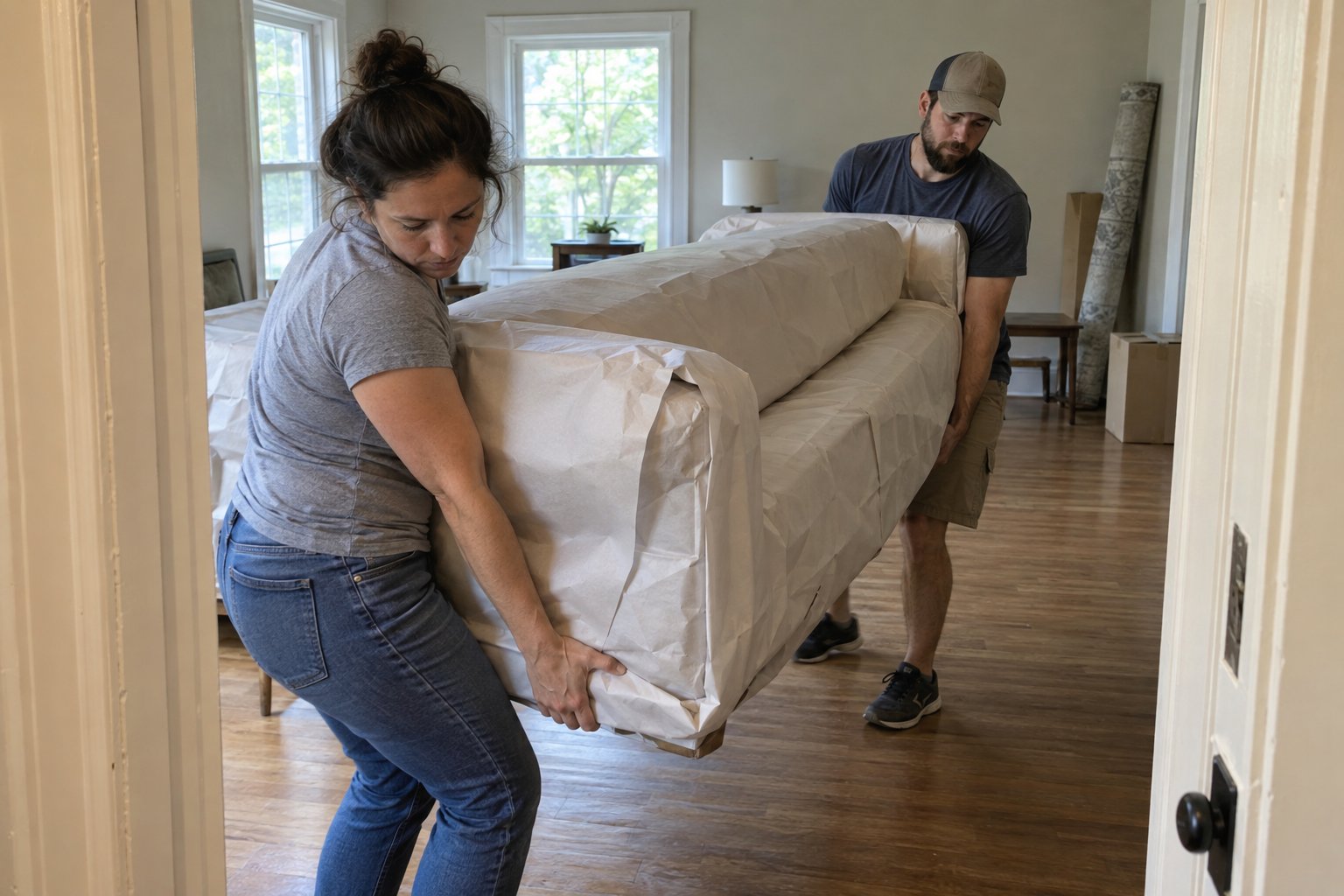
Deciding between a DIY move and hiring local movers comes down to four things: how much time you have, how much physical effort you're willing to put in, how much risk you can tolerate, and what your specific move actually requires. Neither option is automatically the right call. The better choice depends on your home, your schedule, and how much of the heavy lifting you want to take on yourself.
A DIY move means you rent the truck, recruit the help, and handle every box, dresser, and mattress yourself from start to finish. It gives you full control over the schedule and the process, but it also puts every decision and every lift on your shoulders.
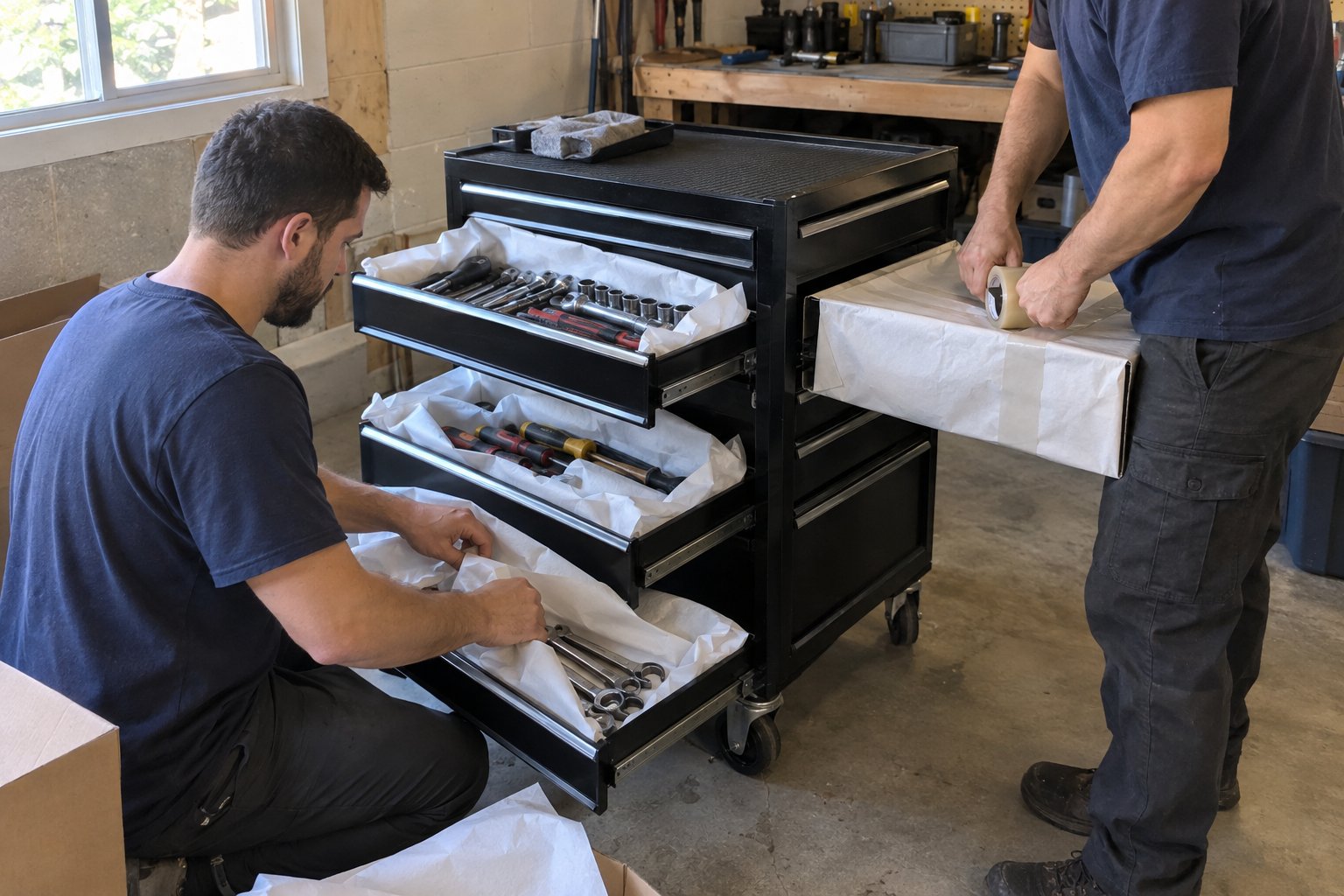
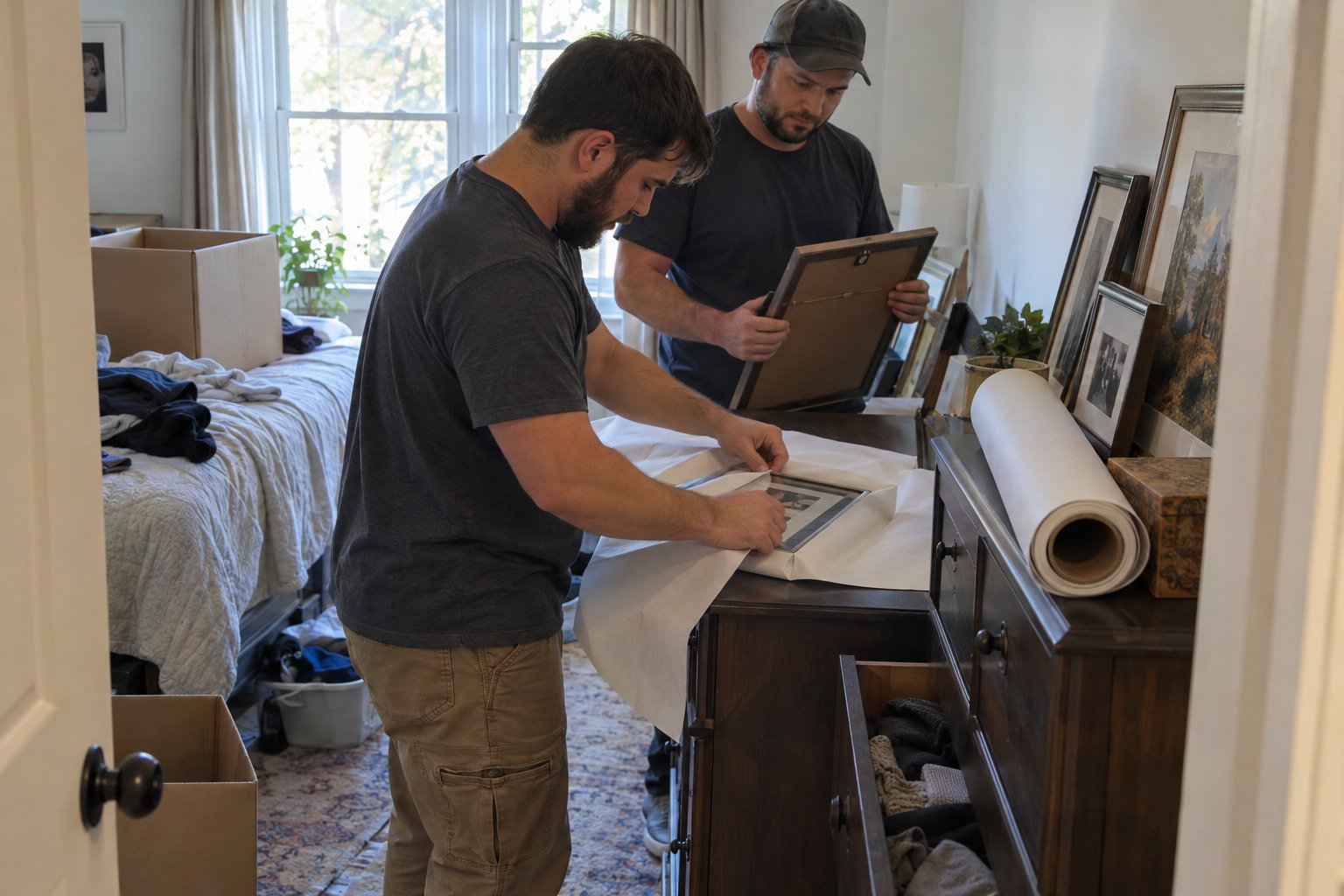
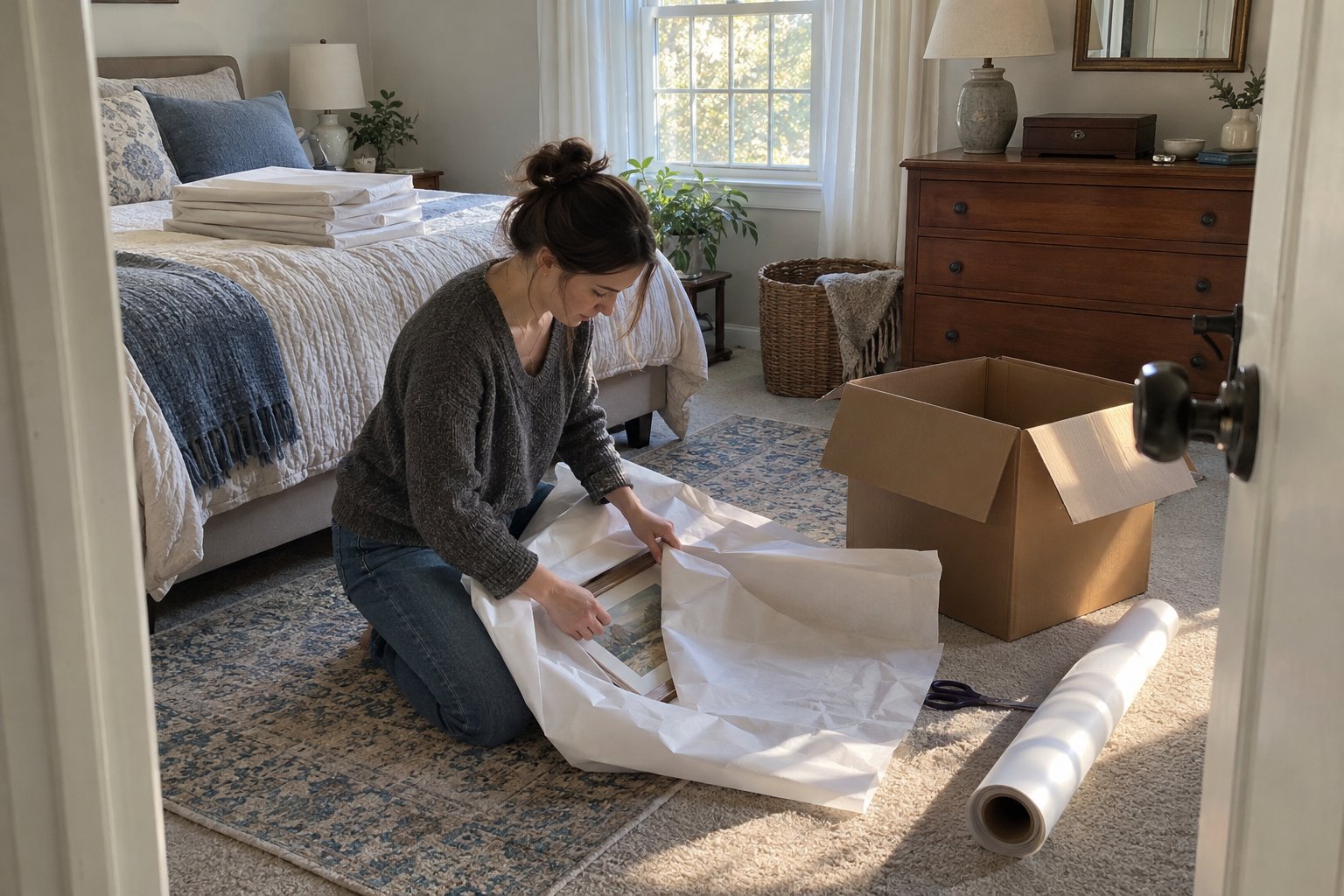
Beyond the obvious driving and loading, a DIY move means sourcing boxes and padding, figuring out how to load a truck so nothing shifts in transit, coordinating friends or family around their own schedules, and handling any awkward or heavy items without the tools or experience movers bring to the job. If something goes wrong, a dropped dresser, a scratched doorframe, a truck that's harder to maneuver than expected, you're the one dealing with it in the moment.
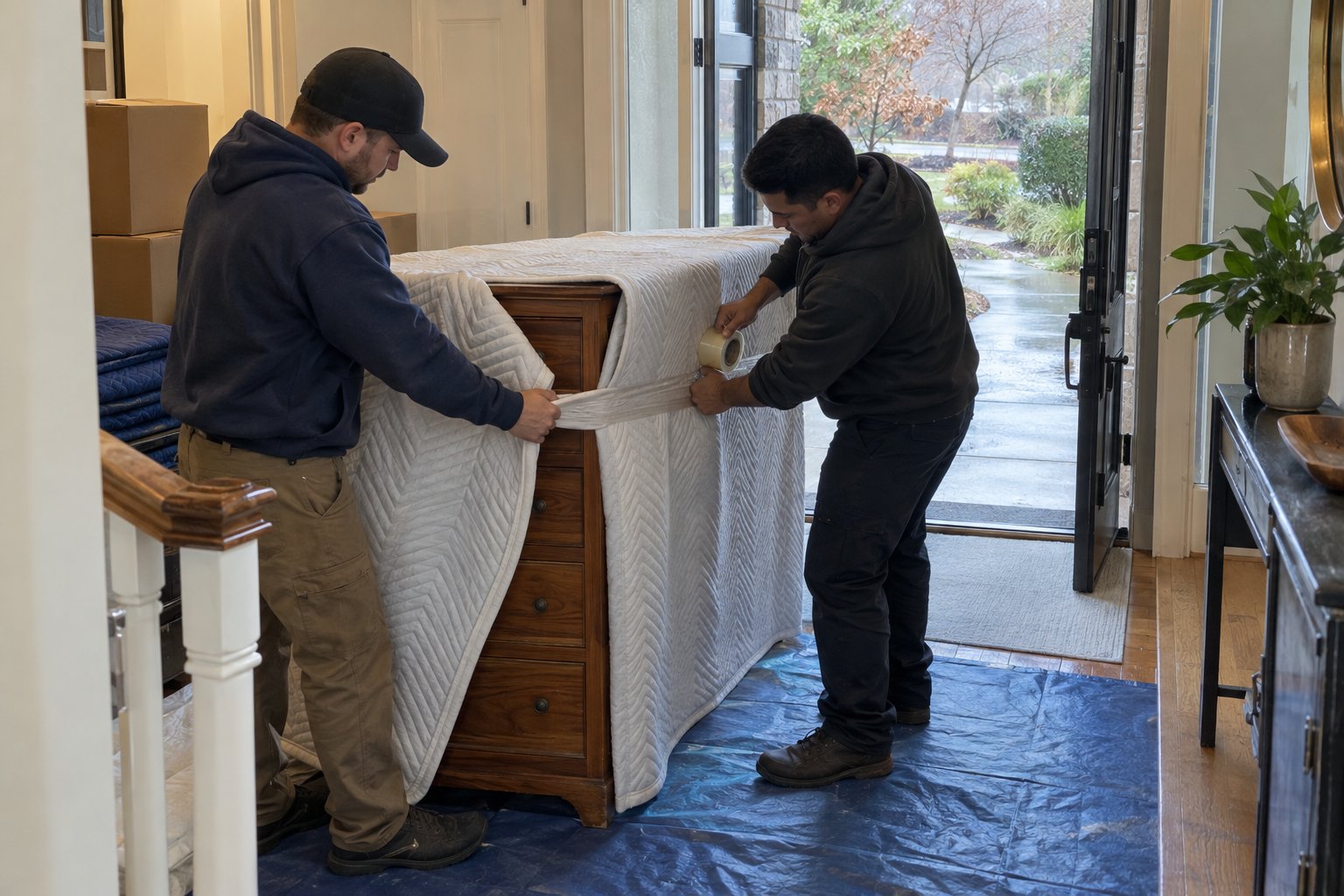
Hiring local movers through a service like local moving means a trained crew handles the loading, carrying, and unloading, often including furniture protection and basic disassembly and reassembly of beds and tables. Your main job shifts from physical labor to coordination: confirming details, pointing out fragile or awkward items, and being available on moving day.
A professional crew brings equipment like dollies, furniture pads, and straps that most households don't own, along with the practiced technique of moving heavy items through doorways and stairwells without damaging the home or the item. That experience tends to matter most on moves with a lot of furniture, stairs, or a tight timeline.
Side by side, the two approaches trade off in predictable ways. A DIY move generally takes longer because you're learning as you go and working at the pace of whoever showed up to help. Hiring movers compresses the timeline since a crew works in parallel and already knows the most efficient way to load and carry.
On effort, there's no real contest: a DIY move means you and your helpers do the lifting, the driving, and the problem-solving. Hiring movers trades that physical effort for a professional crew taking on the job, which you can get a clear picture of with a written quote rather than guessing.
Risk is where the gap widens further. A DIY move puts the risk of injury, item damage, and property damage (scraped walls, scratched floors) on you and whoever you recruited to help. A professional crew carries insurance and experience that reduces those risks, though it doesn't eliminate them entirely, which is why it's worth understanding how a moving company's insurance and liability coverage actually works before you book.
As a rule of thumb, plan for roughly a day of work per average-sized room when moving yourself, more if stairs, narrow hallways, or heavy furniture are involved. That estimate assumes a small team working steadily, not a solo effort.
A DIY move tends to suit smaller households, studio or one-bedroom apartments, and moves where you have reliable help and a flexible schedule. It also fits people who want full control over the pace of the day and don't mind the physical work involved.
It's a reasonable fit if you're moving light furniture, don't have much to transport, and your new place and old place both have easy loading access, no tricky stairwells or long carries from the door to the truck.
Hiring local movers makes more sense for larger households, homes with stairs or heavy furniture, and anyone working with a tight timeline or limited help. It's also the better fit if you'd rather not take on the physical risk of carrying heavy or awkward items yourself.
If you're short on people to help, worried about protecting floors and walls during the move, or simply want the day to run smoothly without managing every detail yourself, a local crew takes that weight off your plate.
For a typical household move involving a full apartment or house, not just a handful of boxes, hiring local movers is usually the better fit. The combination of reduced physical risk, a faster timeline, and the equipment a crew already has on hand outweighs the appeal of handling it entirely yourself, especially once furniture, stairs, or a moving deadline enter the picture.
A DIY move still makes sense for small, simple relocations with light furniture and willing help. The honest answer is to match the approach to the size and complexity of your move rather than defaulting to one option out of habit.
Start by counting what you actually need to move: furniture pieces, boxes, and anything oversized or fragile. Then check your access points at both ends, stairs, elevators, narrow doorways, and long walks from the door to the curb all add effort and time regardless of which approach you choose.
If you're still unsure, request a written quote for professional help and compare it honestly against what a weekend of your own time and a sore back are worth to you. The guide to choosing a moving company walks through what to look for once you've decided hiring is the right direction, and if your move crosses state lines rather than staying local, the considerations shift further, which is covered in our overview of cross country moves.
Before you file this decision away, it's worth updating your records regardless of which option you pick. Whether you move yourself or hire a crew, don't forget to file your change of address with USPS so mail and packages follow you without a gap.
Planning your move? Request a quote from Wise Guys Moving.
If you're moving more than a small apartment's worth of furniture, have stairs at either end, or have fewer than two or three reliable helpers, it's worth at least getting a written quote from local movers before committing to a DIY approach.
Let them know about stairs, narrow hallways, elevators, or any particularly heavy or awkward furniture ahead of time. That lets the crew bring the right equipment and plan the loading order before they arrive.
Yes, some households pack boxes themselves and hire a crew just for loading, carrying, and transport. This splits the physical effort while still getting professional handling for the heaviest or most awkward items.
Aim to decide at least a few weeks before your move date, especially during busier seasons, so you have time to request quotes, book a crew, or line up help and a truck rental if you go the DIY route.
Physical injury and property damage are the two most common surprises. Carrying heavy furniture through doorways or down stairs without the right technique or equipment is where most DIY moves run into trouble.