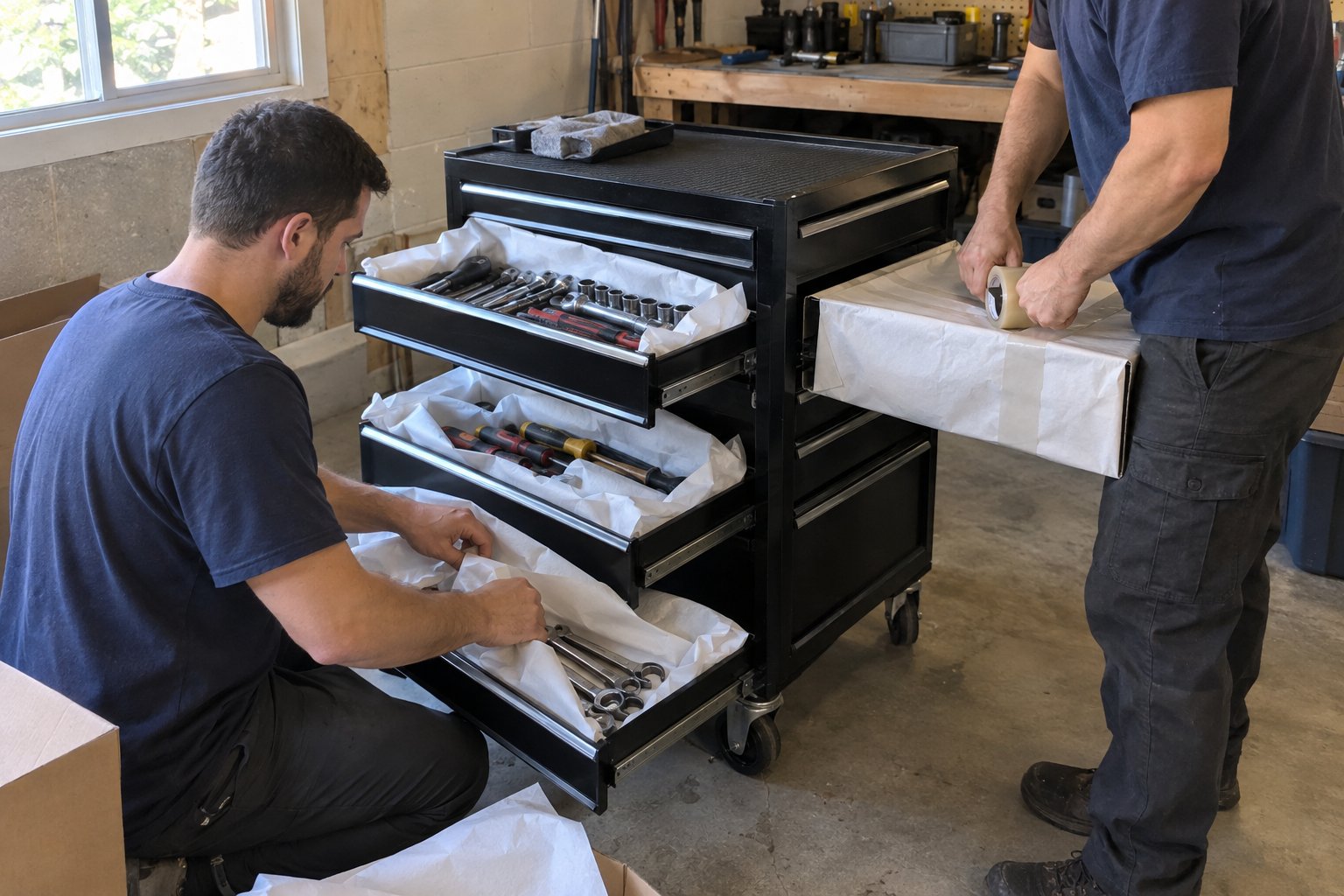
Packing a tool chest and workbench for moving means handling two very different problems at once: a tool chest is heavy, rolling, and full of drawers that love to fly open, while a workbench is often bolted together, bolted to a wall, or simply too awkward to carry whole. Get the sequence wrong and you end up with a chest that tips off a dolly or a workbench that will not go back together the way it came apart. Get it right and both items move almost as easily as any other furniture.
These two pieces do not behave like normal furniture because their weight is uneven, their contents are hazardous or sharp, and their parts are rarely labeled. A dresser is heavy but balanced. A loaded tool chest is heavy on one side and wants to roll or tip the moment a drawer slides open mid-carry. A workbench, meanwhile, may hide steel tools, power cords, and fasteners under a layer of sawdust that makes everything harder to grip.
Both items also tend to collect loose items nobody thinks about until moving day: half-used cans of oil, loose blades, extension cords wound around a leg. Treating them like "just garage stuff" is how boxes end up punctured or trucks end up smelling like gasoline. A quick pass through our full guide to packing and moving a garage is worth doing first if you have not sorted the rest of the space yet, since the bench and chest are usually the two heaviest items in it.
Start by sorting the contents, removing anything flammable or pressurized, and locking or taping every drawer shut before the chest ever leaves its spot. A tool chest that arrives with its drawers still packed and secured saves you an entire re-sorting session at the new place.
Pull out anything that cannot legally or safely ride in a moving truck: propane canisters, open solvents, aerosol lubricants, and gas-powered tool attachments with fuel still in them. These need to be used up, given away, or disposed of locally rather than packed.
Most rolling tool chests have a built-in locking bar: engage it. If yours does not lock, wrap a ratchet strap or heavy packing tape around the entire cabinet, drawers included, so nothing can slide open under its own weight during transport.
Loose wrenches and sockets rattle and chip finishes over a long drive. A folded towel or a layer of packing paper between tool trays keeps metal from grinding against metal without adding much bulk.
Most workbenches come apart at the legs, the top, or wherever they were bolted together or anchored to a wall, and taking them down to those pieces is almost always easier than moving one solid unit. A disassembled bench also protects your doorways and stairwells from gouges that a rigid six-foot top can leave behind.
Before removing a single bolt, take a few photos of how the legs, braces, and top connect. Workbenches rarely come with labeled hardware, and a photo saves real guesswork during reassembly.
Group bolts, washers, and brackets by the section they came from and label each bag by name, not just "bench parts." A bag taped directly to the matching leg or panel is even harder to lose.
A mounted vise adds significant weight to one corner and can crack a benchtop if the whole assembly gets tipped or dropped. Unbolt it and wrap it on its own.
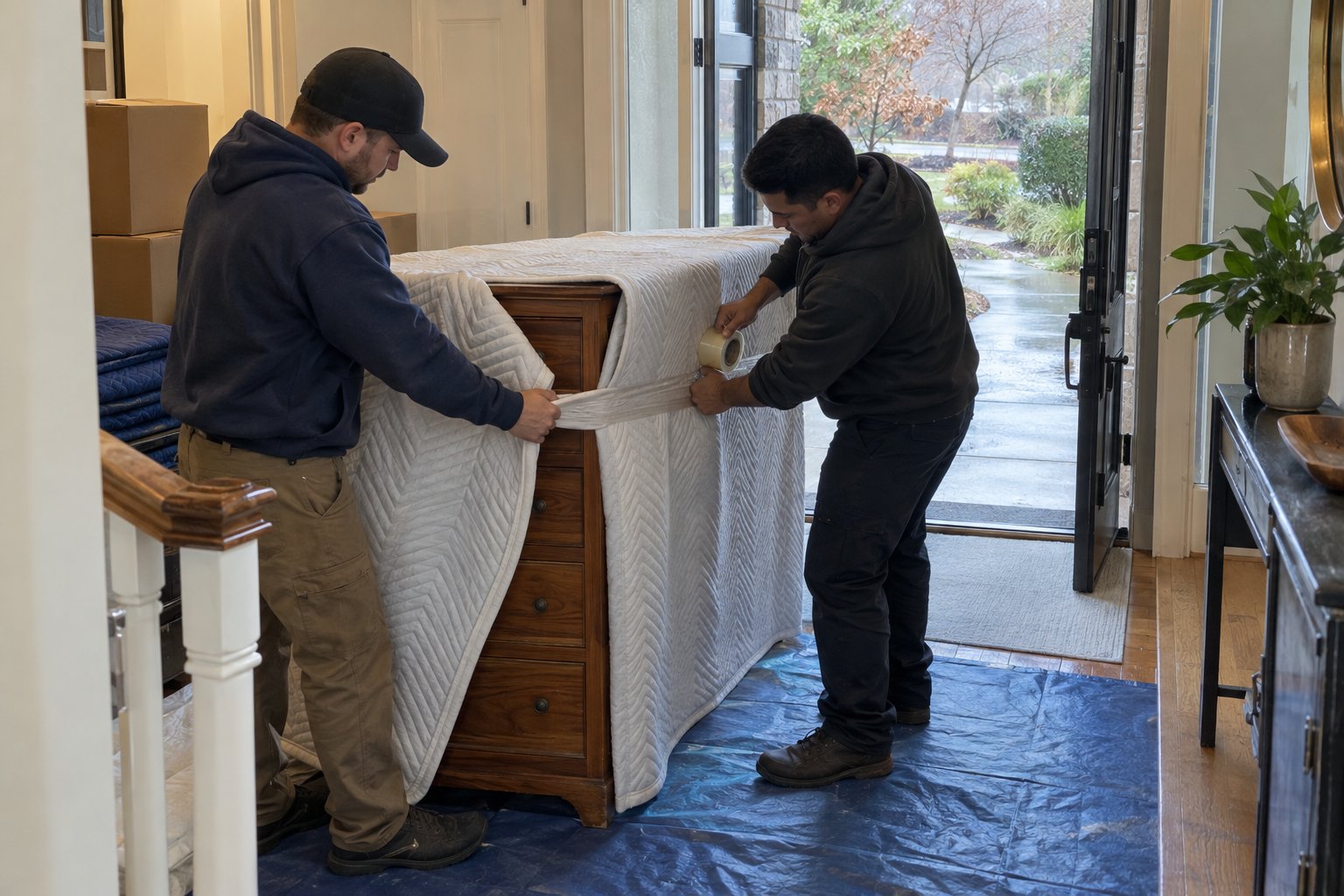
A furniture dolly, ratchet straps, moving blankets, and a set of labeled hardware bags cover almost every part of this job. The tool chest needs the dolly and straps; the workbench needs the blankets and bags; both benefit from a layer of stretch wrap to keep drawers and loose boards from shifting. If you would rather have a crew bring the right equipment and handle the lifting, our packing services cover exactly this kind of specialty prep alongside the rest of your boxes.
Tool chests should ride upright, strapped to the truck wall near the front where weight sits low and stable, never stacked under other items. Workbench pieces travel better flat and stacked by size, with the heaviest panels on the bottom and padding between every layer to stop wood from rubbing against metal edges.
If the chest is too heavy to control confidently on a ramp, that is a sign to call in help rather than risk a drawer breaking loose on an incline.
Hire help when the chest is too heavy to control on your own, when the bench does not disassemble cleanly, or when you simply do not want to spend a weekend on it. A loaded rolling tool chest can easily weigh several hundred pounds, and a slip on stairs or a ramp is not worth saving a service call.
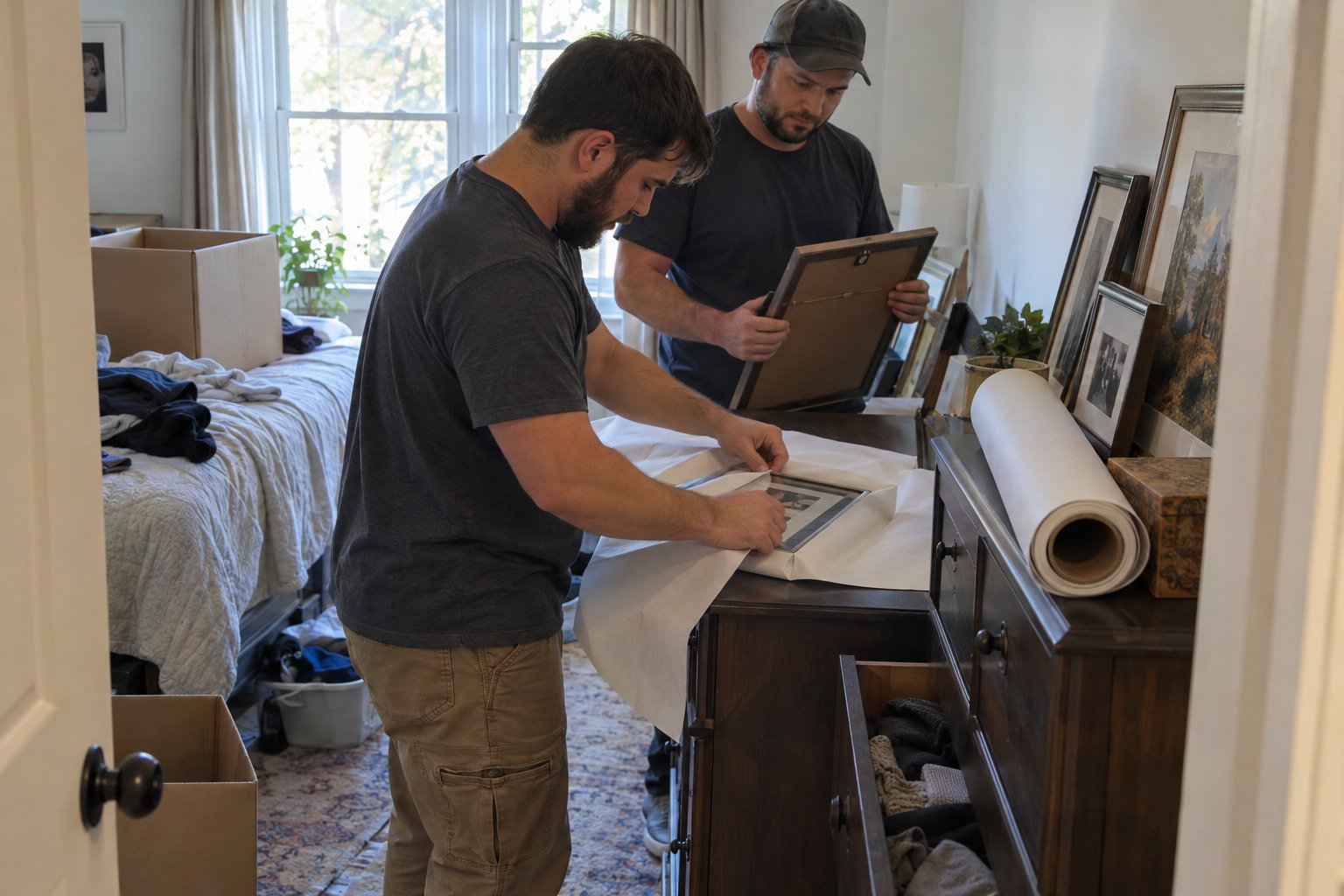
Wise Guys Moving crews regularly carry heavy furniture and boxes within a home, load and unload trucks, and protect floors and furniture with pads and wrapping on moving day, which covers the physical part of getting a chest and bench out the door safely. If you are weighing DIY against bringing in help for the whole move, our local moving team can walk the space with you and quote the job before moving day arrives.
Yes, as long as every drawer is locked or taped shut and the chest is not so heavy that it becomes unsafe to tilt onto a dolly. Removing only the heaviest items, like full sets of sockets or dense metal parts, can make the chest easier to control even if the rest stays packed.
Drain fuel from gas-powered tools and use up or properly dispose of any open containers of oil, solvent, or lubricant before moving day. Moving trucks are not equipped to safely transport flammable liquids, and most moving companies will not load them.
Bag bolts, washers, and brackets by the section of the bench they came from, label each bag clearly, and tape it directly to the matching part when possible. Keeping all hardware bags in one small labeled box as a backup prevents a single lost bag from stalling reassembly.
Disassembled almost always travels better, since a full-size workbench is awkward to carry through doorways and stairwells and puts strain on joints that were not designed to be lifted as one rigid unit. Taking it down to the top, legs, and braces also reduces the risk of scratching floors and walls.
A fully loaded rolling tool chest can weigh several hundred pounds depending on its size and how many tools it holds, which is often more than it looks like from the outside. If you cannot confidently control it on a flat surface, moving it down a ramp or stairs is a job better left to professional movers.