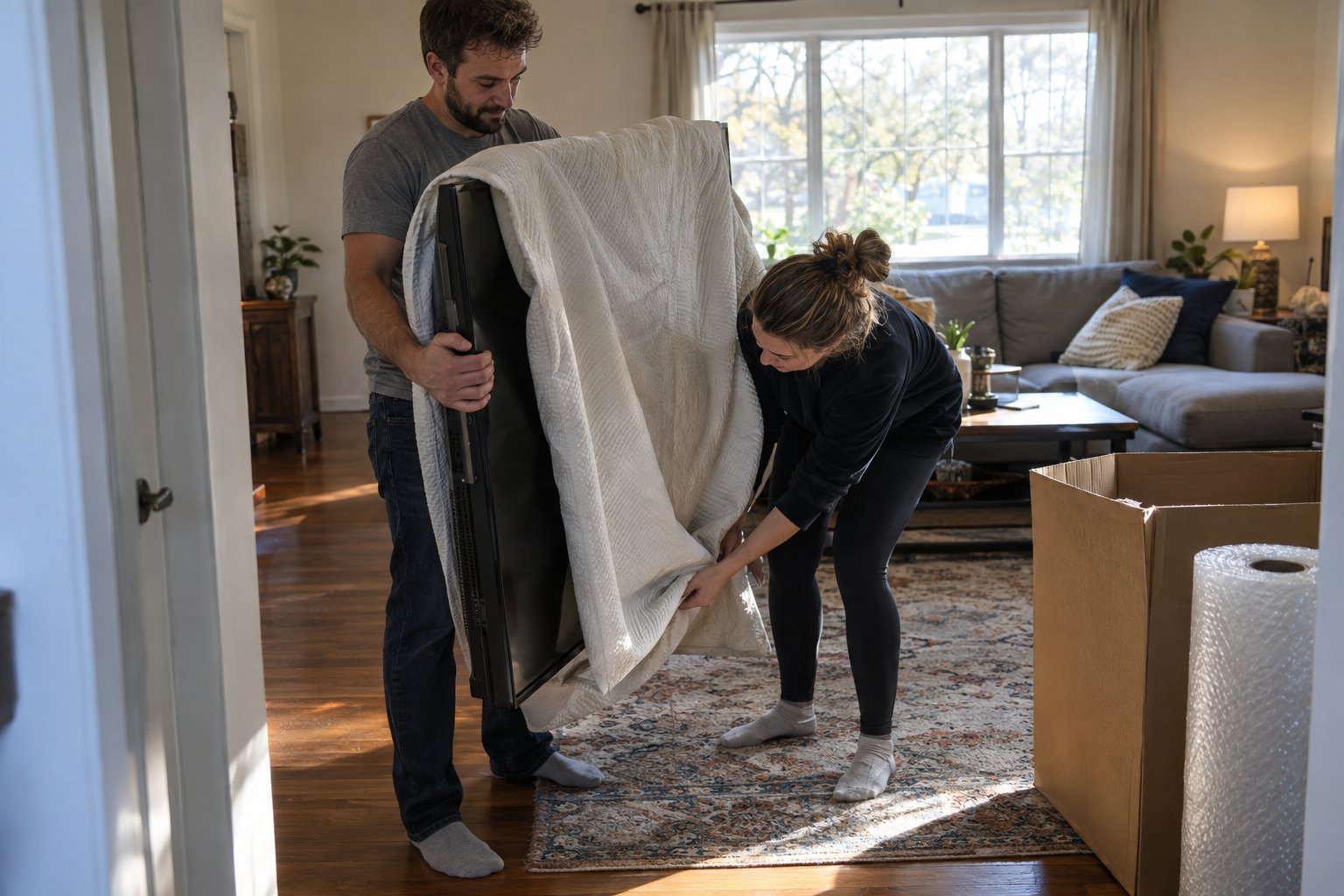
When homeowners work through their room-by-room moving plan, the home library almost always gets underestimated — but knowing how to pack and move a home library the right way can save you from cracked spines, water-damaged covers, buckled shelving units dragged out without being disassembled, and a new home where hundreds of books are stacked in random boxes with no system for ever finding them again. The home library is deceptively demanding: it is one of the heaviest rooms in the house per square foot, holds items that are both financially and sentimentally irreplaceable, and requires a packing strategy that goes far beyond tossing books into the nearest open box.
Whether you are relocating across Auburn or moving to an entirely new city, this guide walks you through every step of packing and moving your home library safely and efficiently. When you are ready to leave the hard work to the professionals, call Wise Guys Moving at (334) 610-1593 or get a free moving quote today.
The home library presents a category of moving challenges that are entirely different from any other space in the home. Unlike the kitchen — where the primary concern is heavy appliances and fragile dishware — or the garage — where hazardous materials and bulky power tools dominate the risk profile — the home library combines sheer, concentrated weight, moisture-sensitive paper and leather bindings, large freestanding or built-in shelving units, decorative items like globes and framed artwork, and often a collection of rare or antique books that require handling far more careful than a standard paperback novel.
Think about what a typical home library actually contains: hardcover reference sets that weigh several pounds each, paperbacks packed tightly into shelves that have bowed under their load over the years, leather-bound or cloth-bound books that scuff or crack when slid against each other without padding, framed prints or maps hung on the walls, a rolling library ladder mounted on a rail system, reading lamps with delicate shades, a desk or armchair with side tables, and decorative items ranging from antique bookends to ceramic figurines. Each of these categories carries its own specific risk in transit. Books in overfilled boxes will blow out the bottom seams. Hardcovers sliding spine-down crush their bindings. Moisture from a poorly sealed truck can warp paperback covers overnight. Shelving units left assembled create enormous, top-heavy loads that shift dangerously on curves.
Plan to dedicate at minimum a full day exclusively to the home library. If yours spans a full room with floor-to-ceiling shelving and several hundred volumes, start at least two to three weeks before moving day so you can sort, donate, and pack in manageable stages rather than in a panicked last-minute rush.
Before you pack a single book, take a complete inventory of everything in the library and make honest decisions about what is worth transporting, what can be donated, and what has simply run its useful life in your collection.
Every book you donate or sell before moving day is a book you do not have to lift, box, label, load, unload, and shelve again. Go through your collection shelf by shelf and pull anything you have not opened in years, anything you purchased with good intentions and never read, and any duplicate copies you accumulated over time. Local libraries, used bookstores, Little Free Libraries, and charitable organizations frequently accept book donations, and many will arrange a pickup if your volume is significant enough.
Be especially honest about heavy reference books — encyclopedias, legal volumes, medical directories, and oversized art books — that have been largely replaced by online resources. These are among the heaviest items in any library and, if their content is freely available online, may not be worth the weight cost of transporting them.
If your collection includes first editions, signed copies, antique bindings, or books with significant monetary value, set them aside before general packing begins. These volumes deserve individual wrapping in acid-free tissue paper, placement in rigid boxes with extra cushioning on all six sides, and ideally transport in your personal vehicle rather than the moving truck. Consider photographing high-value books before packing them as a record for insurance purposes.
Packing a home library with the wrong materials is one of the fastest ways to damage a collection that took years to build. The supplies you choose matter as much as the technique you use.
Books are among the densest items in any home. A standard large moving box filled entirely with hardcover books can easily exceed 60–70 pounds — far beyond what most people can safely lift, and heavy enough to split box seams under its own load. Use small boxes exclusively for books. The same boxes typically used for canned goods, tools, or kitchen staples are ideal. If you use medium boxes, keep them no more than half full of books and fill the remaining space with lighter items like throw blankets or soft décor to bring the weight down.
Newspaper ink transfers onto book covers and page edges, leaving stains that are difficult or impossible to remove. Use plain white packing paper to wrap individual books or to fill gaps between volumes in each box. Bubble wrap is appropriate for oversized art books, fragile antique bindings, or decorative items like bookends and figurines, but is overkill for most standard paperbacks.
Regardless of box size, run two strips of high-quality packing tape along the bottom seam of every box before loading it with books. Books settle and shift in transit, and the concentrated weight at the base of a book box places enormous stress on the bottom seam. A single strip of tape is rarely sufficient. Double-tape the bottom, then tape the sides of the bottom flap as well for heavy loads.
There is a right way and several wrong ways to pack books, and the difference matters for anything you intend to keep long-term.
Books can be packed in three orientations depending on their size and the box configuration:
Never pack books spine up (pages down), as this position stresses the binding and can cause pages to separate from the spine over time.
A book box should close flat at the top with light pressure, not require force. If you are pressing down on the lid to get the flaps to meet, the box is overfilled, the books at the top of the stack are under compression, and the bottom seam is under more stress than it can reliably hold. If a box will not close comfortably, remove two or three books and start a new box.
One of the most common post-move frustrations in a home library is having no idea which box holds which subject, series, or section of the collection. Label every box on at least two sides — not just the top — with the shelf or category it came from. Use a consistent system that matches how you intend to organize the library in your new home. Labels like "Fiction A–G," "Reference — Science," or "Kids' Books — Picture Books" will save you hours of sorting on move-in day.
Bookshelves are among the most awkward large furniture pieces to move, and a fully loaded bookshelf is among the most dangerous loads to attempt without proper planning.
No matter how stable a bookshelf appears when standing still, it must be completely emptied before it is moved. The lateral forces of carrying, tilting, or loading a shelf onto a truck will shift even tightly packed books against the side panels, warping the shelf structure or sending the entire load toppling. Empty every shelf completely before the shelving unit leaves its position.
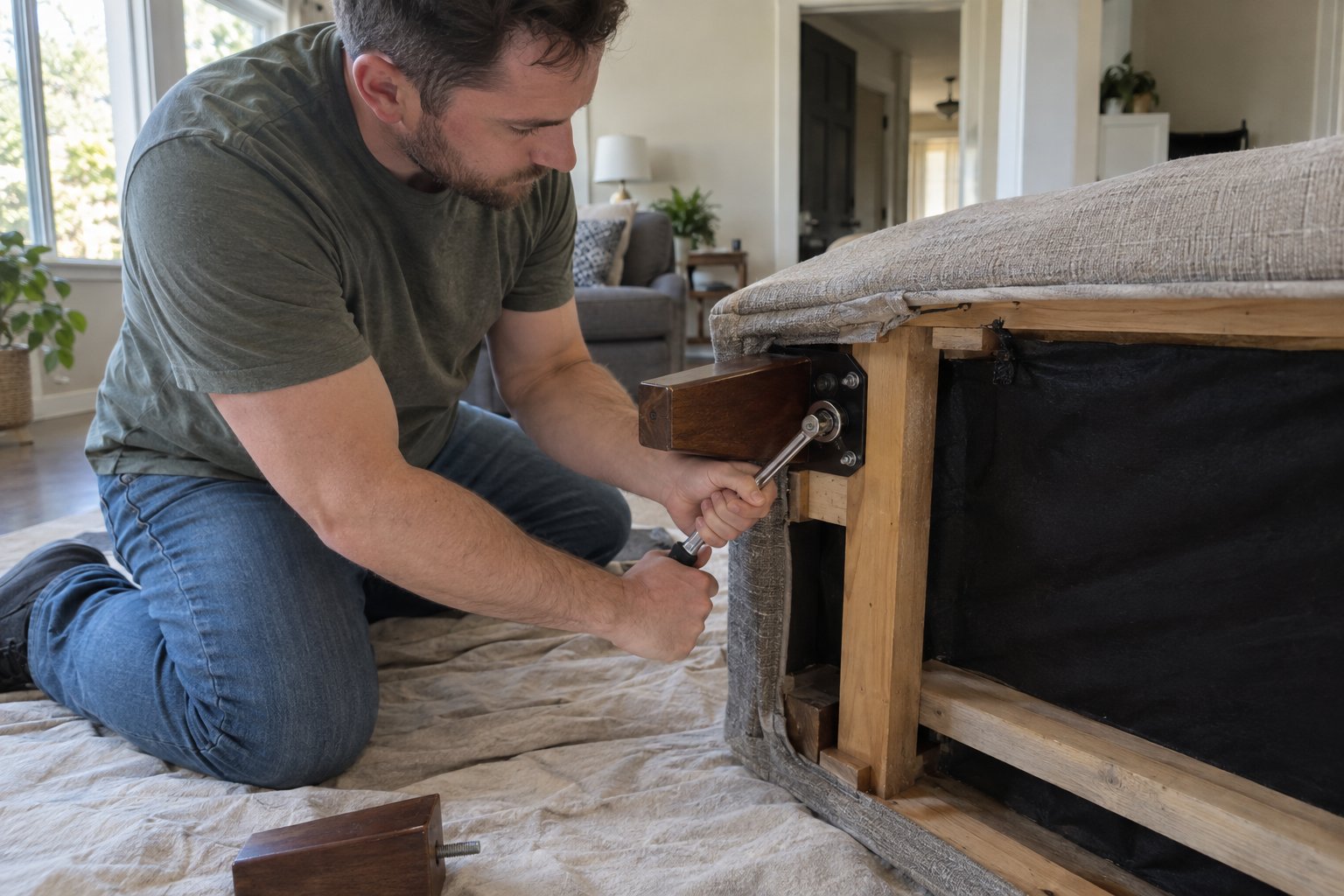
Most freestanding bookshelves — including popular modular systems assembled from individual sections — break down into flat panels, dowels, cam locks, and shelf pins. Disassemble these completely before moving day if possible. Keep all hardware in a labeled zip-lock bag taped to the largest panel so nothing gets separated. Built-in shelving units that are anchored to walls may need to stay behind depending on how they are mounted; if removal is possible without damaging the walls, consult a professional before attempting to pry them free yourself.
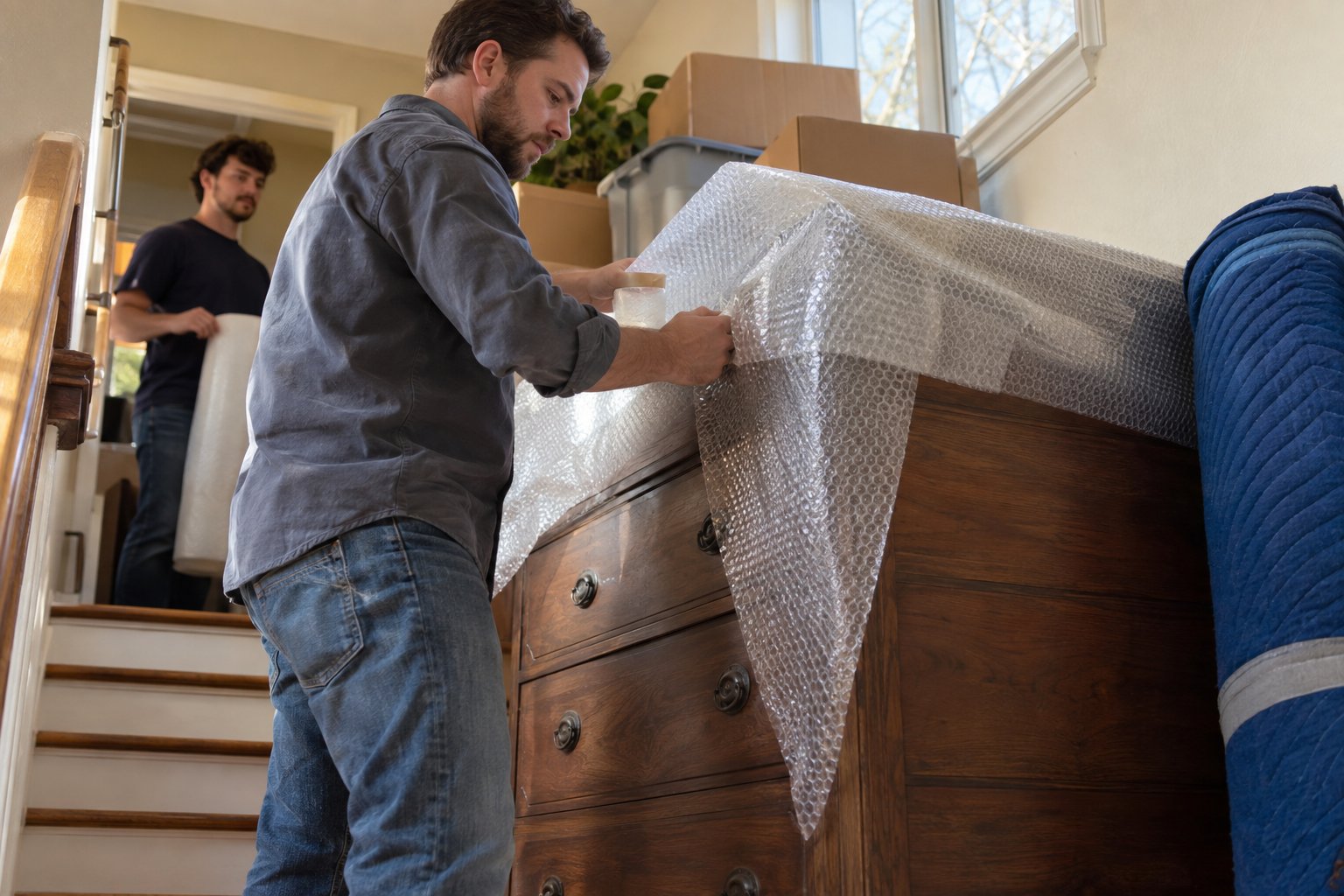
Wrap wooden shelf panels in moving blankets or stretch wrap to protect finished surfaces from scratches during transit. Pay special attention to corners and edges, which are the first points to chip or gouge when panels are slid against each other or against the truck wall.
A home library typically contains far more than books. The decorative and functional items that make the space feel like a library — rather than simply a room with shelves — each require their own approach.
Heavy cast-iron or stone bookends should be wrapped individually in packing paper and placed at the bottom of a sturdy box with softer items layered above them. Decorative figurines, ceramic pieces, and glass objects require bubble wrap and placement in boxes where they cannot shift or knock against one another in transit.
Remove framed prints, maps, and artwork from the walls and wrap each piece in packing paper followed by a layer of bubble wrap. Stand framed pieces on their edge in boxes rather than laying them flat, and fill all gaps with crumpled packing paper so nothing can move. Label the box "Fragile — Artwork" on all visible sides.
Remove lampshades and wrap them individually in clean packing paper — never bubble wrap, which can crush the fabric or distort the shape. Pack shades in large boxes by themselves if necessary, with no other items pressing against them. Lamp bases can be wrapped in moving blankets and transported standing upright if they are tall floor lamps, or boxed with padding if they are desk or table lamps.
If your library has a rolling ladder on a rail system, check whether the ladder itself detaches from the rail. Most rolling ladders are designed to roll off the end of the rail when tilted at the correct angle. Once detached, wrap the ladder in moving blankets and transport it horizontally in the truck. The rail should be unscrewed from the wall molding — keeping all mounting hardware in a labeled bag — and wrapped flat for transport.
The work is not finished when the boxes arrive. Setting up a home library in a new space is a project of its own, and a little planning before move-in day will save you from restacking hundreds of books twice.
Before any boxes are opened, position and reassemble all shelving units in their final locations in the new home. Anchor freestanding units to the wall using the appropriate hardware for your wall type — drywall anchors, stud screws, or masonry anchors depending on the construction. Only once shelving is stable and anchored should you begin unpacking boxes and returning books to the shelves.
Unpack by category or section in the order you intend to shelve, working from your box labels. Place the heaviest hardcover volumes on lower shelves where their weight is supported most effectively and where a toppled book is less likely to cause injury. Lighter paperbacks and smaller volumes can go on upper shelves. Distribute weight evenly across each shelf to prevent bowing, and avoid overloading any single shelf beyond what the unit is rated to hold.
When you are ready to let professionals handle the heavy lifting — from books to built-ins — get a free moving quote from Wise Guys Moving and let our team take care of the rest.
Use small moving boxes exclusively for books — the same size typically used for canned goods or kitchen items. Fill each box no more than three-quarters full with books, then top off the remaining space with lightweight items like folded towels or packing paper to bring the total weight to a manageable level. As a rule of thumb, if you cannot comfortably lift the box with both hands from a standing position, it is too heavy and needs to have books removed.
Spine down with pages facing up is the safest orientation for most hardcovers, as the spine is the strongest structural part of the book and can handle the weight of the stack above it. Flat stacking is appropriate for large-format or oversized books. Avoid packing books spine up (pages down), as this position places stress on the binding and can cause pages to separate from the glue or thread holding them in place over time.
Rare, antique, or high-value books should be wrapped individually in acid-free tissue paper rather than standard packing paper, placed in rigid boxes with foam or bubble wrap cushioning on all sides, and transported in your personal vehicle whenever possible rather than in the moving truck. Photograph each high-value book before packing as a record for insurance purposes, and consider consulting a rare book specialist if you are unsure how to properly protect particularly fragile or valuable bindings.
Yes — all shelves should be completely emptied before they are moved, and modular or freestanding units should be disassembled into their component panels whenever possible. Moving a fully loaded or even partially loaded bookshelf risks warping the unit, damaging the books, and creating a dangerous load that can tip unexpectedly. Store all hardware — screws, dowels, cam locks, shelf pins — in a labeled zip-lock bag taped to the largest panel so nothing is lost in transit.
Absolutely. Wise Guys Moving has experience handling home libraries of all sizes, from a single wall of shelves to full dedicated rooms with floor-to-ceiling built-ins, rolling ladders, and extensive collections. Our team can assist with careful loading, padding and protecting shelving units, and safe transport of your books and library décor. Call us at (334) 610-1593 or request a free quote online to get started.

Use small moving boxes exclusively for books — the same size typically used for canned goods or kitchen items. Fill each box no more than three-quarters full with books, then top off the remaining space with lightweight items like folded towels or packing paper to bring the total weight to a manageable level. As a rule of thumb, if you cannot comfortably lift the box with both hands from a standing position, it is too heavy and needs to have books removed.
Spine down with pages facing up is the safest orientation for most hardcovers, as the spine is the strongest structural part of the book and can handle the weight of the stack above it. Flat stacking is appropriate for large-format or oversized books. Avoid packing books spine up (pages down), as this position places stress on the binding and can cause pages to separate from the glue or thread holding them in place over time.
Rare, antique, or high-value books should be wrapped individually in acid-free tissue paper rather than standard packing paper, placed in rigid boxes with foam or bubble wrap cushioning on all sides, and transported in your personal vehicle whenever possible rather than in the moving truck. Photograph each high-value book before packing as a record for insurance purposes, and consider consulting a rare book specialist if you are unsure how to properly protect particularly fragile or valuable bindings.
Yes — all shelves should be completely emptied before they are moved, and modular or freestanding units should be disassembled into their component panels whenever possible. Moving a fully loaded or even partially loaded bookshelf risks warping the unit, damaging the books, and creating a dangerous load that can tip unexpectedly. Store all hardware — screws, dowels, cam locks, shelf pins — in a labeled zip-lock bag taped to the largest panel so nothing is lost in transit.
Absolutely. Wise Guys Moving has experience handling home libraries of all sizes, from a single wall of shelves to full dedicated rooms with floor-to-ceiling built-ins, rolling ladders, and extensive collections. Our team can assist with careful loading, padding and protecting shelving units, and safe transport of your books and library décor. Call us at (334) 610-1593 or request a free quote online to get started.