When homeowners work through their room-by-room moving plan, the sunroom almost always gets treated as an afterthought — but knowing how to pack and move a sunroom the right way can save you from shattered glass tabletops, snapped wicker frames, broken terracotta pots, and an embarrassing moving-day scramble to protect furniture that was never meant to leave the house without a plan. The sunroom is deceptively demanding: it holds some of the most fragile furniture in the entire home, contains living plants that require special handling, and fills itself with lightweight decorative items that become dangerous projectiles in an unsecured truck.
Whether you are relocating across Auburn or moving to an entirely new city, this guide walks you through every step of packing and moving your sunroom safely and efficiently. When you are ready to leave the hard work to the professionals, call Wise Guys Moving at (334) 610-1593 or get a free moving quote today.
The sunroom presents a category of moving challenges that are entirely different from any other space in the home. Unlike the living room — where the primary concern is bulky upholstered furniture and entertainment systems — or the garage — where hazardous materials and heavy power tools dominate the risk profile — the sunroom combines fragile glass surfaces, moisture-sensitive natural materials, living plants that do not survive a sealed moving truck, and a collection of lightweight decorative pieces that are extraordinarily easy to break and extraordinarily hard to replace.
Think about what a typical sunroom actually contains: a wicker or rattan sectional with loose cushions, a glass-top coffee or dining table, a set of wrought iron or aluminum accent chairs, ceramic or terracotta planters in varying sizes, hanging basket plants suspended from ceiling hooks, a collection of glass lanterns and decorative objects arranged on shelves, Roman shades or sheer curtain panels hung on tension rods, an area rug that has absorbed humidity for years, and possibly a ceiling fan or portable electric heater. Each of these categories carries its own specific risk in a move. Wicker cracks if stacked without proper padding. Glass tops shatter if placed flat with weight on top. Plants die if enclosed in a dark truck for hours. Ceramic planters crumble at the rim if not individually wrapped. And wrought iron furniture scratches every other surface it touches if not properly blanketed.
Plan to dedicate at minimum a full half-day exclusively to the sunroom — and if your sunroom has doubled as a plant conservatory or storage space for outdoor entertaining gear, budget a full day and start packing at least a week before moving day.
Before you wrap a single cushion or lift a single pot, the most valuable thing you can do is take a complete inventory of everything in the sunroom and make honest decisions about what is worth transporting, what can be sold or donated, and what simply will not survive a move in any practical sense.
Sunrooms are where furniture goes to age gracefully — and sometimes not so gracefully. Wicker and rattan furniture that has been exposed to direct sunlight and humidity cycles for years may be structurally compromised in ways that are not visible until a mover picks it up and a leg snaps. Before committing to moving a piece, inspect each joint, each leg, and each frame member for brittleness, rot, or separation. A wicker loveseat that cost $400 five years ago may not be worth the risk of damage to other items in the truck if it is already weakening.
Apply the same logic to glass tabletops. Check for existing chips, hairline cracks, or damaged edges. A piece of glass that is already compromised at a corner is significantly more likely to shatter in transit, even with proper wrapping. If the glass top is replaceable and the base is what holds sentimental or financial value, consider having a local glass shop cut a new top at the destination rather than risking the original.
Plants are one of the most commonly mishandled items in any sunroom move. Professional movers are generally not permitted to transport live plants in a sealed moving truck — not because of regulatory restriction, but because plants require light, temperature stability, and ventilation that a moving truck cannot provide. A plant left in a dark, hot truck for even a few hours in an Alabama summer may not recover. Plan to transport all plants in your personal vehicle, ideally on the day of the move or the day before. If you are making a long-distance move, research the plant import restrictions of your destination state, as some states restrict certain plant species from being brought across state lines.
Glass items are the highest-risk category in any sunroom and deserve the most time, the most materials, and the most careful placement in the truck. Do not rush this step.
Glass tabletops should never be transported flat. A flat sheet of glass resting on a truck floor, even padded, is exposed to flex and vibration from every direction. Instead, glass tabletops should be transported vertically — standing on their long edge — with moving blankets on both faces and cardboard at the edges. Use painter's tape to apply a large X across the face of each glass panel before wrapping; this does not prevent breakage, but if the glass does crack in transit, the tape holds the shards together and dramatically reduces the risk of injury when unwrapping at the destination.
If your coffee table has a removable glass insert, remove it, wrap it separately, and transport it with other glass items rather than leaving it in the table frame. A glass insert that shifts inside a frame during transit can crack both itself and the frame beneath it.
Empty every planter before packing. Soil adds significant weight, shifts during transit, and creates moisture that accelerates cracking in terracotta. Once emptied, wrap each planter individually in at least two layers of packing paper, paying particular attention to the rim — the thinnest and most vulnerable point on any ceramic or terracotta piece. Pack planters in boxes with crumple paper or foam fill between each piece, and mark the boxes clearly as fragile.
Wrap every individual glass decorative item in packing paper before placing it in a box. Use the "burrito wrap" method — place the item in the center of a full sheet of packing paper, fold the sides in, then roll toward the open edge — to create a complete protective layer. Do not nest glass objects directly against each other, even when wrapped. Use crumpled paper fill between every item in the box and fill all empty space to prevent shifting.
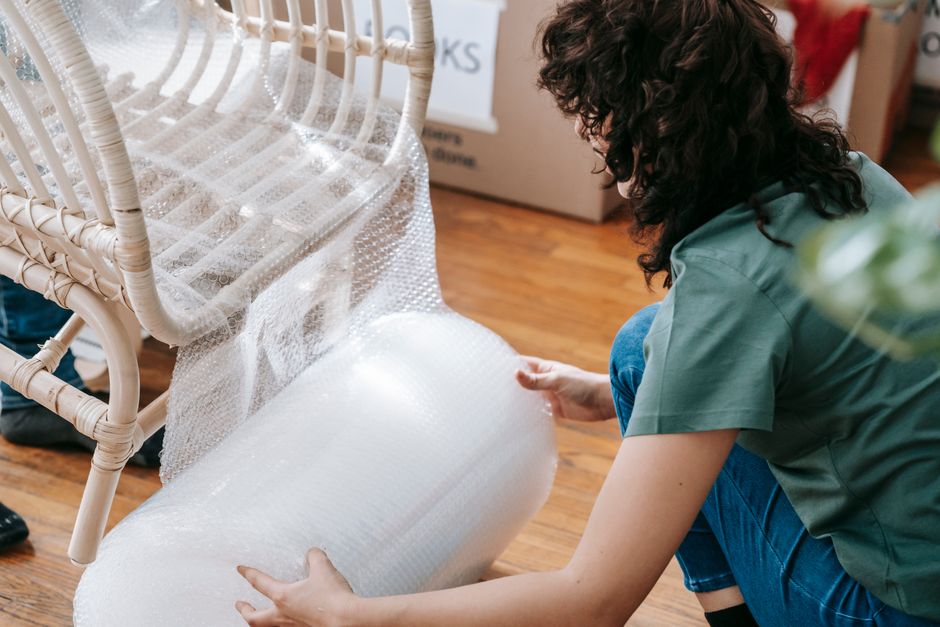
Wicker and rattan furniture present unique challenges because of their open weave structure. Standard moving blankets draped over wicker can catch on protruding weave points and pull sections of the weave apart when removed. The correct approach is to use stretch wrap (plastic film wrap) as a first layer over the wicker frame before adding a moving blanket on top. The stretch wrap smooths the surface, protects the weave from snagging, and holds loose wicker ends in place during transit.
Sunroom cushions are almost always oversized relative to standard moving boxes. Use large wardrobe boxes or clean contractor bags (not black garbage bags, which can trap moisture and cause mildew) to transport cushions. If your cushions have removable covers, strip them, wash them, and pack them flat in a linen box. Pack the foam inserts separately, compressing them gently and tying them with twine if needed to reduce volume.
Roll sunroom area rugs rather than folding them — folding a rug creates permanent crease damage and can crack the pile. Roll tightly from one end, secure with twine or rug bands at two or three points along the roll, and wrap the entire roll in stretch wrap to protect against moisture and dirt. If the rug has been exposed to high humidity in the sunroom, allow it to air out in a dry space for at least 24 hours before rolling and packing to prevent mold development inside the roll.
Most sunroom furniture — wrought iron bistro sets, aluminum sectional frames, wooden bench frames — can and should be partially disassembled for transport. Remove legs where possible. Separate sectional pieces rather than trying to maneuver an assembled L-shaped sofa through a door frame. Take down any ceiling hooks, tension rods, or wall-mounted brackets and pack the hardware in labeled zip-lock bags taped directly to the furniture piece they belong to.
Wrap every metal furniture piece in moving blankets secured with stretch wrap before loading. The primary risk with wrought iron and aluminum furniture is not damage to the pieces themselves — metal is durable — but damage to every other item they touch. An unwrapped wrought iron chair can scratch a glass surface, gouge a wood floor on the other end, or tear through the fabric of a cushion stored next to it in the truck. Blanket everything.
If your sunroom has a ceiling fan or pendant light that you are taking with you, coordinate the removal with a licensed electrician before moving day rather than attempting to remove it yourself. Pack fan blades individually wrapped in packing paper, and pack the motor housing in a box with foam or paper fill. Keep all hardware — screws, mounting brackets, canopy — in a labeled bag inside the same box.
Sunroom items should be among the last pieces loaded onto the truck — not the first. Glass and fragile items placed at the back of the truck are exposed to the full force of road vibration and shifting loads from everything loaded after them. Load heavy, stable furniture (beds, dressers, appliances) first against the cab wall. Load sunroom furniture and fragile boxes in the final section of the truck, nearest the door, where they can be unloaded first at the destination and where they have the least distance to travel relative to shifting loads.
Never stack heavy boxes on top of boxes marked fragile, regardless of how carefully they are packed. Use the truck's wall straps to anchor furniture pieces and prevent lateral movement. If you are using a professional moving company, communicate clearly which boxes and pieces are fragile before loading begins — a good crew will work fragile items into the load plan from the start rather than making accommodations at the last minute.
When you are ready to let an experienced team handle every detail of your sunroom move, request a free moving quote from Wise Guys Moving and get a plan built around your specific needs.
Most professional moving companies, including Wise Guys Moving, do not transport live plants in a sealed moving truck because plants require light, ventilation, and temperature stability that a truck cannot provide — especially during Alabama summers. Plan to transport your plants in your own vehicle. For long-distance moves, also check whether your destination state has any restrictions on bringing certain plant species across state lines.
Glass tabletops should always be transported vertically — standing on their long edge — never lying flat. Wrap both faces in moving blankets and protect the edges with cardboard or foam edge guards. Apply a large X of painter's tape across the glass face before wrapping; this won't prevent breakage, but it holds shards together if the glass cracks, making it much safer to handle at the destination.
Apply a layer of stretch wrap (plastic film) directly over the wicker frame first. This smooths the surface, holds any loose weave ends in place, and prevents moving blankets from snagging on the open weave and pulling sections apart. Once the stretch wrap is in place, cover the piece with a moving blanket and secure it with additional stretch wrap or packing tape on the outside of the blanket.
Yes — always empty planters completely before packing. Soil adds substantial weight, shifts during transit, and introduces moisture that accelerates cracking in terracotta and ceramic. Once emptied, wrap each planter individually in packing paper, paying extra attention to the rim, which is the thinnest and most vulnerable point. Pack planters in boxes with crumpled paper fill between each piece and label all boxes as fragile.
Sunroom cushions are typically too large for standard moving boxes. Use large wardrobe boxes or clean contractor bags to transport cushions. If the covers are removable, strip and wash them, then pack them flat in a linen box. Pack the foam inserts separately, compressing them gently. Avoid black garbage bags, which trap moisture and can cause mildew if the move takes more than a day or involves any humidity exposure.

Most professional moving companies, including Wise Guys Moving, do not transport live plants in a sealed moving truck because plants require light, ventilation, and temperature stability that a truck cannot provide — especially during Alabama summers. Plan to transport your plants in your own vehicle. For long-distance moves, also check whether your destination state has any restrictions on bringing certain plant species across state lines.
Glass tabletops should always be transported vertically — standing on their long edge — never lying flat. Wrap both faces in moving blankets and protect the edges with cardboard or foam edge guards. Apply a large X of painter's tape across the glass face before wrapping; this won't prevent breakage, but it holds shards together if the glass cracks, making it much safer to handle at the destination.
Apply a layer of stretch wrap (plastic film) directly over the wicker frame first. This smooths the surface, holds any loose weave ends in place, and prevents moving blankets from snagging on the open weave and pulling sections apart. Once the stretch wrap is in place, cover the piece with a moving blanket and secure it with additional stretch wrap or packing tape on the outside of the blanket.
Yes — always empty planters completely before packing. Soil adds substantial weight, shifts during transit, and introduces moisture that accelerates cracking in terracotta and ceramic. Once emptied, wrap each planter individually in packing paper, paying extra attention to the rim, which is the thinnest and most vulnerable point. Pack planters in boxes with crumpled paper fill between each piece and label all boxes as fragile.
Sunroom cushions are typically too large for standard moving boxes. Use large wardrobe boxes or clean contractor bags to transport cushions. If the covers are removable, strip and wash them, then pack them flat in a linen box. Pack the foam inserts separately, compressing them gently. Avoid black garbage bags, which trap moisture and can cause mildew if the move takes more than a day or involves any humidity exposure.