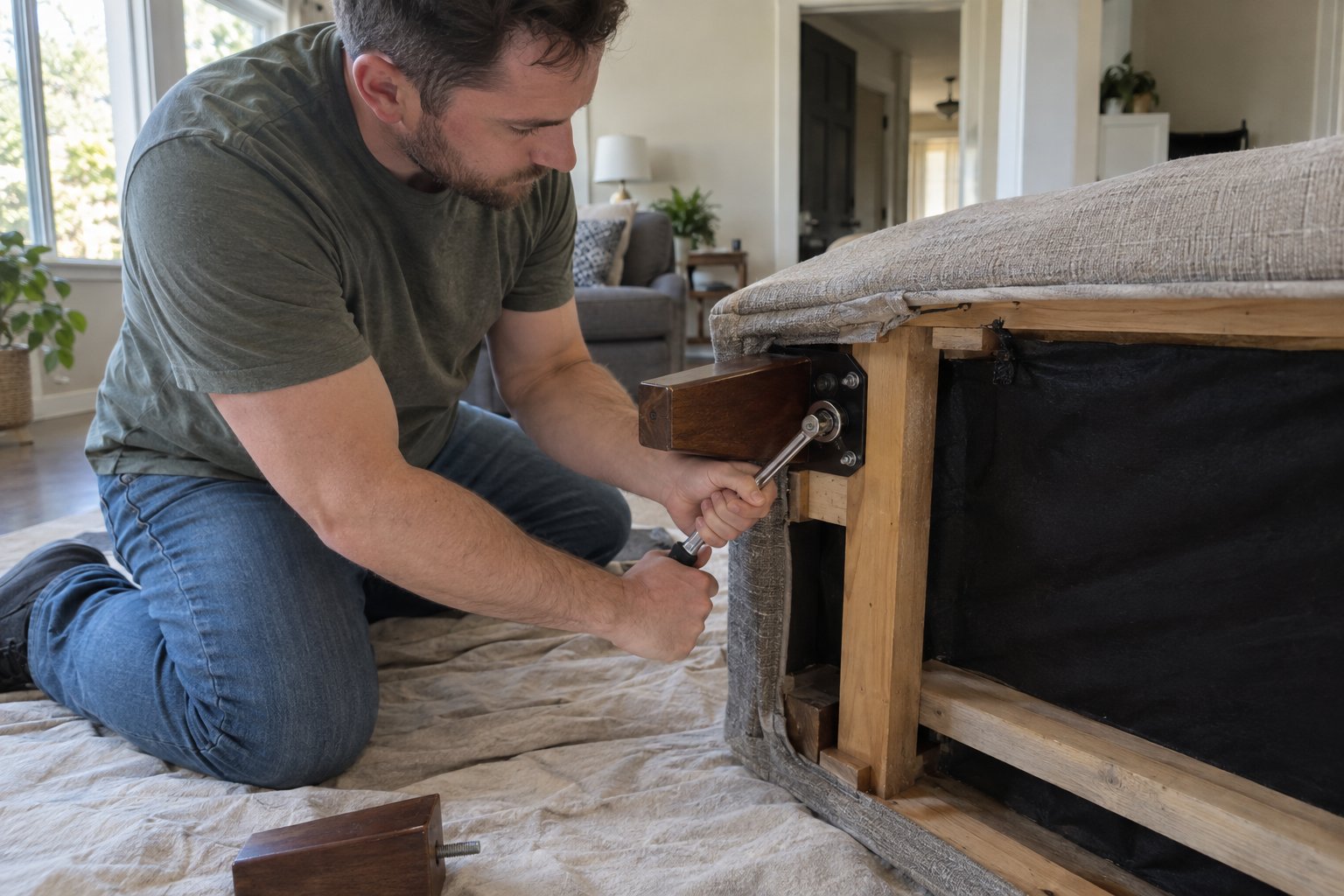
When homeowners work through their room-by-room moving plan, the home workshop almost always gets left until the very last minute — but knowing how to pack and move a home workshop the right way can save you from broken drill bits rattling loose in a cardboard box, a table saw that arrives with a bent fence, a workbench that collapses because someone tried to carry it fully loaded, and hazardous chemicals that violate moving truck regulations and create a genuine safety risk. The home workshop is deceptively demanding: it combines heavy stationary equipment, sharp hand tools, flammable and corrosive materials, and a lifetime of small hardware that disappears the moment it leaves its drawer.
Whether you are relocating across Auburn or moving to an entirely new city, this guide walks you through every step of packing and moving your home workshop safely and efficiently. When you are ready to leave the hard work to the professionals, call Wise Guys Moving at (334) 610-1593 or get a free moving quote today.
The home workshop presents a category of moving challenges that is entirely different from any other space in the home. Unlike the kitchen — where the primary concern is fragile dishware and heavy appliances — or the garage — where bulk and vehicle-related equipment dominate the risk profile — the home workshop combines precision instruments that go out of calibration when jostled, power tools with detachable components that become projectiles if they shift in transit, hand tools with exposed blades and points that can injure anyone who reaches into an improperly packed box, flammable liquids that are prohibited in moving trucks under federal regulations, and hardware collections accumulated over decades that represent real replacement cost if they are lost or mixed together.
Think about what a typical home workshop actually contains: a table saw or miter saw mounted on a stand, a drill press bolted to a bench, a router table, a bandsaw, a workbench with a heavy vise, pegboard walls covered in hanging hand tools, rolling tool chests loaded with sockets, wrenches, and screwdrivers, drawers full of screws, nails, bolts, and fasteners sorted by size, cans of stain, lacquer, paint thinner, and mineral spirits, a shop vacuum, clamps of every size hanging from hooks, and a lumber rack with stock you plan to use at the new house. Each of these categories carries its own specific risk in transit. Power tools can sustain internal damage if they shift against each other without padding. Sharp tools can cut through cardboard and injure anyone on the receiving end. Flammable liquids cannot legally travel in a moving truck. Hardware that is not containerized before the move will take months to reorganize at the destination.
Plan to dedicate at minimum a full day — ideally two — exclusively to the workshop. If your workshop is a serious dedicated space with multiple stationary power tools, begin the process of cleaning, draining fluids, disassembling machines, and sorting hardware at least two weeks before moving day.
Before you pack a single box, take a complete inventory of your workshop and make honest decisions about what is worth moving, what can be sold or donated, and what needs to be disposed of properly rather than loaded into the truck.
Power tools are heavy, and moving heavy items costs money — whether you are hiring movers or renting a truck. Before committing to moving a piece of equipment, ask yourself whether it still works reliably, whether it is worth the cost and effort of disassembly and transport, and whether it will fit in the new workshop space. A table saw that has seen better days and a drill press that you have not used in three years may not be worth the effort. If you are upgrading or downsizing your workshop at the new home, now is the time to make those decisions — not on moving day.
Federal and industry regulations prohibit flammable, corrosive, and combustible materials from traveling in a moving truck. This includes paint thinner, mineral spirits, lacquer, varnish, acetone, gasoline in any container, propane cylinders, and aerosol cans of lubricant or finish. If you have these in your workshop — and nearly every workshop does — they need to be used up before the move, given to a neighbor, or disposed of at a local hazardous waste collection facility. Attempting to sneak these materials into boxes hidden inside moving truck loads is both dangerous and potentially a violation of your moving contract.
Loose hardware is the single most chaotic element of any workshop move. Screws, nails, bolts, nuts, washers, and anchors that travel unsorted will take longer to reorganize at the new home than it took to accumulate them. Before you start packing anything else, spend time sorting your hardware into clearly labeled containers. Use small zip-lock bags for fasteners of each type and size, then place those bags into a labeled bin or small box. Masking tape and a marker on every drawer pull will tell you at a glance what was inside before you start the move.
Hand tools and power tools each require a different packing approach, and rushing this step is how tools get damaged and how people get hurt on the receiving end of an improperly packed box.
Chisels, plane blades, router bits, drill bits, saw blades, and carving tools are sharp enough to cut through cardboard and injure anyone reaching blindly into a box. Every cutting edge should be wrapped individually in several layers of packing paper, secured with tape, and then grouped with like tools inside a rigid container — never loose in a soft bag. Utility knives should have their blades retracted or replaced with a blade guard before packing. Screwdrivers, hammers, mallets, and files can travel wrapped in paper and packed tightly so they do not shift and puncture the box walls. Label every box containing sharp tools clearly on the outside: SHARP TOOLS — OPEN WITH CARE.
Smaller power tools — drills, circular saws, jigsaws, sanders, and routers — pack best in their original cases when you still have them. If the original cases are long gone, wrap each tool in two to three layers of bubble wrap, secure it with packing tape, and pack it snugly in a medium-weight box with crumpled paper filling any voids. Remove all batteries from cordless tools before packing; lithium-ion batteries should travel separately in a fireproof pouch or dedicated container, as punctured or overheated lithium cells can ignite. Detach accessories — router bits, saw blades, sanding pads — and pack them separately rather than leaving them attached to the tool during transit.
Large stationary tools require disassembly before they can be safely moved. On a table saw, remove the blade (wrap it carefully in cardboard and tape it securely), detach the fence and miter gauge and wrap them separately, and lock the blade guard in its lowest position. On a drill press, lower the table to its lowest position and lock it, remove the chuck key, and if the column is removable on your model, detach it to reduce the load's height. Band saws should have the blade removed or relieved of all tension before transport. Consult the owner's manual for each machine — most manufacturers include a section on preparing the tool for relocation. Wrap exposed surfaces in moving blankets and secure them with stretch wrap to prevent scratches during loading.
The workbench is often the heaviest single item in the workshop, and the tool chest is often the most contents-dense. Neither should be moved the way they sit during daily use.
A solidly built hardwood workbench can weigh well over 200 pounds when its vise, lower shelf, and any storage drawers are factored in. Before attempting to move it, remove everything stored on or under the bench. Detach the vise if it is a separate component bolted to the top — vise castings are heavy, and a mounted vise creates an awkward cantilever that makes the bench almost impossible to carry safely. If the bench has removable legs or is built in sections, disassemble it into its component parts. Wrap the top surface and any finished edges in moving blankets to prevent dents and scratches. Use a furniture dolly for transport through the shop and down any steps.
Rolling tool chests look manageable because they have wheels — but those wheels are designed for shop floors, not ramps and truck beds. Before moving a chest, remove the heaviest drawers if the chest allows it, or remove items from the heaviest drawers and pack them in a separate box. Lock or tape every drawer shut so they do not slide open during the move and spill their contents. A chest that is too heavy to lift safely with two people should travel on a proper appliance dolly with ratchet straps securing it upright in the truck. Never attempt to roll a fully loaded tool chest up a ramp — the wheels will skid sideways.
How you unload and organize the new workshop will determine how quickly you can start using it again. A little planning before moving day pays off in hours saved on the other end.
Before moving day, take the dimensions of the new workshop space and sketch a layout showing where each stationary tool will land. Heavy tools like table saws and drill presses cannot be easily repositioned once two people have set them down, so knowing exactly where each piece goes before it comes off the truck will prevent back-and-forth repositioning that exhausts your crew and risks injury. Consider power outlet locations, lighting, dust collection routing, and workflow when planning the layout.
Counterintuitively, the smallest items in your workshop are the most urgent to unpack and organize. Once stationary tools are positioned and plugged in, you will need hardware and hand tools immediately to reassemble components, remount accessories, and perform the calibration checks that precision tools require after a move. Unpack and organize your hardware bins and hand tool storage before you start reassembling machines — it will make the reassembly process significantly smoother.
Stationary power tools — especially table saws, miter saws, and drill presses — should be calibrated before use after any move. Transport vibration can shift the blade angle, fence alignment, and table squareness on even a well-packed machine. Use a reliable square, a calibration gauge, or the tool's own adjustment protocol to verify that everything is true and square before making your first cut. This step takes less than thirty minutes per machine and prevents the wasted material and potential injury that comes from working with an out-of-alignment tool.
Moving a home workshop is one of the most technically demanding relocations in any house, but with careful preparation, the right packing materials, and a clear plan for the new space, it can be done without losing a single bit or stripping a single drawer. When you are ready to let experienced professionals handle the heavy lifting, get a free moving quote from Wise Guys Moving and let our team take the hardest part off your hands.
No. Flammable, combustible, and corrosive materials — including paint thinner, mineral spirits, lacquer, varnish, acetone, gasoline, and propane — are prohibited from traveling in a moving truck under federal and industry regulations. Use them up before the move, give them away to a neighbor, or drop them off at your local hazardous waste collection facility. Attempting to pack them inside boxes hidden in the truck is dangerous and may violate your moving contract.
Every cutting edge should be wrapped individually in several layers of packing paper and secured with tape before packing. Group wrapped sharp tools inside a rigid container — never loose in a soft bag or mixed with other items in a general box. Label the outside of every box containing sharp tools clearly: SHARP TOOLS — OPEN WITH CARE. This protects both your tools and anyone who handles the box at the destination.
Yes. Before moving a table saw, remove and carefully wrap the blade in cardboard, detach and wrap the fence and miter gauge separately, and lower and lock the blade guard. Leaving the blade and fence attached during transport increases the risk of damage to the tool and injury during loading and unloading. Consult your owner's manual for model-specific disassembly instructions, and wrap all exposed surfaces in moving blankets secured with stretch wrap.
Remove the heaviest items from the drawers or remove the drawers themselves if the chest allows it, then tape or lock every drawer shut to prevent them from sliding open during transport. Use a proper appliance dolly with ratchet straps to secure the chest upright in the truck. Never attempt to roll a fully loaded tool chest up a loading ramp — the caster wheels are designed for flat shop floors and will skid sideways on a ramp, creating a serious tip-over risk.
Yes — always calibrate stationary power tools after a move before making your first cut. Transport vibration can shift blade angles, fence alignment, and table squareness even on a carefully packed machine. Use a reliable square or calibration gauge to verify that each tool is true and square before use. This takes less than thirty minutes per machine and prevents wasted material and potential safety hazards from working with an out-of-alignment tool.

No. Flammable, combustible, and corrosive materials — including paint thinner, mineral spirits, lacquer, varnish, acetone, gasoline, and propane — are prohibited from traveling in a moving truck under federal and industry regulations. Use them up before the move, give them away to a neighbor, or drop them off at your local hazardous waste collection facility. Attempting to pack them inside boxes hidden in the truck is dangerous and may violate your moving contract.
Every cutting edge should be wrapped individually in several layers of packing paper and secured with tape before packing. Group wrapped sharp tools inside a rigid container — never loose in a soft bag or mixed with other items in a general box. Label the outside of every box containing sharp tools clearly: SHARP TOOLS — OPEN WITH CARE. This protects both your tools and anyone who handles the box at the destination.
Yes. Before moving a table saw, remove and carefully wrap the blade in cardboard, detach and wrap the fence and miter gauge separately, and lower and lock the blade guard. Leaving the blade and fence attached during transport increases the risk of damage to the tool and injury during loading and unloading. Consult your owner's manual for model-specific disassembly instructions, and wrap all exposed surfaces in moving blankets secured with stretch wrap.
Remove the heaviest items from the drawers or remove the drawers themselves if the chest allows it, then tape or lock every drawer shut to prevent them from sliding open during transport. Use a proper appliance dolly with ratchet straps to secure the chest upright in the truck. Never attempt to roll a fully loaded tool chest up a loading ramp — the caster wheels are designed for flat shop floors and will skid sideways on a ramp, creating a serious tip-over risk.
Yes — always calibrate stationary power tools after a move before making your first cut. Transport vibration can shift blade angles, fence alignment, and table squareness even on a carefully packed machine. Use a reliable square or calibration gauge to verify that each tool is true and square before use. This takes less than thirty minutes per machine and prevents wasted material and potential safety hazards from working with an out-of-alignment tool.