When homeowners work through their room-by-room moving plan, the walk-in closet almost always gets left until the very last moment — but knowing how to pack and move a walk-in closet the right way can save you from a mountain of wrinkled clothing stuffed into garbage bags, lost accessories buried under disorganized boxes, a built-in shelving system that was never meant to be disassembled the way it just was, and a new closet that takes months to feel functional again. The walk-in closet is deceptively demanding: it holds more individual items than almost any other space in the home, contains both everyday essentials and rarely used keepsakes, and requires a level of organization on the back end that most people never think about until they are standing in a sea of boxes on move-in day.
Whether you are relocating across Auburn or moving to an entirely new city, this guide walks you through every step of packing and moving your walk-in closet safely and efficiently. When you are ready to leave the hard work to the professionals, call Wise Guys Moving at (334) 610-1593 or get a free moving quote today.
The walk-in closet presents a category of moving challenges that are entirely different from any other space in the home. Unlike the kitchen — where the primary concern is heavy appliances and fragile dishware — or the garage — where hazardous materials and power tools dominate the risk profile — the walk-in closet combines an overwhelming volume of soft goods organized by a system only you understand, high-value accessories that are easy to lose in transit, footwear in awkward shapes and sizes, and built-in storage infrastructure that may or may not be coming with you.
Think about what a typical walk-in closet actually contains: double-hang rods loaded with suits, dresses, blouses, and jackets organized by category or color, a long hang section for floor-length gowns and coats, a shoe wall or shoe rack holding anywhere from twenty to well over a hundred pairs, built-in shelving filled with folded sweaters and jeans, a drawer bank integrated into the island or wall unit, a jewelry organizer, a belt and handbag hook system, a tie rack, seasonal items stored in bins on the highest shelves, luggage stacked in a back corner, and boxes of sentimental items stored behind everything else. Each of these categories carries its own specific risk in a move. Clothing packed carelessly arrives deeply wrinkled and smelling of the moving truck. Shoes tossed together without protection scuff, scratch, and crush each other. Jewelry left loose in a box tangles irreversibly. And a built-in closet system removed by movers who were never told which screws hold the weight-bearing brackets can come apart in ways that are expensive to repair.
Plan to dedicate at minimum a full half-day exclusively to the walk-in closet — and if your closet is fully loaded after years of accumulation, budget a full day to do it properly.
Before you pull a single item off a hanger or box a single pair of shoes, the most valuable thing you can do is take complete stock of everything in the walk-in closet and make honest decisions about what is worth transporting to your new home.
Walk-in closets accumulate items at a faster rate than almost any space in the house. Clothes migrate in on hangers and never leave. Shoes get shoved in without a system. Accessories collect on hooks until there is no more room. Before you pack anything, pull every item from every shelf, every rod, every bin, and every corner of the floor. Lay it all out — in the bedroom, in the hallway, wherever you have space — and see what you are actually dealing with.
Sort everything into four categories: items you will keep and move, items you will donate, items you will discard, and items that belong in a different area of the new home. Clothing you have not worn in over two years, shoes that no longer fit or are beyond repair, duplicate seasonal items, and accessories you forgot you owned are all strong candidates for donation or disposal before the move. Every item you do not put on the truck is money and effort saved.
If your walk-in closet has a built-in shelving and rod system — whether it is a custom-installed unit or a store-bought modular organizer — photograph every section from multiple angles before you touch a single component. Photograph the bracket placements, the screw locations, the way the shelves stack at different heights, and any adjustable rod positions. If you are taking the system with you, this photo record will be essential for reassembly. If the system is staying with the home, the photos will help you document its condition for closing.
Clothing is the highest-volume category in almost every walk-in closet, and it is also one of the easiest to damage through careless packing. The goal is to keep clothing organized by category, protected from moisture and odor, and as wrinkle-free as possible when it arrives at the new home.
The single best investment you can make for a closet move is a set of wardrobe boxes. These tall moving boxes come with a metal hanging bar across the top, allowing you to transfer garments directly from the rod to the box — still on their hangers, still in their organized groupings — without folding or rolling. When you arrive at the new home, you transfer them directly back to the rod. Wrinkle risk drops dramatically, and your organization is preserved from one home to the next.
Group garments by category before loading wardrobe boxes: all suits together, all dress shirts together, all dresses together. Use a rubber band or twist tie around the hangers of each group so they stay clustered inside the box. Fill any gap at the bottom of the wardrobe box with folded soft goods — sweaters, jeans, or linens — to keep the garments from swinging and creasing during transport.
Folded clothing — t-shirts, sweaters, jeans, athletic wear — should be packed in small or medium moving boxes rather than large ones. Clothing is heavier than it looks once packed in volume, and an overfilled large box becomes difficult to carry without the bottom giving way. Fold items neatly in the same manner you would store them on a shelf, pack them in organized stacks by category, and label each box with its contents and the destination room.
For delicate fabrics — cashmere sweaters, silk blouses, structured blazers that cannot hang — lay them flat between sheets of acid-free tissue paper before stacking. This adds minimal weight and makes a significant difference in how the items arrive.
Items stored on high shelves or in bins — out-of-season clothing, holiday attire, items in garment bags — should be inventoried and packed separately from everyday clothing. These items are often the first to be packed since they are not needed before the move, and keeping them in their own clearly labeled boxes prevents them from getting mixed into daily unpacking.
The accessories and footwear section of a walk-in closet requires more individual attention than its volume might suggest. Small items are the easiest to lose in a move, and high-value accessories require protection that generic box packing does not provide.
The best approach for moving shoes is to use their original boxes when available — they are shaped perfectly for the shoe and stack efficiently. When original boxes are not available, wrap each shoe individually in packing paper or bubble wrap, pair them together, and pack them sole-to-sole in a medium moving box. Never toss shoes loosely into a large box. Heels puncture soft leather. Buckles scratch patent finishes. Sole adhesive can bond to adjacent materials if shoes are stacked without any barrier.
Pack shoes in a dedicated box labeled "shoes" with the general category noted — dress shoes, athletic shoes, boots — so you can find what you need quickly after the move without opening every box.
Jewelry is among the highest-risk items in any move — not because it is fragile, but because it is small, valuable, and easy to lose. Do not pack jewelry in moving boxes with other items. Instead, keep jewelry in its original storage — the jewelry box, the armoire drawer, the travel organizer — and transport it personally in your own vehicle rather than on the moving truck. If a piece is particularly valuable, photograph it before the move and keep documentation of its description in case of any dispute.
For belts, scarves, ties, and handbags, use the same principle: keep like items together, wrap structured bags in tissue to preserve their shape, and roll belts and ties rather than folding them to prevent creasing.
If your walk-in closet contains a built-in shelving and rod system — whether custom-installed by a contractor or a modular unit from a retailer — you need to make a clear decision about whether it is staying or going before moving day, not during it.
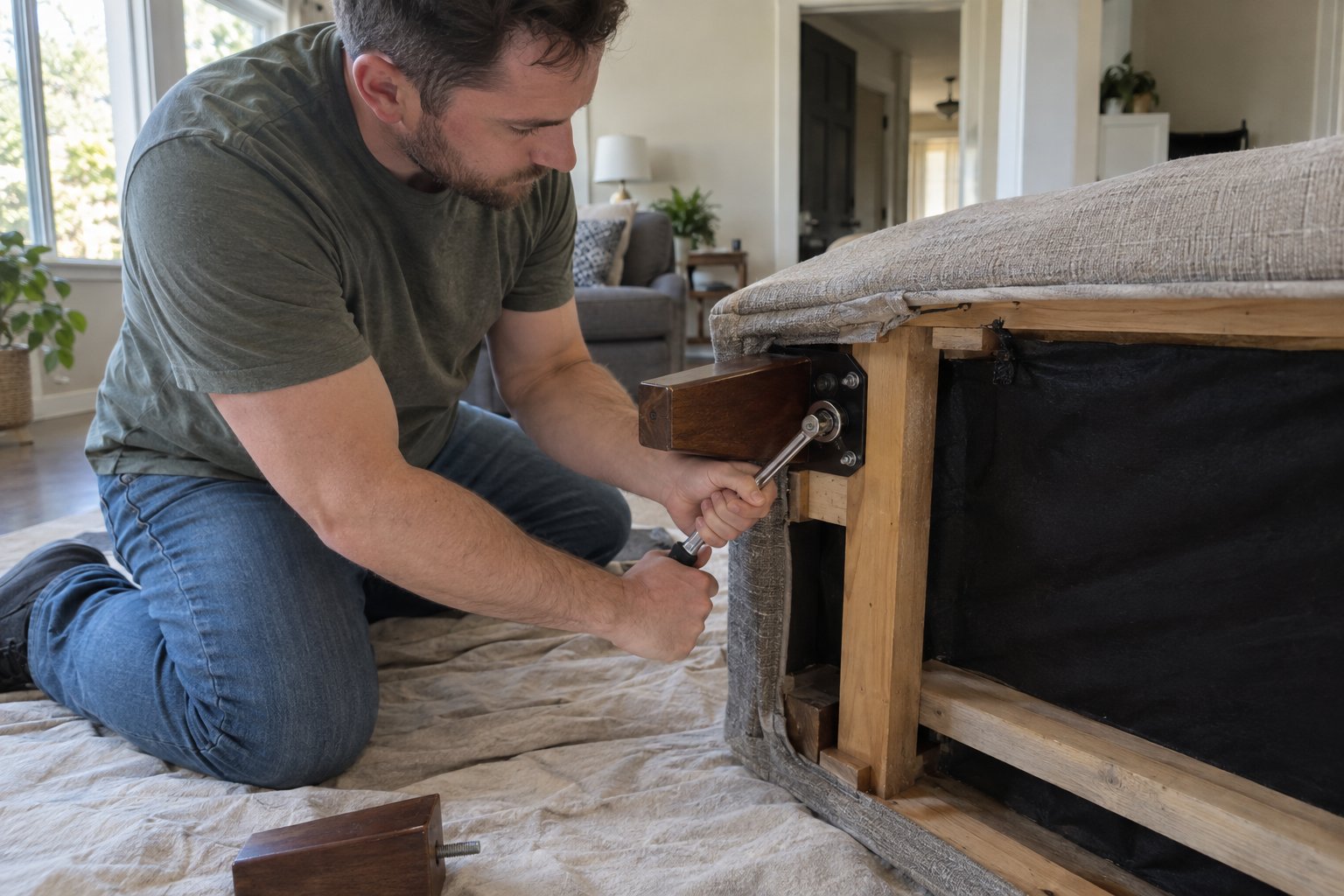
Custom closet systems installed by contractors are often bolted directly into studs and may be considered a permanent fixture of the home. Check your purchase agreement to confirm whether the system is included in the sale. If the system is staying, your job is simply to remove your belongings from it carefully. If it is a modular unit that you installed yourself and plan to take, disassemble it section by section using your pre-move photographs as a guide, and bag all hardware by section in clearly labeled zip-lock bags taped to the corresponding component.
If you are removing any wall-mounted brackets, hooks, or rod holders, patch the holes and document the wall condition before the movers arrive. Even small anchor holes can become a point of dispute in a home sale if they are not addressed. Larger bracket holes may require spackle, sanding, and touch-up paint to restore the wall surface properly.
The final phase of moving a walk-in closet is one of the most important — and the most frequently rushed. How you label and load your closet boxes directly determines how quickly you can get the new closet functional after the move.
Every box from the walk-in closet should have two labels: one on the top and one on a side panel. The label should note the general contents (e.g., "women's work blouses — hangers," "men's dress shoes," "winter sweaters — shelf 2") and the destination room. If your new home has multiple closets, specify which closet the box belongs in. Generic labels like "clothes" create chaos on move-in day when you cannot find a single thing you need.
Clothing and accessories are not fragile in the structural sense — they will not shatter if another box is stacked near them — but wardrobe boxes are tall and need to stand upright to protect the hanging garments inside. Load wardrobe boxes last, stand them upright against the truck wall, and secure them so they cannot tip. Shoe boxes and accessory boxes should be stacked with heavier items below and lighter ones above.
When you arrive at the new home, make the walk-in closet one of the first spaces you set up — before you tackle the living room, before you arrange the kitchen. Install your rod system or confirm the built-in is in place, hang your wardrobe boxes directly onto the rods, and get shoes onto a rack or shelf. A functional closet means you can get dressed for work the next morning without digging through boxes, and it signals the beginning of the new home feeling like home.
If the scope of your move feels overwhelming, the professionals at Wise Guys Moving are ready to help. Call us at (334) 610-1593 or request a free moving quote and let our team handle the heavy lifting while you focus on settling in.
The easiest DIY method is to bundle a group of hanging garments together — still on their hangers — gather the hanger hooks at the top, and secure them with a rubber band. Then slip a large garbage bag over the garments from the bottom, cut a small hole at the closed end for the hanger hooks to poke through, and tie the open bottom loosely. This creates a protective cover that shields the clothing from dust and moisture during transit. Wardrobe boxes are still the preferred option because they keep garments fully upright and wrinkle-free, but the garbage-bag method works well for shorter moves.
If the dresser or drawer unit is a freestanding piece of furniture being moved by movers, yes — empty the drawers before moving day. Heavy drawers shift during transport and can cause the dresser frame to warp or break, and drawer contents can spill or get damaged. Pack drawer contents in labeled boxes by category so reassembly in the new closet is straightforward. If the drawer unit is built-in and is staying with the home, simply remove your belongings and leave the unit in place.
Stuff each handbag with clean packing paper, bubble wrap, or a soft cloth to help it hold its shape during the move. Then wrap the outside of the bag in a single layer of tissue paper or a soft cloth — never bubble wrap directly against leather or suede, as the texture can leave marks. Place each bag in its original dust bag if available, or wrap it individually before placing it in a box. Pack handbags in a box where they will not be crushed by heavier items, and label the box clearly as fragile. Transport extremely high-value bags in your personal vehicle rather than on the moving truck.
Yes — original shoe boxes are ideal for moving because they protect each pair individually and stack efficiently. If you leave shoes in their original boxes, tape each box shut so lids do not pop open in transit and load them in a dedicated moving box or stack them on the truck in a stable, upright position. Shoes should not be placed under heavy items, as the weight can crush box lids and deform shoes inside. If you do not have original boxes, wrap each pair individually in packing paper and pack them in a medium moving box with similar footwear.
Start with seasonal and rarely used items at least three to four weeks before your move date. These are things you will not need before moving day — winter coats in summer, holiday attire, formal wear worn only a few times a year — and packing them early reduces the volume you need to handle in the final week. Pack everyday clothing and shoes in the final two to three days before the move, after you have confirmed what you need to wear through moving day. Jewelry and high-value accessories should be transported personally and packed last.

The easiest DIY method is to bundle a group of hanging garments together — still on their hangers — gather the hanger hooks at the top, and secure them with a rubber band. Then slip a large garbage bag over the garments from the bottom, cut a small hole at the closed end for the hanger hooks to poke through, and tie the open bottom loosely. This creates a protective cover that shields the clothing from dust and moisture during transit. Wardrobe boxes are still the preferred option because they keep garments fully upright and wrinkle-free, but the garbage-bag method works well for shorter moves.
If the dresser or drawer unit is a freestanding piece of furniture being moved by movers, yes — empty the drawers before moving day. Heavy drawers shift during transport and can cause the dresser frame to warp or break, and drawer contents can spill or get damaged. Pack drawer contents in labeled boxes by category so reassembly in the new closet is straightforward. If the drawer unit is built-in and is staying with the home, simply remove your belongings and leave the unit in place.
Stuff each handbag with clean packing paper, bubble wrap, or a soft cloth to help it hold its shape during the move. Then wrap the outside of the bag in a single layer of tissue paper or a soft cloth — never bubble wrap directly against leather or suede, as the texture can leave marks. Place each bag in its original dust bag if available, or wrap it individually before placing it in a box. Pack handbags in a box where they will not be crushed by heavier items, and label the box clearly as fragile. Transport extremely high-value bags in your personal vehicle rather than on the moving truck.
Yes — original shoe boxes are ideal for moving because they protect each pair individually and stack efficiently. If you leave shoes in their original boxes, tape each box shut so lids do not pop open in transit and load them in a dedicated moving box or stack them on the truck in a stable, upright position. Shoes should not be placed under heavy items, as the weight can crush box lids and deform shoes inside. If you do not have original boxes, wrap each pair individually in packing paper and pack them in a medium moving box with similar footwear.
Start with seasonal and rarely used items at least three to four weeks before your move date. These are things you will not need before moving day — winter coats in summer, holiday attire, formal wear worn only a few times a year — and packing them early reduces the volume you need to handle in the final week. Pack everyday clothing and shoes in the final two to three days before the move, after you have confirmed what you need to wear through moving day. Jewelry and high-value accessories should be transported personally and packed last.