When homeowners work through their room-by-room moving plan, the nursery almost always triggers the most anxiety — but knowing how to pack and move a nursery the right way can save you from a disassembled crib with missing hardware, a broken glider rocker, ruined baby monitors, and a moving day derailed by the one room where nothing can go wrong. A nursery is deceptively demanding: it combines large furniture with strict safety standards, sensitive electronics, delicate soft goods, and a collection of small accessories that disappear into boxes and never surface again unless you pack with extreme intention.
Whether you are relocating across Auburn or moving to an entirely new city, this guide walks you through every step of packing and moving your nursery safely and efficiently. When you are ready to leave the hard work to the professionals, call Wise Guys Moving at (334) 610-1593 or get a free moving quote today.
The nursery presents a category of moving challenges that are entirely different from any other space in the home. Unlike the bedroom — where the primary concern is mattresses and heavy dressers — or the home office — where electronics and paperwork dominate the risk profile — the nursery combines furniture regulated by federal safety standards, soft goods in large unwieldy quantities, electronic monitoring equipment, and a developmental environment carefully calibrated for a child who cannot articulate what they need when it is disrupted.
Think about what a typical nursery actually contains: a full-size or convertible crib with attached drop rails or fixed sides, a changing table or dresser-topper combo, a glider or rocking chair with an ottoman, a baby monitor system with a base unit and multiple cameras, a white noise machine, a mobile suspended from the crib, swaddle blankets and sleep sacks by the dozen, a hamper overflowing with tiny clothes, a bookshelf loaded with board books, a toy bin or storage cube system, blackout curtains mounted on a tension or hardware rod, a diaper pail, a small nightlight, and a closet organized with dividers, hanging organizers, and a stacked shelf system. Each of these categories carries its own risk. A crib disassembled without photographing the hardware layout becomes an hours-long puzzle at the destination — and reassembling it incorrectly creates a genuine safety hazard for your child. Blackout curtains removed without noting how they were hung will leave you with a wide-awake baby on the first night in the new home. Baby monitor cameras separated from their sync documentation may require a full factory reset before they function again.
Plan to dedicate at least half a day to the nursery — and if the room has accumulated overflow baby gear from the first year or two of your child's life, allow a full day to do it properly.
Before you pull a single screw from the crib frame or empty a single drawer in the changing table, the most valuable thing you can do is take complete stock of everything in the nursery and make clear, honest decisions about what is worth transporting to your new home.
Nurseries accumulate items faster than almost any other room in the house. Open every drawer, lift every lid, and pull every item from every shelf before you begin packing anything. Sort the room's contents into four categories: items you will keep and move, items you will donate, items you will discard, and items that belong elsewhere in the new home. Outgrown clothing in sizes your child has already passed through, duplicate items received as gifts that were never used, expired medications or ointments kept in the changing table, and broken toys are all candidates for the discard or donate pile. Moving is the single best opportunity to stop paying the hidden cost — in boxes, truck space, and moving labor — of hauling things that have no purpose at the destination.
Before you commit to moving any large baby item — a crib, a bassinet, a bouncer seat, a swing, a baby monitor — take five minutes to check it against the Consumer Product Safety Commission's recall database. Baby gear safety standards are updated regularly, and items purchased even a few years ago may have since been recalled or flagged for repair. This is especially important for cribs and sleeping surfaces, where safety standards are the most stringent. Moving a recalled item to a new home and continuing to use it is never worth the risk.
Walk through the nursery with your phone and photograph every piece of furniture in place, every hardware configuration on the crib and changing table, every cord routing on the baby monitor, and every shelf arrangement before you touch anything. These photographs will save you hours of guesswork during reassembly and help you recreate a familiar, comforting environment for your child on arrival day.
Nursery furniture is purpose-built for a very specific function, and almost all of it requires careful disassembly before it can be safely moved. Rushing this step is one of the most common nursery moving mistakes — and the consequences range from stripped hardware to furniture that cannot be legally reassembled in a safe configuration.
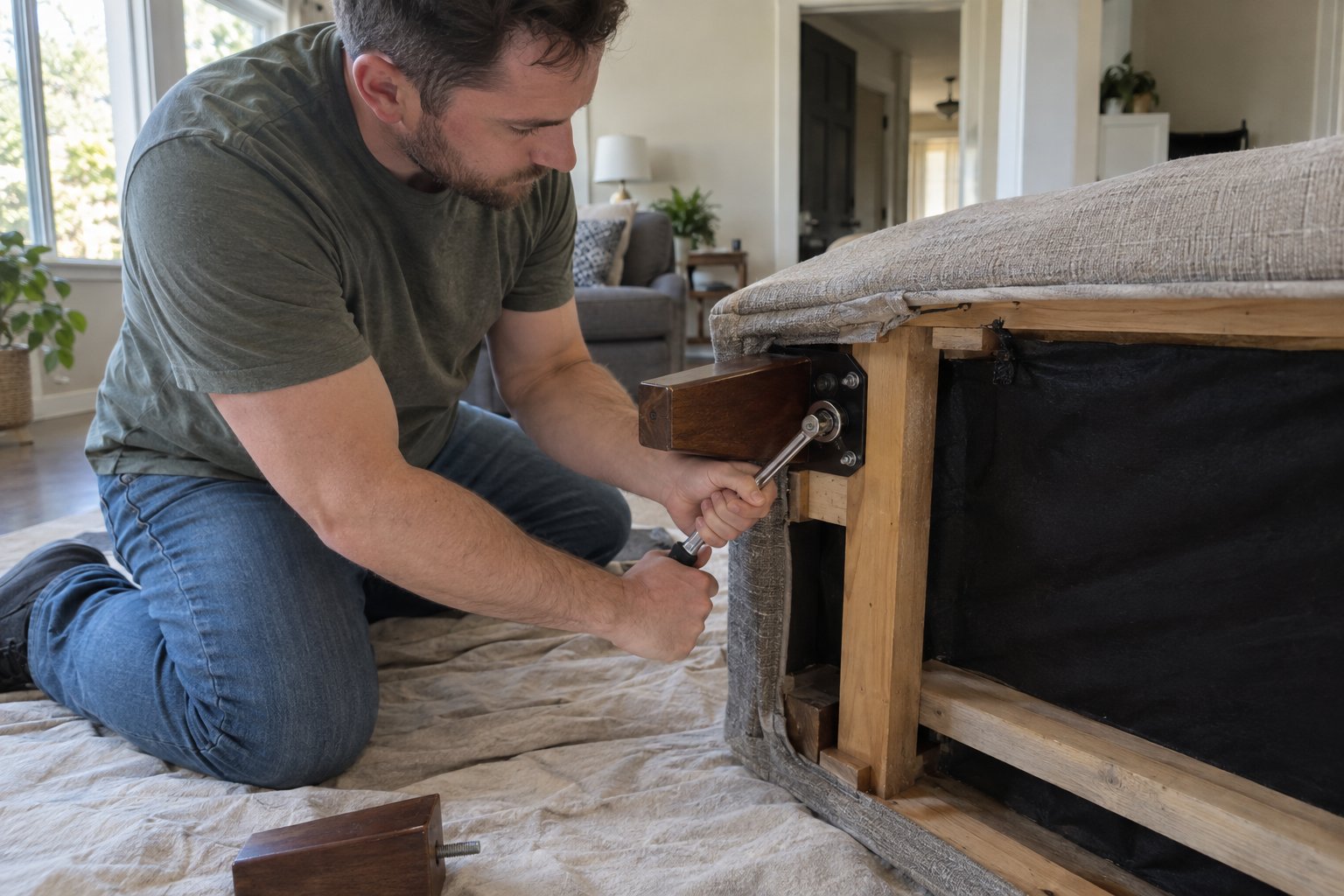
The crib is almost certainly the largest and most structurally complex piece of furniture in the nursery. Before you remove a single bolt, photograph the assembled frame from every angle — front, back, both sides, and close-up shots of every hardware connection point. Use a zip-lock bag to collect every bolt, screw, washer, and Allen wrench that comes off the frame as you disassemble, and tape that bag directly to one of the side rail panels so it cannot be separated from the crib during transport. Wrap each rail and panel in moving blankets or stretch wrap before loading. If the crib came with an instruction manual, keep it accessible — reassembly instructions are especially important for convertible cribs that transition to toddler beds, where the hardware configuration changes between modes.
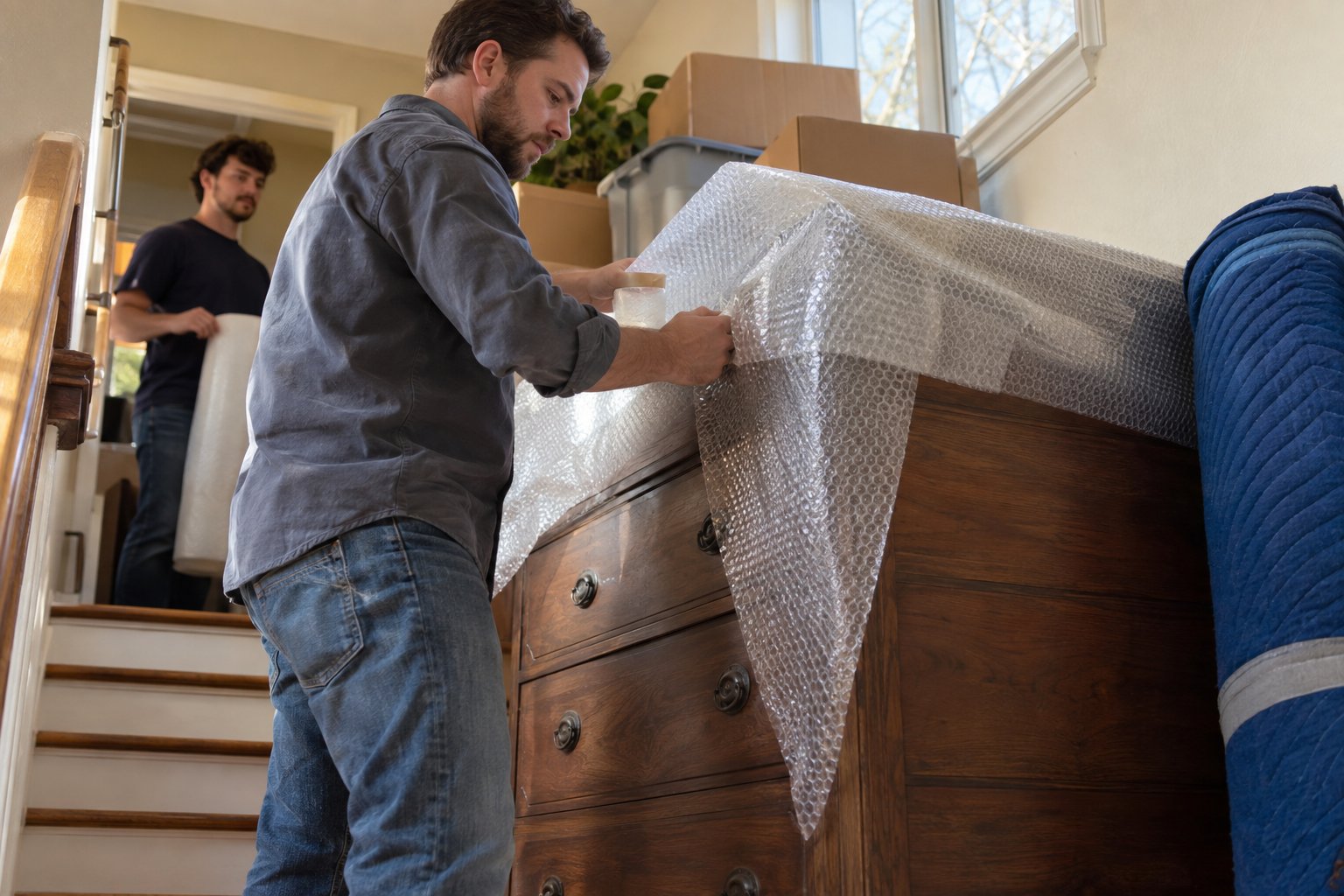
If your changing table is a standalone unit, remove the changing pad and store it separately — most pads are foam and can be compressed slightly, but they should be wrapped in plastic or a large garbage bag to protect the vinyl cover from scuffs. Remove any drawers and pack them separately, wrapping the drawer faces in paper or bubble wrap. If the changing table is a topper that sits on a dresser, remove it and transport it flat, never on its side, to avoid warping the raised safety edges.
Glider rockers are heavier than they appear and their mechanisms — the swivel base or the glide track — are the most vulnerable parts. Wrap the chair body in a moving blanket and secure it with stretch wrap. If the ottoman is attached via a glide mechanism, check the manufacturer's instructions before attempting to detach it; some ottomans are not designed to be separated from the chair frame and can be damaged if forced. Move the glider upright whenever possible to protect the mechanism.
Freestanding nursery shelving is often lightweight particleboard or MDF construction — the kind that looks solid but will bow, warp, or crack under the wrong load distribution during a move. Remove all items from shelves before moving the unit, and if the shelf is wall-mounted, patch the anchor holes before you vacate the room. Pack board books flat in small boxes — they are heavier than they look, and overfilling a large box with books will make it impossible to lift safely.
The non-furniture contents of a nursery fall into three broad categories: soft goods in large quantities, sensitive electronics, and a dense field of small accessories that require deliberate organization to survive the move intact.
Baby clothing is small, light, and easy to pack — but the sheer volume of it in a typical nursery can fill more boxes than you expect. Use wardrobe boxes for hanging items already on hangers, and use medium-sized boxes lined with clean garbage bags for folded clothing, swaddles, sleep sacks, and blankets. Label every box with the clothing size range it contains — this will be invaluable when you are unpacking and need to find the right size immediately. Wash all soft goods before packing so everything arrives clean and ready to use without an extra laundry cycle at the destination.
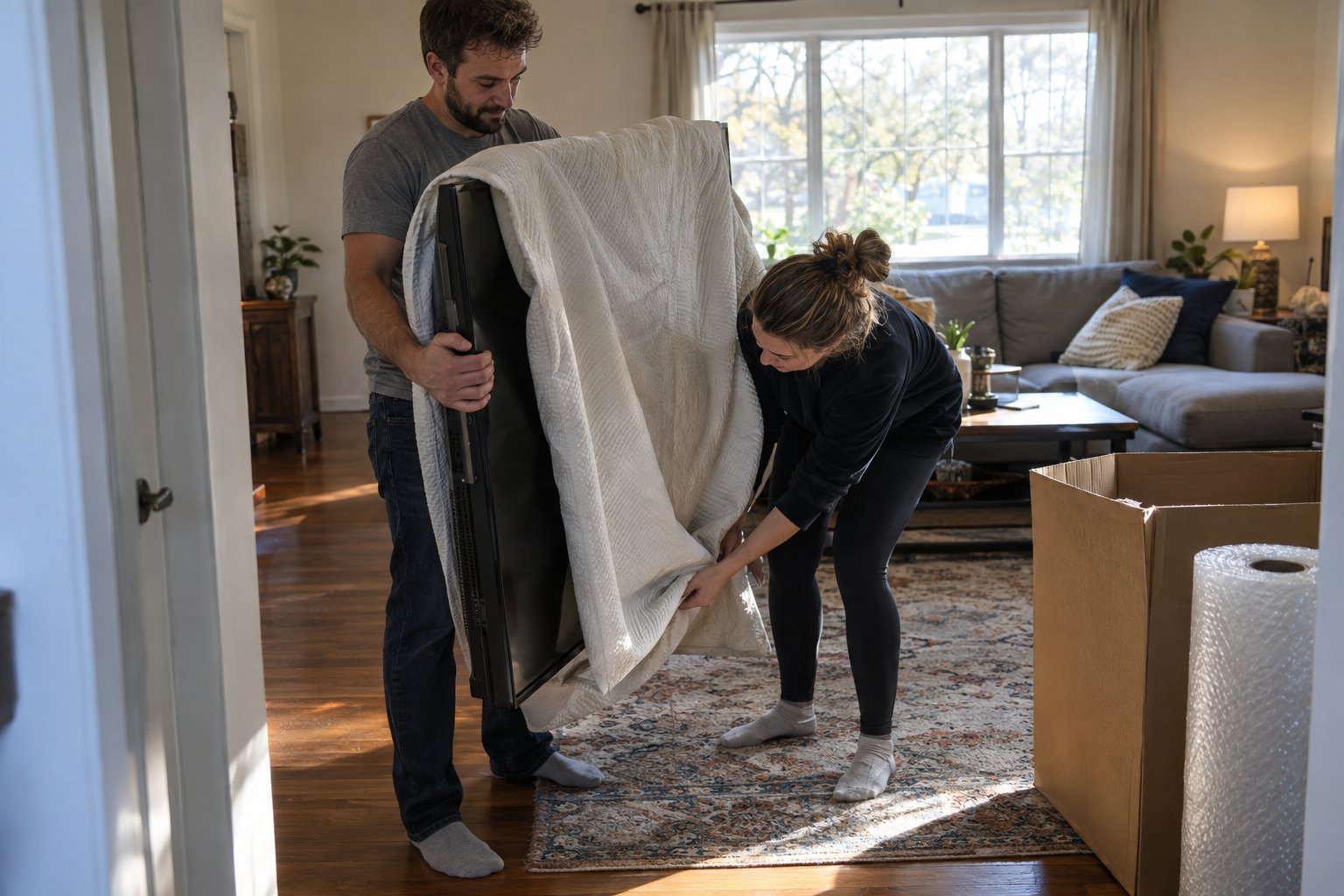
Ideally, baby electronics should be packed in their original boxes. If those are no longer available, wrap each unit in bubble wrap and pack it in a small box surrounded by packing paper. Keep camera units and base units together in the same box — never split a monitor system across multiple boxes. Photograph the back of each unit to capture the model number and any sync codes before wrapping. White noise machines are often dropped during chaotic moving days; treat them like any other fragile electronic and pack accordingly.
The diaper bag itself should travel with you in your personal vehicle rather than on the moving truck — you will almost certainly need it accessible on moving day and during the first night in the new home. Pack diapers, wipes, and a basic first-aid kit separately in a clearly labeled "open first" bag that stays in your car. Nightlights, outlet covers, corner guards, and other childproofing accessories are small but critical — pack them in a single labeled zip-lock bag inside a clearly marked box so you can childproof the new nursery before your child spends their first night there.
The goal on arrival day is simple: get the nursery functional before anything else in the house. A child who can sleep in a familiar crib, surrounded by familiar soft goods and sounds, will adjust to the new environment far more smoothly than one who spends the first night in a chaotic, half-assembled room.
Make the crib your very first assembly task at the new home. Use the hardware bag you taped to the rail panel and the photographs you took before disassembly. Follow the manufacturer's instructions exactly — do not improvise with alternate hardware or skip steps. Once assembled, check every connection point before placing the mattress and any bedding. A safely assembled crib is non-negotiable.
Hang the blackout curtains, set up the white noise machine, and place familiar soft toys or a sleep sack in the crib before your child's first nap in the new room. Familiar sounds and textures signal safety to young children and help the transition feel less abrupt. If the mobile was hung over the crib in the previous home, rehang it in the same relative position. Small details matter more than adults typically expect in the first days after a move.
Before your child enters the nursery in the new home, complete a full childproofing walkthrough: install outlet covers, check for any new furniture gaps or ledges that were not present in the previous home, secure any freestanding bookshelves or dressers to the wall with anti-tip straps, and confirm that cords from blinds or curtains are secured out of reach. Moving to a new home resets the childproofing environment entirely — what was safe in the old layout may not be safe in the new one.
The nursery is one room where the stakes of a moving mistake are genuinely high. Incorrectly reassembled baby furniture, damaged monitors, and lost hardware can create real safety risks for your child. If you want the confidence of knowing that every piece of nursery furniture is disassembled, transported, and reassembled correctly — by a team that treats your family's belongings with care — request a free moving quote from Wise Guys Moving today. We serve Auburn, Opelika, and communities throughout the region, and we are ready to help you make this move the smoothest your family has ever experienced.
Start the nursery at least one to two weeks before moving day. Begin with items your child has outgrown or rarely uses — stored clothing sizes, duplicate gear, out-of-rotation toys — and work toward the daily-use items in the final days. The crib, white noise machine, and sleep essentials should be the very last things packed and the very first things reassembled at the new home.
It depends on the crib model. Many cribs are safest transported disassembled with each panel wrapped and secured. A fully assembled crib laid flat takes up significant truck space and can sustain structural stress on the joints during transit. Consult your crib's manufacturer guidelines before moving it assembled. When in doubt, disassemble, photograph the hardware layout first, and keep all bolts in a labeled bag taped to one of the panels.
Refrigerated or frozen breast milk and formula should be transported in an insulated cooler with ice packs, not on the moving truck. Plan the move logistics so that the total time the cooler is unrefrigerated stays within safe limits recommended by pediatric and food safety guidelines. If the move is long-distance, research your options for shipping or safely transporting frozen milk before moving day.
Consistency in sleep cues is the most effective tool. Bring the white noise machine, familiar sleep sack, and favorite comfort items in your personal vehicle so they are immediately accessible — not buried in the moving truck. Reassemble the crib and set up the nursery before your child's first nap in the new home. Try to maintain regular nap and bedtime schedules as closely as possible during the transition period, even if the rest of the house is still in boxes.
Yes — professional moving companies like Wise Guys Moving can disassemble and reassemble nursery furniture including cribs, changing tables, and glider rockers. If you want this service, confirm it when you book your move so the team arrives prepared with the right tools and enough time allocated to do the job safely. Always confirm that any crib reassembled by movers is checked against manufacturer instructions before your child uses it.

Start the nursery at least one to two weeks before moving day. Begin with items your child has outgrown or rarely uses — stored clothing sizes, duplicate gear, out-of-rotation toys — and work toward the daily-use items in the final days. The crib, white noise machine, and sleep essentials should be the very last things packed and the very first things reassembled at the new home.
It depends on the crib model. Many cribs are safest transported disassembled with each panel wrapped and secured. A fully assembled crib laid flat takes up significant truck space and can sustain structural stress on the joints during transit. Consult your crib's manufacturer guidelines before moving it assembled. When in doubt, disassemble, photograph the hardware layout first, and keep all bolts in a labeled bag taped to one of the panels.
Refrigerated or frozen breast milk and formula should be transported in an insulated cooler with ice packs, not on the moving truck. Plan the move logistics so that the total time the cooler is unrefrigerated stays within safe limits recommended by pediatric and food safety guidelines. If the move is long-distance, research your options for shipping or safely transporting frozen milk before moving day.
Consistency in sleep cues is the most effective tool. Bring the white noise machine, familiar sleep sack, and favorite comfort items in your personal vehicle so they are immediately accessible — not buried in the moving truck. Reassemble the crib and set up the nursery before your child's first nap in the new home. Try to maintain regular nap and bedtime schedules as closely as possible during the transition period, even if the rest of the house is still in boxes.
Yes — professional moving companies like Wise Guys Moving can disassemble and reassemble nursery furniture including cribs, changing tables, and glider rockers. If you want this service, confirm it when you book your move so the team arrives prepared with the right tools and enough time allocated to do the job safely. Always confirm that any crib reassembled by movers is checked against manufacturer instructions before your child uses it.