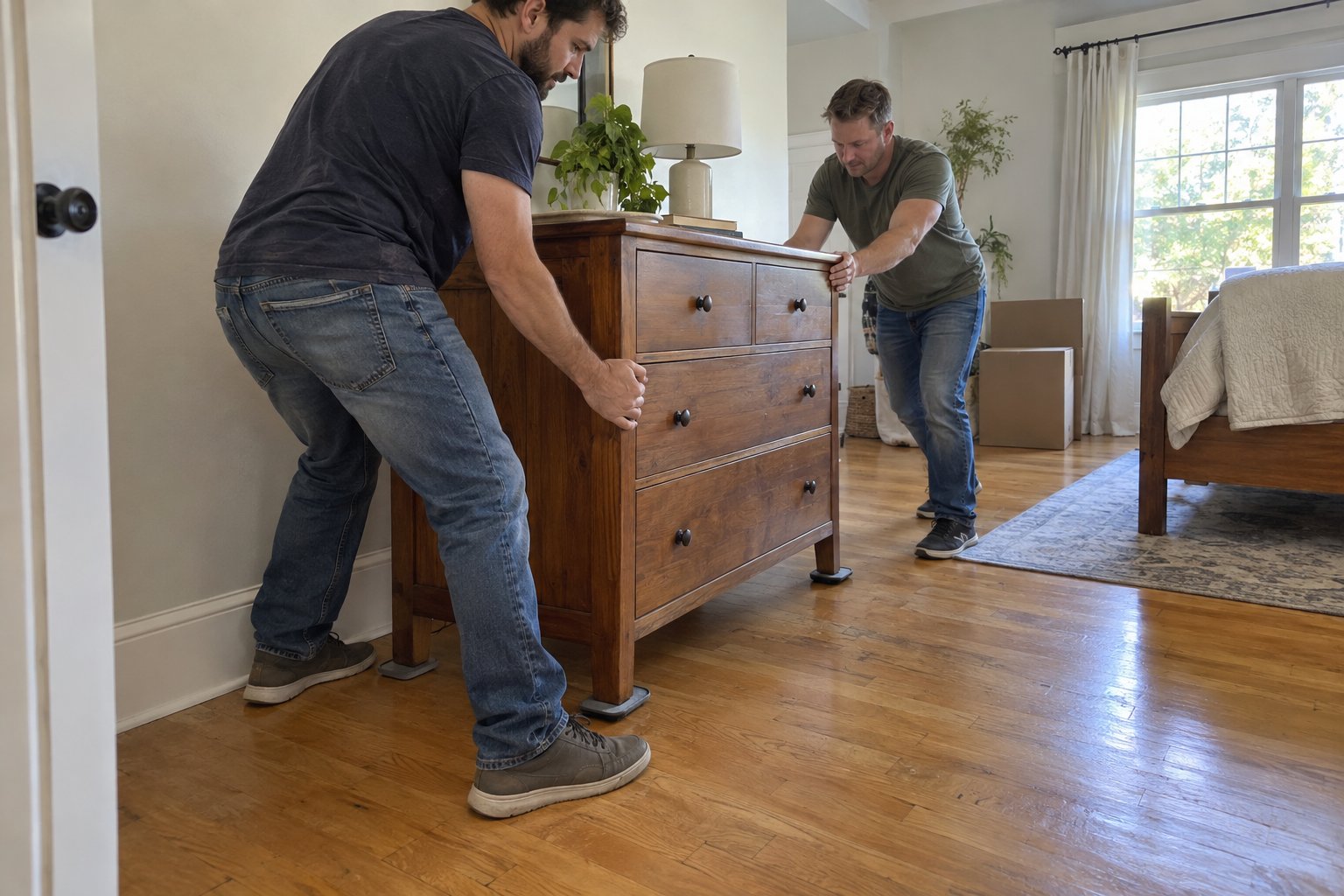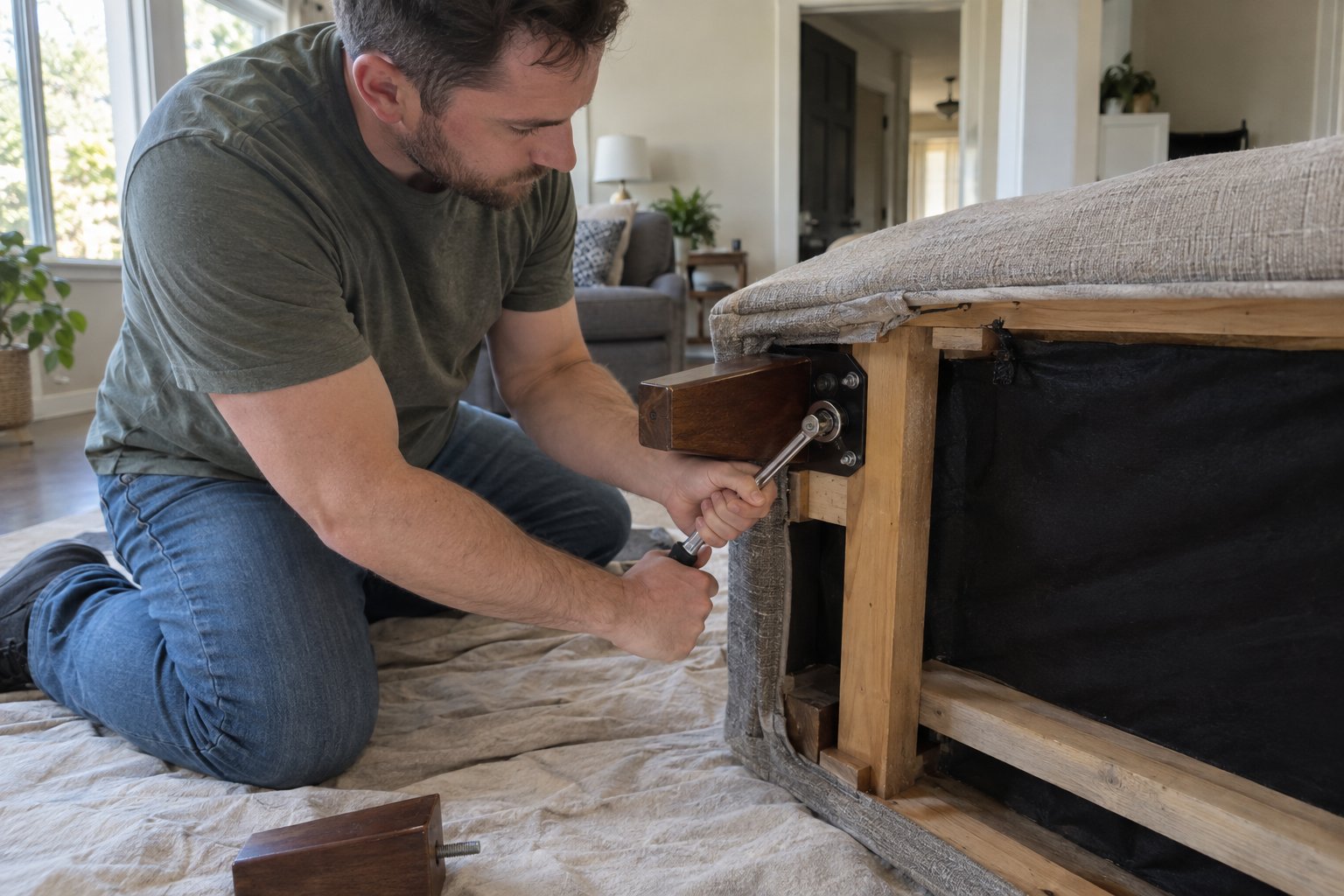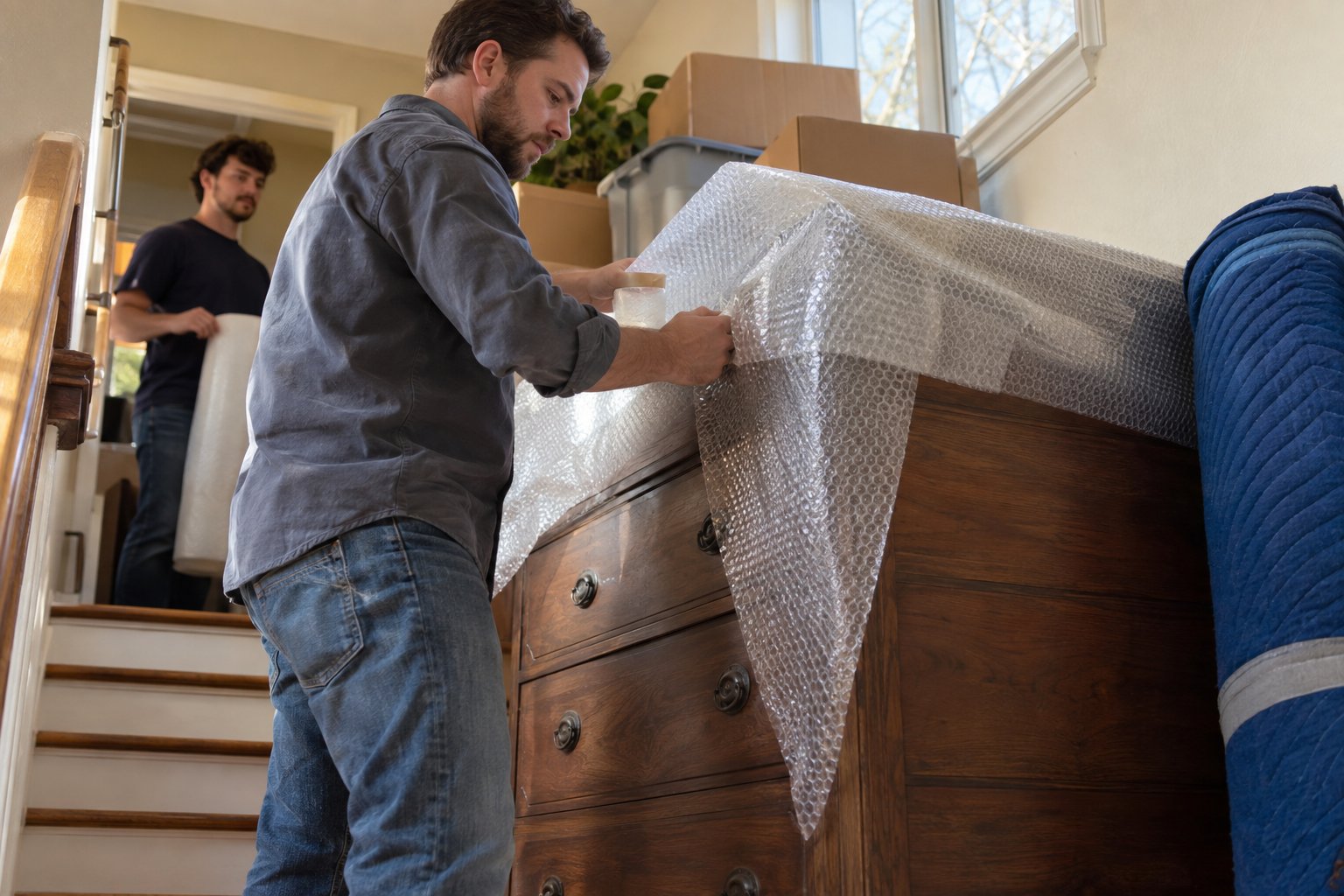
Can you lay a dryer on its side to transport it? In most cases, no, not if you want it to run properly once it arrives. Dryers are built to operate and travel upright, and tipping one on its side risks shifting internal components, straining mounts, and in gas models, creating a real safety hazard. There are rare exceptions and ways to reduce risk if you have no other choice, but upright is the position every manufacturer and appliance technician recommends.
This question comes up constantly on moving day, usually when a dryer will not fit through a doorway, stairwell, or truck ramp standing up. Before you tilt one over to make it fit, it helps to understand what is actually at risk inside the appliance and what your realistic options are.
A dryer's drum, motor, belt, and blower assembly are all mounted and balanced for an upright orientation. Laying the unit on its side shifts weight onto parts and mounting points that were never engineered to bear it, which can bend brackets, misalign the drum, or loosen internal wiring.
Unlike a washing machine, a dryer has no water or suspension system to drain or lock down before a move, so people often assume it has nothing to protect against movement. In reality, the drum support rollers, the belt tensioner, and the blower housing are all sensitive to being jostled at an angle they were not built for. Even a short trip on its side across a driveway can be enough to knock something out of alignment.
The most common issues after a dryer travels on its side are a belt that slips off its pulley, a blower wheel that shifts and starts rattling, or a drum that no longer spins evenly. None of these are always obvious right away. Some owners run the dryer once or twice before noticing a new noise, a burning smell, or reduced airflow, by which point the unit has already been run in a compromised state.
Yes, gas dryers carry an added risk that electric models do not: residual oil sitting in the gas valve or burner assembly can leak out if the unit is tipped, and any lingering gas odor should never be treated as harmless. Electric dryers avoid that specific hazard, but both types still face the same mechanical risks to the drum, belt, and motor mounts.
If you have a gas dryer, the line must be fully disconnected by a qualified technician or your gas utility before the unit is moved at all, regardless of orientation. Never attempt to disconnect a gas line yourself if you are not confident doing so safely. Once disconnected, treat a gas dryer with the same upright-only rule as an electric one, but build in extra time for professional disconnection and reconnection on both ends of the move.
If an upright dryer genuinely will not clear a doorway, stairwell, or hallway turn, the safer fix is almost always to adjust the angle of approach rather than lay the unit flat. A slight backward tilt on a hand truck, removing a door from its hinges, or walking the dryer through at a diagonal usually buys enough clearance without ever taking it past roughly a 45 degree angle.
If none of that works and the dryer truly must go on its side for a short stretch, minimize both the angle and the time spent there. Lay it on the side opposite the controls and door hinge if possible, support the full length of the unit rather than letting it rest on narrow edges, and set it upright again as soon as you clear the obstacle. Before running it again, let it sit upright for a few hours so anything that shifted has time to settle, and listen carefully for new noises on the first cycle.
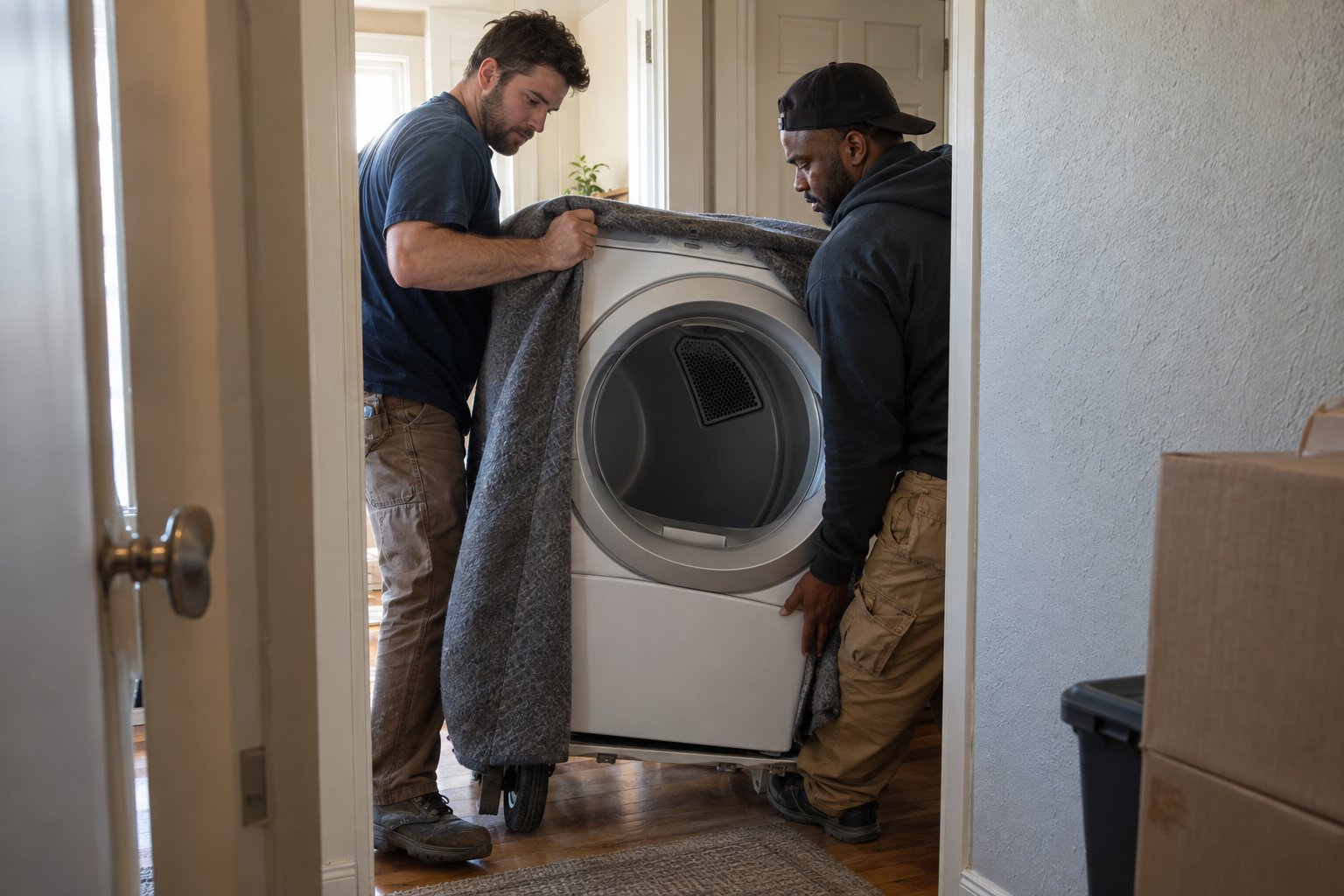
The safest way to transport a dryer is upright, strapped securely, and lifted rather than dragged. A furniture dolly rated for the appliance's weight, ratchet straps to secure it to the dolly or truck wall, and a second person to help navigate turns make the whole process far less likely to end in damage.
If you are moving multiple large appliances in the same trip, having a plan for how everything is loaded and secured together matters as much as how each individual piece is handled. Crews who specialize in careful handling of fragile and specialty items build that sequencing into the job so nothing gets crushed, tipped, or scratched by what is loaded around it.
Beyond the mechanical damage, a dryer transported on its side can also develop issues that only show up after weeks of use, which makes the cause hard to trace back to the move itself. A belt that was knocked slightly off-track might still function for a while before it slips completely. A blower wheel nudged out of balance can cause a vibration that gradually works other components loose.
This is part of why professional movers avoid laying major appliances flat whenever there is any alternative, even when it means taking a few extra minutes to maneuver through a tight space. The short-term convenience of tipping an appliance over rarely outweighs the risk of a repair call or a replacement motor a few weeks later.
If your move involves a tricky stairwell, a narrow hallway, or an appliance that barely fits anywhere, it is worth getting an opinion before moving day rather than improvising on the spot. A team that regularly handles local moving jobs will have already seen your layout problem before and can tell you in advance whether the dryer needs to come apart, go through a window, or simply be tilted carefully through a doorframe.
If you are not confident lifting, strapping, or maneuvering a dryer safely, or if your gas line needs disconnection, it makes sense to bring in professional movers rather than risk the appliance or your own safety. This is especially true for tight stairwells, long carries, or moves where the dryer is one of several heavy items being loaded the same day.
Professional crews bring the right dollies, straps, and padding, and they know how to read a doorway or staircase before committing to a lift. If your dryer is part of a larger relocation, it is worth requesting a free moving quote so the crew can plan for the appliance alongside everything else going on the truck.
It is not recommended. Even for a short pickup truck trip, laying a dryer on its side risks shifting the drum, belt, or blower assembly. If it truly cannot travel upright, keep the trip as short as possible, support the full length of the unit, and have it inspected before running a cycle.
There is no safe length of time that guarantees no damage, since even a brief tip can knock a belt off track or shift a blower wheel. The longer a dryer stays on its side, especially over bumpy roads, the higher the chance something inside is knocked out of alignment.
Many technicians recommend letting a dryer sit upright for a few hours before running it, particularly if it traveled on its side or if a gas line was reconnected. This gives any shifted components or trapped oil residue time to settle before the unit is used.
No. A gas dryer's line should always be disconnected by a qualified technician or your gas utility before the appliance is moved, upright or otherwise. Moving a gas dryer without proper disconnection risks a gas leak regardless of how carefully the unit itself is handled.
Stop using it and have it inspected before running further cycles, since a new rattle, thumping, or grinding sound after being laid on its side usually points to a shifted belt, drum roller, or blower wheel. Running it further can turn a minor misalignment into a more expensive repair.

It is not recommended. Even for a short pickup truck trip, laying a dryer on its side risks shifting the drum, belt, or blower assembly. If it truly cannot travel upright, keep the trip as short as possible, support the full length of the unit, and have it inspected before running a cycle.
There is no safe length of time that guarantees no damage, since even a brief tip can knock a belt off track or shift a blower wheel. The longer a dryer stays on its side, especially over bumpy roads, the higher the chance something inside is knocked out of alignment.
Many technicians recommend letting a dryer sit upright for a few hours before running it, particularly if it traveled on its side or if a gas line was reconnected. This gives any shifted components or trapped oil residue time to settle before the unit is used.
No. A gas dryer's line should always be disconnected by a qualified technician or your gas utility before the appliance is moved, upright or otherwise. Moving a gas dryer without proper disconnection risks a gas leak regardless of how carefully the unit itself is handled.
Stop using it and have it inspected before running further cycles, since a new rattle, thumping, or grinding sound after being laid on its side usually points to a shifted belt, drum roller, or blower wheel. Running it further can turn a minor misalignment into a more expensive repair.