When homeowners work through their room-by-room moving plan, the guest room almost always falls near the bottom of the priority list — but knowing how to pack and move a guest room the right way can save you from collapsed bed frames, crushed decorative pillows, tangled window treatments, and a collection of miscellaneous items that ends up scattered across a dozen unmarked boxes. A guest room is deceptively complex: it often doubles as a storage room, a secondary office, a place for seasonal items, and a fully functional bedroom all at once, creating a packing challenge that is far more layered than its casual appearance suggests.
Whether you are relocating across Auburn or moving to an entirely new city, this guide walks you through every step of packing and moving your guest room safely and efficiently. When you are ready to leave the hard work to the professionals, call Wise Guys Moving at (334) 610-1593 or get a free moving quote today.
The guest room presents a category of moving challenges that are entirely different from any other space in the home. Unlike the master bedroom — where the primary concern is heavy furniture and personal belongings — or the home office — where electronics and paperwork dominate the risk profile — the guest room combines multi-purpose furniture, a mix of stored seasonal items, bedding in large unwieldy sizes, and decorative pieces that have often sat undisturbed for months or even years.
Think about what a typical guest room actually contains: a full, queen, or sleeper sofa bed with a complex frame mechanism, a nightstand or two, a dresser filled with overflow clothing and linens, a closet packed with luggage, holiday decorations, out-of-season clothing, gift wrap supplies, and spare electronics, decorative artwork, lamps, window treatments, area rugs, and an assortment of miscellaneous items that were placed there temporarily and never relocated. Each of these categories carries its own risk. A sleeper sofa with a fold-out metal frame can pinch or tear if the mattress is not secured before moving. A dresser drawer packed with loose, miscellaneous items can shift and warp its slides during transit. Artwork leaned carelessly against a truck wall will arrive scratched or with broken frames.
A rushed guest room pack almost always produces the same bad outcomes: bedding stuffed into boxes without being bagged or protected, bed frames assembled without labeling the hardware, closet contents tossed indiscriminately into bags that tear under their own weight, and furniture that arrives at the new home with scuffed legs and missing screws. Plan to dedicate at least one full day to the guest room — and if it has accumulated years of secondary storage, allow two days to do it properly.
Before you pull a single item from the closet or strip the bed, the most valuable thing you can do is take stock of everything in the guest room and make clear, honest decisions about what is genuinely worth moving to your new home.
Guest room closets are notorious catch-all spaces. Open the doors and pull everything out before you pack anything else in the room. Sort contents into four categories: items you will keep and move, items you will donate, items you will discard, and items that belong in a different room of the new home. Moving is the single best opportunity to stop paying the hidden cost — in boxes, truck space, and effort — of transporting things you no longer need. Luggage, in particular, is worth evaluating: older, broken-wheeled bags that you have not used in years are rarely worth the space they occupy in a moving truck.
Walk through the room with your phone before touching anything and photograph the bed frame from multiple angles, any furniture with complex assembly, how artwork is hung and spaced on the walls, and how cords are routed from lamps or electronics. These photos eliminate the guesswork of reassembly and rehang at the new home and take only a few minutes to capture.
Mattresses are one of the most commonly damaged items during a move when they are not properly protected. Decide now whether the guest room mattress is worth moving in its current condition or whether it makes more sense to replace it at the new home. If you are moving it, order a mattress bag or mattress cover before moving day — not as an afterthought on the truck.
Bedding, pillows, and soft furnishings from a guest room are among the easiest items to pack when handled correctly — and among the most wasteful to pack incorrectly, since they take up enormous box space if not consolidated strategically.
Comforters, duvets, quilts, and blankets compress to a fraction of their normal size in vacuum storage bags. This single step can reduce the number of boxes needed for soft goods by half or more. Seal the bags before moving day, not during, so you are not scrambling with a vacuum on the morning of the move.
Decorative pillows and sleeping pillows can be placed inside wardrobe boxes on top of hanging clothing — effectively using dead space that would otherwise go unused. Clean, unused trash bags also work well for pillows, since the bags can be tied and stacked without risk of the contents being damaged.
Embroidered or decorative pillow shams, European square pillows with fragile covers, and specialty cushions should be wrapped individually in clean packing paper or white newsprint before being packed together. Keep decorative shams away from items that could snag or stain the fabric.
Rather than packing all the sheets in one box and all the pillowcases in another, pack each complete linen set together — fitted sheet, flat sheet, and pillowcases — in a single bundle. This makes unpacking dramatically faster and eliminates the frustration of mismatched sets scattered across multiple boxes.
Furniture is the heaviest and most damage-prone category in the guest room. Taking the time to disassemble, pad, and wrap each piece correctly before moving day protects both the furniture and everything around it in the truck.
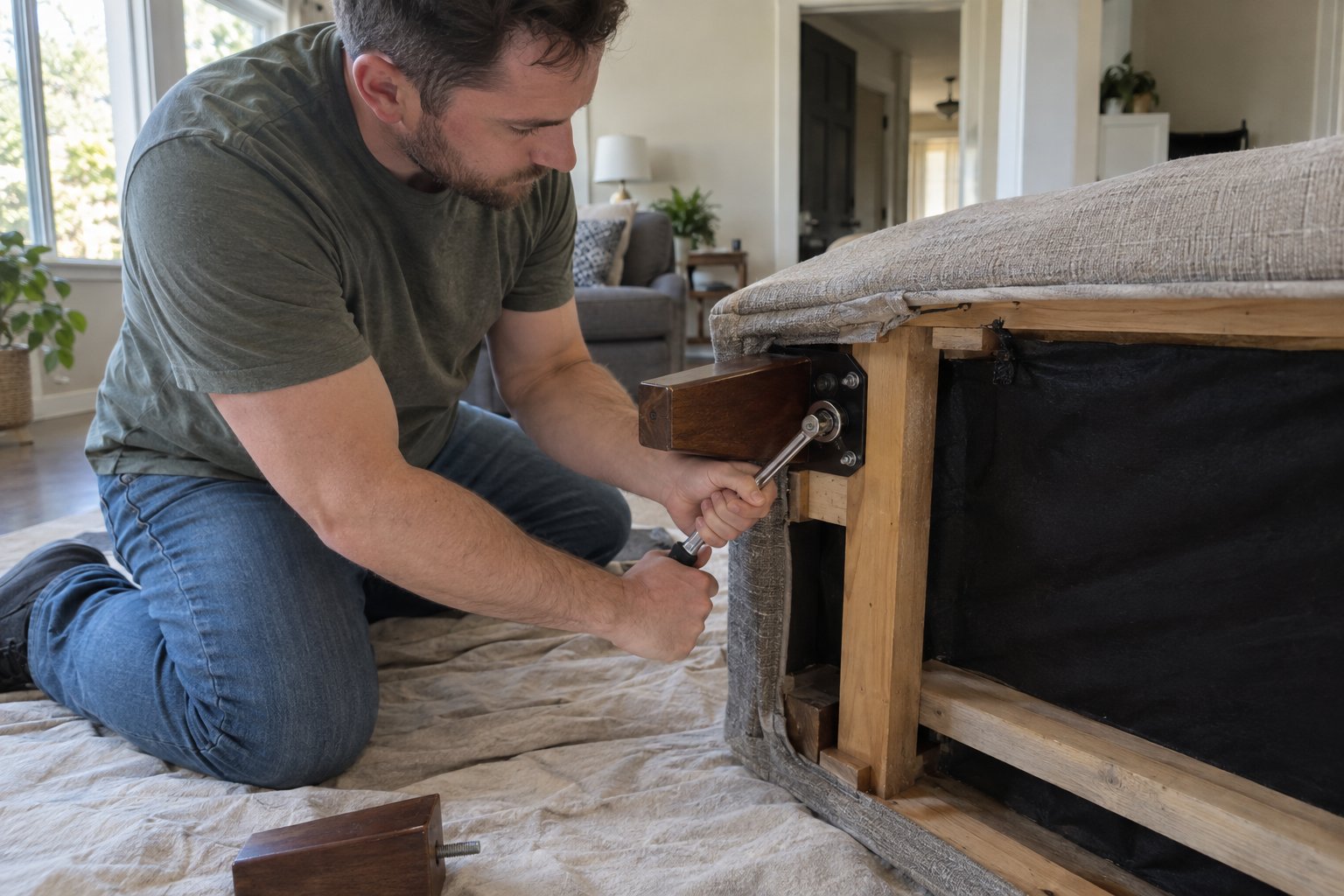
Remove the mattress and box spring first, wrapping each in their respective mattress bags before standing them upright against a wall. Disassemble the bed frame into its component rails, headboard, footboard, and center support beam. Place all screws, bolts, washers, and connector hardware into a labeled zip-lock bag and tape it directly to the headboard so it cannot become separated. Photograph the frame before fully disassembling it so you have a reference for reassembly.
Sleeper sofas — the kind with a fold-out metal mattress mechanism — are among the heaviest and most awkward pieces of furniture in any home. The fold-out mattress should always be secured with rope, ratchet straps, or bungee cords before the sofa is moved, preventing the mechanism from deploying unexpectedly during transit or while navigating stairs. Daybed frames with trundle drawers should have the trundle fully removed and moved separately. Do not attempt to move a sleeper sofa up or down stairs without at least two people and ideally a professional moving team.
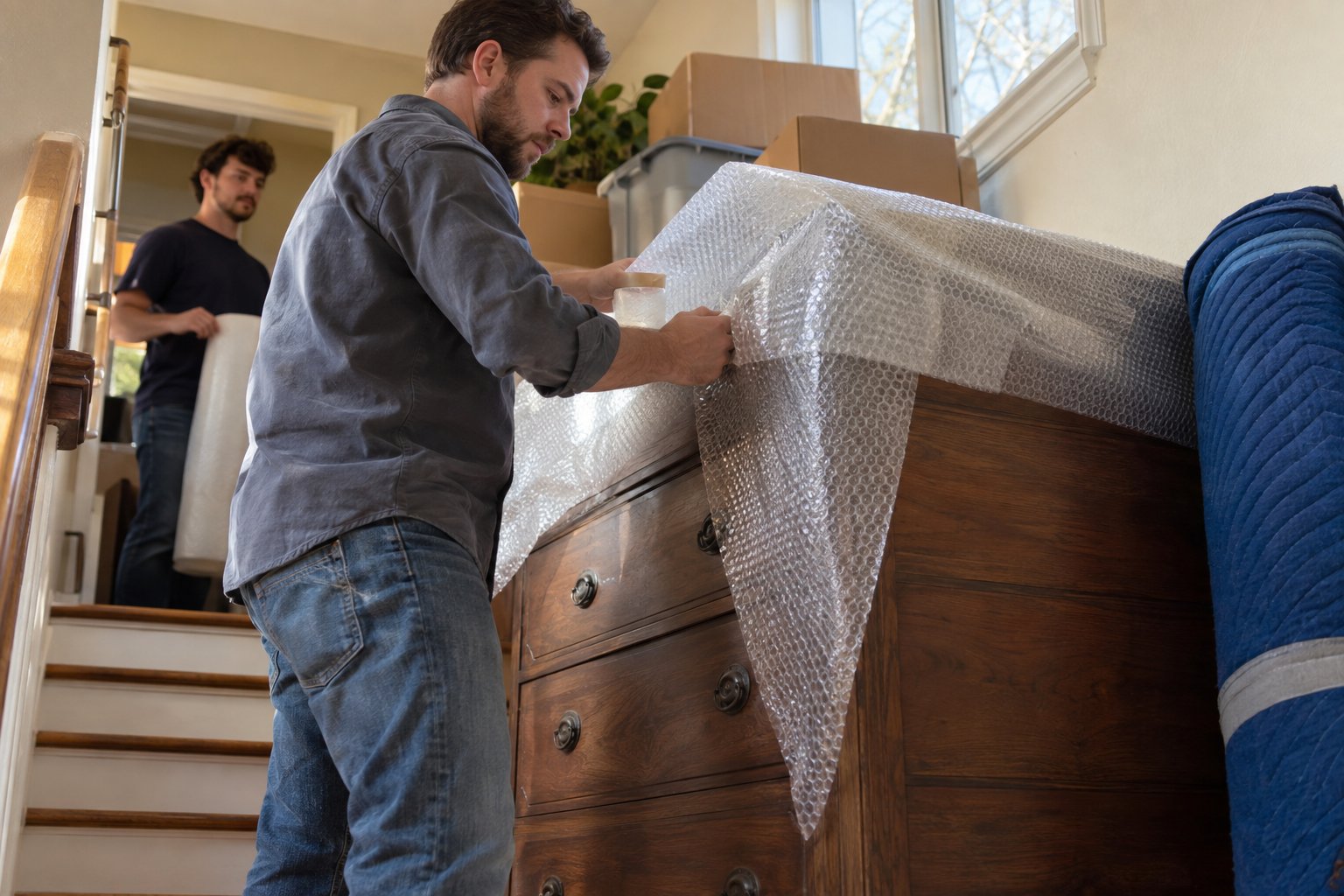
Dressers, nightstands, and side tables should have their drawers removed and packed separately or secured with stretch wrap to prevent them from sliding open in transit. Wrap all exposed wood surfaces — legs, corners, tabletops — in moving blankets or furniture pads and secure with stretch wrap. Do not use tape directly on wood or painted surfaces, as it can pull off finish when removed.
The guest room typically contains at least a few pieces of wall art, a lamp or two, and various decorative objects that require individual attention rather than bulk packing.
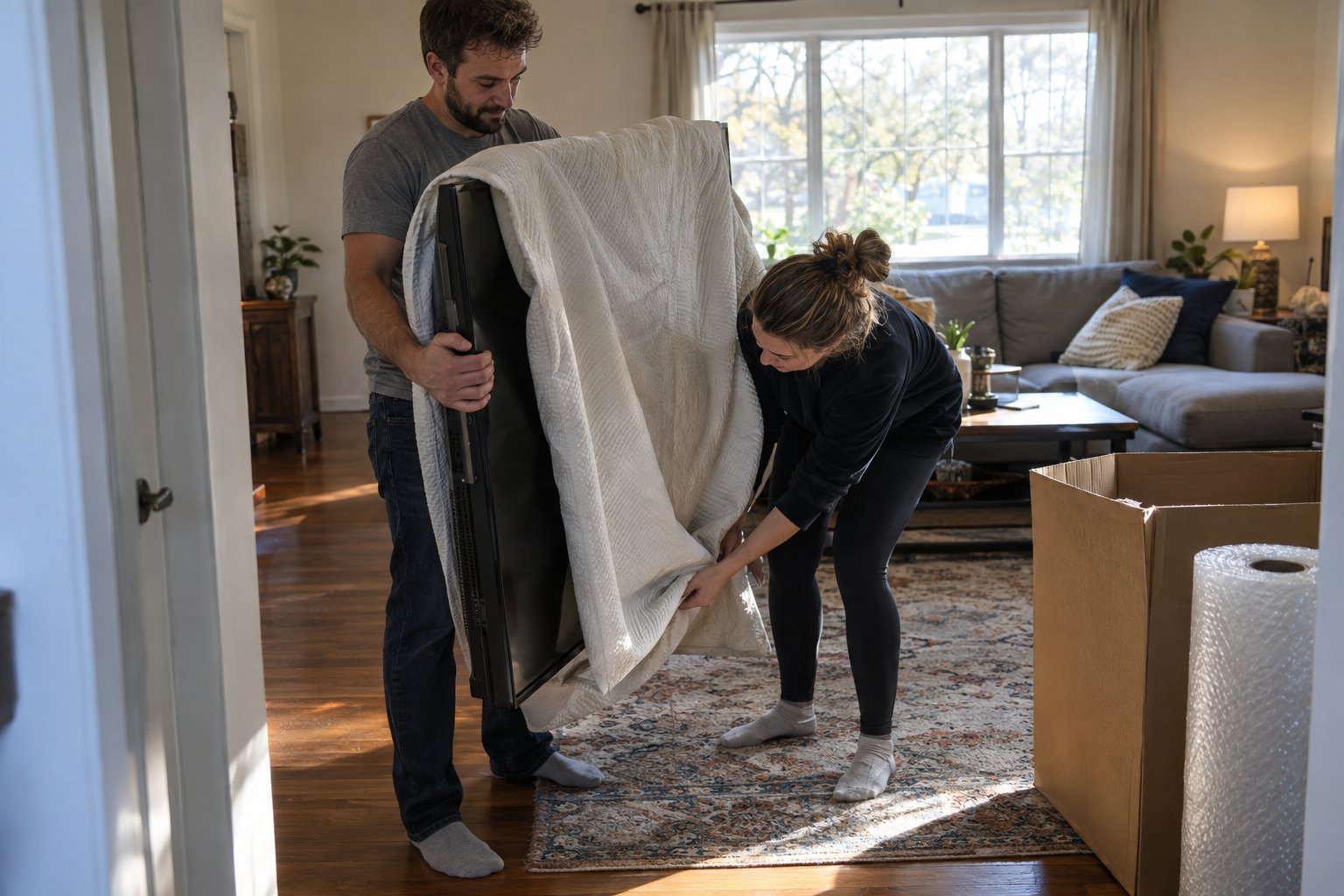
Framed artwork should never be placed flat at the bottom of a box under other items. Use flat picture boxes or mirror boxes sized to fit the piece, wrapping the frame in bubble wrap before sliding it into the box. Label each box "FRAGILE — DO NOT LAY FLAT" and stand the boxes upright in the truck rather than stacking them horizontally.
Remove the lampshade and pack it in a dedicated box with clean packing paper loosely crumpled inside to maintain its shape. Never place anything on top of or inside a lampshade. Wrap the lamp base in bubble wrap and pack it upright in a separate box. Wrap the electrical cord loosely around the base and secure it with a twist tie — never tightly coiled, which can stress the cord.
Picture frames, candles, small sculptures, and decorative objects should each be wrapped in packing paper and grouped by fragility. Place heavier wrapped items at the bottom of the box and lighter, more fragile items on top. Fill all empty space with crumpled packing paper to eliminate shifting. Label the box with its destination room.
A guest room closet that has accumulated years of secondary storage requires a methodical approach. Resist the temptation to grab everything and stuff it into the nearest available box.
Luggage is one of the most underutilized packing assets in any move. Before you pack a single box of soft clothing or linens, fill every piece of luggage you are keeping with soft, packable items: folded clothing, light linens, shoes wrapped in bags, or soft accessories. Luggage is structurally designed to be handled and moved, making it ideal for travel between homes. Once filled, label each bag with its destination room so it does not get mixed into the general box pile.
Holiday decorations, seasonal clothing, and out-of-season gear stored in the guest room closet should go into clearly labeled bins or boxes — not mixed in with everyday items. Label each bin with both its contents and the room it belongs to at the new home: "Holiday Decorations — Storage Room" or "Winter Clothing — Guest Room Closet." This prevents the all-too-common problem of seasonal items disappearing into the wrong closet at the new home and not resurfacing until the following year.
Gift wrap supplies — tissue paper, ribbons, wrapping paper rolls, gift bags — are awkward to pack because of their length. Use a wardrobe box standing upright for wrapping paper rolls, keeping them vertical to prevent crushing. Pack gift bags flat in a standard box layered with packing paper. If the closet contains office overflow such as files, binders, or office supplies, pack these into their own clearly labeled boxes rather than mixing them with bedroom or linen items.
On moving day, the guest room should be one of the first rooms loaded, with its furniture going onto the truck before smaller boxes. Bed frames and mattresses load against the truck walls. The dresser and nightstands load next, drawers out or secured. Boxes stack on top of or around furniture, never directly against unprotected surfaces. Artwork stands upright between blanket-padded furniture pieces, never flat on the floor.
If you are working with a professional moving team, walk them through any pieces that require special handling — particularly the sleeper sofa, any wall-mounted items, or oversized artwork. The few minutes spent communicating before loading can prevent the kind of damage that takes weeks and significant expense to repair.
When you are ready to stop doing this yourself and leave the entire process to professionals who know how to handle every room in your home, request your free moving quote from Wise Guys Moving and let our Auburn-based team take it from here.
For a typical guest room used primarily as a bedroom, allow at least one full day of packing time before your move. If the guest room has doubled as secondary storage — holding luggage, seasonal items, holiday decorations, or office overflow — plan for two full days. Starting at least a week before your move date gives you time to sort, donate, and discard items you do not want to pay to move, which almost always reveals more than homeowners expect in a guest room closet.
Most professional moving companies, including Wise Guys Moving, can disassemble standard bed frames as part of the move. That said, if you have a sleeper sofa with a fold-out mechanism, a daybed with a trundle, or an older frame with non-standard hardware, it is worth discussing this with your moving team before moving day. Having the hardware already organized in labeled bags saves time and ensures nothing gets lost during the move.
Always use a mattress bag or mattress cover to protect the mattress during transit. Mattress bags are inexpensive and prevent the tears, stains, and moisture damage that commonly occur when mattresses are moved bare. Stand the mattress upright against the truck wall rather than laying it flat on the floor, where it can be compressed by stacked items. If the mattress is older or worn, moving may be a good opportunity to replace it rather than incurring the cost and effort of relocation.
The key is to sort before you pack. Pull everything out of the guest room closet and divide it into four groups: keep and move, donate, discard, and belongs in a different room. Once sorted, pack seasonal and holiday items into clearly labeled bins, fill luggage with soft packable items, box gift wrap supplies keeping rolls vertical in a wardrobe box, and separate any office overflow into its own clearly labeled boxes. Resist the temptation to combine categories into a single box — mixed boxes are the most common cause of unpacking frustration.
Yes. Wise Guys Moving offers full-service packing options that cover every room in your home, including the guest room and its closet contents. Our team brings all necessary materials — boxes, packing paper, bubble wrap, wardrobe boxes, mattress bags, and furniture pads — and handles the entire packing process so you can focus on the logistics of your move. Call us at (334) 610-1593 or request a free quote online to discuss which service level is right for your move.

For a typical guest room used primarily as a bedroom, allow at least one full day of packing time before your move. If the guest room has doubled as secondary storage — holding luggage, seasonal items, holiday decorations, or office overflow — plan for two full days. Starting at least a week before your move date gives you time to sort, donate, and discard items you do not want to pay to move, which almost always reveals more than homeowners expect in a guest room closet.
Most professional moving companies, including Wise Guys Moving, can disassemble standard bed frames as part of the move. That said, if you have a sleeper sofa with a fold-out mechanism, a daybed with a trundle, or an older frame with non-standard hardware, it is worth discussing this with your moving team before moving day. Having the hardware already organized in labeled bags saves time and ensures nothing gets lost during the move.
Always use a mattress bag or mattress cover to protect the mattress during transit. Mattress bags are inexpensive and prevent the tears, stains, and moisture damage that commonly occur when mattresses are moved bare. Stand the mattress upright against the truck wall rather than laying it flat on the floor, where it can be compressed by stacked items. If the mattress is older or worn, moving may be a good opportunity to replace it rather than incurring the cost and effort of relocation.
The key is to sort before you pack. Pull everything out of the guest room closet and divide it into four groups: keep and move, donate, discard, and belongs in a different room. Once sorted, pack seasonal and holiday items into clearly labeled bins, fill luggage with soft packable items, box gift wrap supplies keeping rolls vertical in a wardrobe box, and separate any office overflow into its own clearly labeled boxes. Resist the temptation to combine categories into a single box — mixed boxes are the most common cause of unpacking frustration.
Yes. Wise Guys Moving offers full-service packing options that cover every room in your home, including the guest room and its closet contents. Our team brings all necessary materials — boxes, packing paper, bubble wrap, wardrobe boxes, mattress bags, and furniture pads — and handles the entire packing process so you can focus on the logistics of your move. Call us at (334) 610-1593 or request a free quote online to discuss which service level is right for your move.