When homeowners work through their room-by-room moving plan, the mudroom almost always gets treated as a quick five-minute afterthought — but knowing how to pack and move a mudroom the right way can save you from scratched bench seats, stripped wall-anchor holes, tangled boot organizers, and a chaotic moving day made worse by the one room designed to tame chaos in the first place. A mudroom is deceptively demanding: it combines wall-mounted hardware, heavy-duty storage systems, seasonal gear in bulky shapes, and built-in cabinetry that may or may not be coming with you to the new home.
Whether you are relocating across Auburn or moving to an entirely new city, this guide walks you through every step of packing and moving your mudroom safely and efficiently. When you are ready to leave the hard work to the professionals, call Wise Guys Moving at (334) 610-1593 or get a free moving quote today.
The mudroom presents a category of moving challenges that are entirely different from any other space in the home. Unlike the kitchen — where the primary concern is appliances and dishware — or the garage — where hazardous materials and power tools dominate the risk profile — the mudroom combines wall-anchored fixtures, moisture-exposed gear, mixed household categories dumped in one transitional space, and often custom-built storage systems that blur the line between furniture and permanent structure.
Think about what a typical mudroom actually contains: a built-in bench with under-seat storage, a wall-mounted coat rack or individual hooks drilled into studs, cubbies assigned by family member, a boot tray or floor mat saturated with tracked-in mud, shoe racks loaded with seasonal footwear, sports equipment leaning against every available wall, backpacks and gear bags hanging from every hook, an umbrella stand, a key organizer, a small table or shelf for mail, a charging station, a utility sink in some homes, and a closet or cabinet holding cleaning supplies, pet leashes, and seasonal accessories. Each of these categories carries its own risk. A coat hook ripped from drywall without patching can become a costly repair you are responsible for under the terms of your lease or sale. A boot tray with standing water poured into a cardboard box will destroy the contents before the truck leaves the driveway. Sports equipment stacked without padding will scratch, dent, and tangle into a heap.
Plan to dedicate at least half a day to the mudroom — and if it has become a secondary storage hub for the whole household, allow a full day to do it right.
Before you pull a single hook off the wall or empty a single cubby, the most valuable thing you can do is take stock of everything in the mudroom and make clear, honest decisions about what is worth transporting to your new home.
Mudrooms accumulate items from every member of the household. Open every cabinet door, lift every bench lid, and pull every shoe from every rack before you begin packing anything. Sort contents into four categories: items you will keep and move, items you will donate, items you will discard, and items that belong in a different room of the new home. Old shoes that no one wears, broken umbrellas, sports gear for activities the family no longer does, and expired cleaning products are all candidates for the discard pile. Moving is the single best opportunity to stop paying the hidden cost — in boxes, truck space, and moving time — of hauling things that have no purpose at the destination.
Before removing anything from the walls, walk through the mudroom with your phone and photograph every hook placement, every shelf bracket, and every cubby configuration. If you are taking a modular storage system with you, these photos are your reassembly blueprint. They will also document the pre-move condition of the walls for any landlord or buyer inspection that follows your departure.
This is the mudroom's most important pre-move question. A freestanding bench is furniture — it comes with you. A built-in bench with a face frame attached to the wall studs may be a fixture, legally considered part of the home. Review your purchase agreement or lease carefully. When in doubt, ask your real estate agent or attorney before you start disassembling anything. Removing a true fixture without permission can create legal liability and delay your closing.
Wall-mounted items in the mudroom require more care during removal than almost any other category in the home. Done wrong, you leave behind a wall full of holes and walk away with bent hooks that no longer function properly.
Use the correct screwdriver or drill bit for each fastener — stripped screws become a serious problem in drywall. As you remove each hook or rack, immediately place all associated hardware — screws, wall anchors, mounting plates — into a small zip-lock bag and label it with the item it belongs to. Tape that bag directly to the back of the hook or to the rail it came from. This single habit will save you significant time and frustration during reassembly at the new home.
If you are a renter, patching wall anchor holes is typically required by your lease. Even if you are selling the home, leaving a clean wall is a professional courtesy that avoids disputes. Keep a small tube of spackling compound and a putty knife accessible — not buried in a packed box — so you can fill holes after hardware is removed and before your final walkthrough.
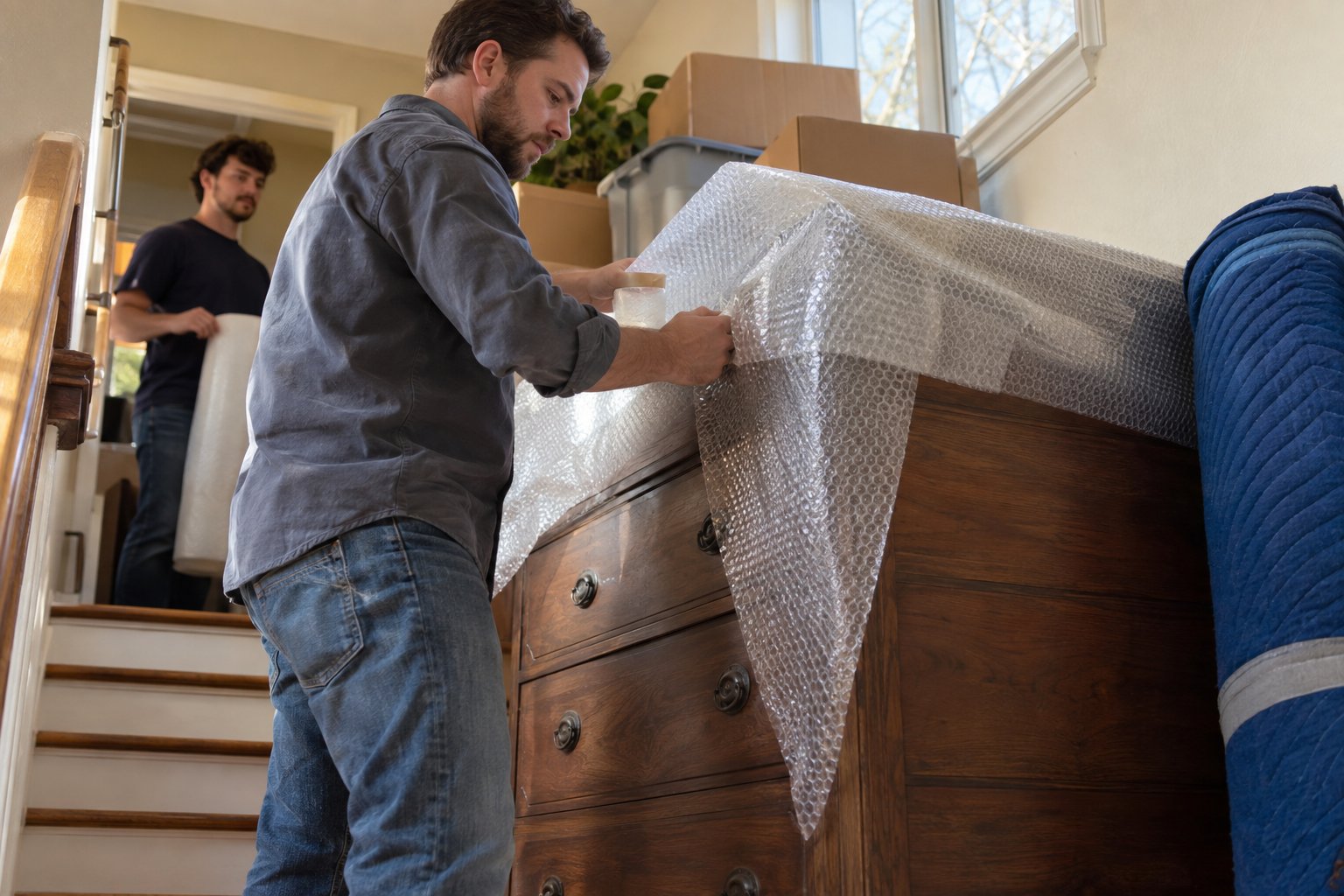
Metal coat rails, wooden peg rails, and hook strips should be wrapped in moving blankets or furniture pads and secured with stretch wrap or rubber bands before loading. Do not lean them bare against truck walls — metal edges will gouge adjacent furniture surfaces, and wood finishes will scuff without protection.
The contents of a mudroom span a wider range of shapes, materials, and weights than almost any room in the house. Packing by category — rather than by location on a shelf — produces boxes that are safer, better organized, and faster to unpack.
Empty, dry, and pair every shoe before packing. Stuff boots with packing paper or rolled socks to help them hold their shape during transit. Pack shoes toe-to-heel in boxes lined with packing paper, heavier shoes on the bottom. Do not pack shoes that are still wet or muddy — the moisture will transfer to other items and encourage mildew. Boot trays should be emptied, cleaned, and dried before being stacked flat or nested together for the truck.
Sports equipment deserves its own category because it is almost always oddly shaped, surprisingly heavy, and prone to damaging soft items it comes into contact with. Helmets can be nested inside each other with a layer of packing paper between them. Bats, sticks, and rackets should be bundled together with stretch wrap and padded with moving blankets at both ends. Balls pack well into large duffel bags that already need to be moved. Cleats and sport-specific footwear should be bagged separately — they carry dirt and odor that will transfer to clothing or other soft goods in a shared box.
Many mudrooms store cleaning products, lawn chemicals, or pest control supplies near the back door. Check every bottle and can for seal integrity before packing. Many liquid cleaning products are not safe to transport in a moving truck — especially in summer heat — because pressure changes and temperature fluctuations can cause containers to leak or burst. Dispose of any open, partially used, or hazardous chemical products according to your local guidelines before moving day. Replace them at the new home with fresh stock.
Coats and jackets that have been hanging in the mudroom should be dry cleaned or laundered before moving if they have been through a hard winter season. Pack clean coats in wardrobe boxes to prevent creasing — folding a heavy winter coat into a standard box compresses the fill and can take weeks for it to recover its insulating loft. Backpacks and tote bags can be filled with soft goods like scarves, gloves, and hats — this maximizes use of their internal volume and keeps small accessories from getting lost.
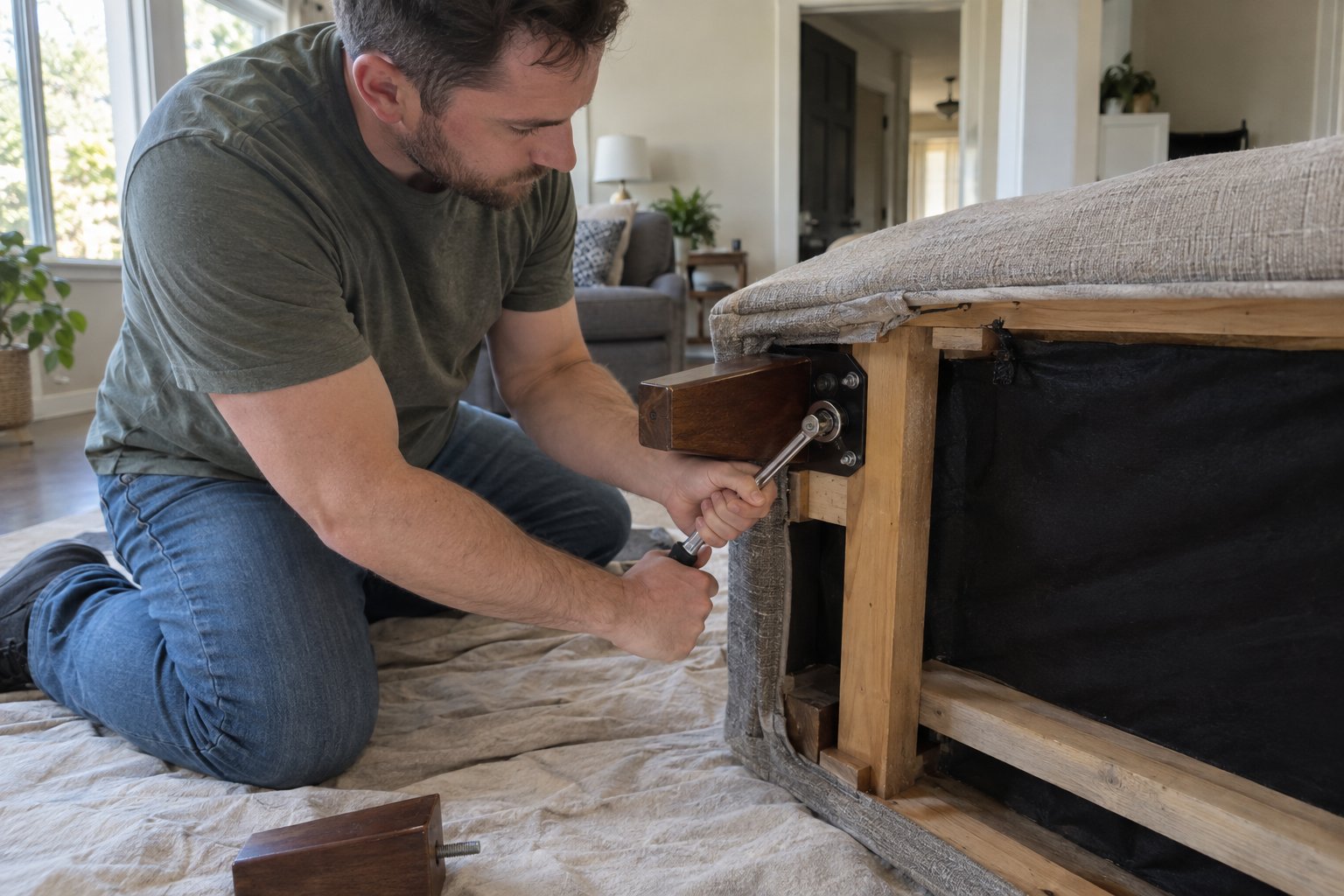
Freestanding mudroom furniture — benches, shelving units, shoe cabinets — should be disassembled where possible and padded before loading. Remove all drawers and under-seat storage compartments, pad them individually, and load them separately from the main piece. This reduces the overall weight and footprint of each item and eliminates the risk of drawers flying open in transit.
Modular cubby systems — the kind sold in flat-pack form at furniture retailers — should be fully disassembled for the move. If you no longer have the original assembly instructions, photograph the assembled unit from multiple angles before taking it apart. Keep all hardware in labeled zip-lock bags taped to the panel they belong with. Flat panels stack and transport far more safely than assembled cubbies, which can rack and warp under sideways pressure in a moving truck.
If you have confirmed that a built-in bench is legally yours to remove, approach disassembly carefully. Built-ins are typically attached to wall studs with lag screws, and the face frame may be glued or nailed to adjacent drywall. Work methodically: remove the top first, then the doors or drawers, then the body, then the base. Have a partner support each section as it comes free. Any drywall damage created during removal should be patched before you hand over the keys.
Once every item is packed and loaded, the mudroom requires a specific closing checklist before you leave the home for the last time.
Packing a mudroom is more complicated than it looks, and the consequences of doing it carelessly — damaged walls, lost hardware, broken gear, and a disorganized truck — ripple through the rest of your moving day. The team at Wise Guys Moving has the experience, equipment, and packing materials to handle every room in your home efficiently and safely, including the ones that were never designed to be easy to move.
Serving Auburn and the surrounding region, Wise Guys Moving provides full-service residential moving that covers everything from disassembly and packing to loading, transport, and setup at the new home. Call us at (334) 610-1593 or get a free moving quote and let us take the stress out of moving day — starting with the mudroom and finishing with every last box.
It depends on whether the built-in is legally considered a fixture or furniture. Fixtures — items attached to the wall studs that are intended to remain with the home — typically stay unless your purchase agreement explicitly allows removal. Freestanding or modular units are generally yours to take. Review your sale contract or lease and consult your real estate agent before disassembling anything attached to the wall.
As you remove each hook, rack, or rail, immediately place all screws, wall anchors, and mounting plates into a labeled zip-lock bag and tape that bag directly to the item it belongs with. This keeps every set of fasteners paired with its fixture and makes reinstallation at the new home straightforward. Never toss loose hardware into a box or bag with other miscellaneous items — it will disappear.
Many household cleaning products and chemical supplies are not safe to transport in a moving truck, particularly in hot weather, because heat and pressure changes can cause containers to leak or rupture. Check each product for seal integrity. Partially used or open containers of bleach, aerosol sprays, and hazardous chemicals should be disposed of properly before moving day. Replace them with fresh stock at the new home.
Make sure all footwear is completely dry before packing — wet or muddy boots will create moisture and odor problems in transit. Stuff tall boots with packing paper or rolled socks to help them hold their shape. Pack shoes toe-to-heel in sturdy boxes lined with packing paper, with heavier items on the bottom. Boot trays should be cleaned, dried, and stacked flat rather than packed in a box with other items.
Start the mudroom two to three days before moving day. Begin by auditing and decluttering the closets and cubbies, then photograph all wall-mounted hardware before removal. Pack seasonal gear and infrequently used items first, and leave daily-use items like keys, bags, and frequently worn shoes accessible until moving morning. If the mudroom doubles as a household storage hub, give yourself a full day rather than trying to rush it.

It depends on whether the built-in is legally considered a fixture or furniture. Fixtures — items attached to the wall studs that are intended to remain with the home — typically stay unless your purchase agreement explicitly allows removal. Freestanding or modular units are generally yours to take. Review your sale contract or lease and consult your real estate agent before disassembling anything attached to the wall.
As you remove each hook, rack, or rail, immediately place all screws, wall anchors, and mounting plates into a labeled zip-lock bag and tape that bag directly to the item it belongs with. This keeps every set of fasteners paired with its fixture and makes reinstallation at the new home straightforward. Never toss loose hardware into a box or bag with other miscellaneous items — it will disappear.
Many household cleaning products and chemical supplies are not safe to transport in a moving truck, particularly in hot weather, because heat and pressure changes can cause containers to leak or rupture. Check each product for seal integrity. Partially used or open containers of bleach, aerosol sprays, and hazardous chemicals should be disposed of properly before moving day. Replace them with fresh stock at the new home.
Make sure all footwear is completely dry before packing — wet or muddy boots will create moisture and odor problems in transit. Stuff tall boots with packing paper or rolled socks to help them hold their shape. Pack shoes toe-to-heel in sturdy boxes lined with packing paper, with heavier items on the bottom. Boot trays should be cleaned, dried, and stacked flat rather than packed in a box with other items.
Start the mudroom two to three days before moving day. Begin by auditing and decluttering the closets and cubbies, then photograph all wall-mounted hardware before removal. Pack seasonal gear and infrequently used items first, and leave daily-use items like keys, bags, and frequently worn shoes accessible until moving morning. If the mudroom doubles as a household storage hub, give yourself a full day rather than trying to rush it.