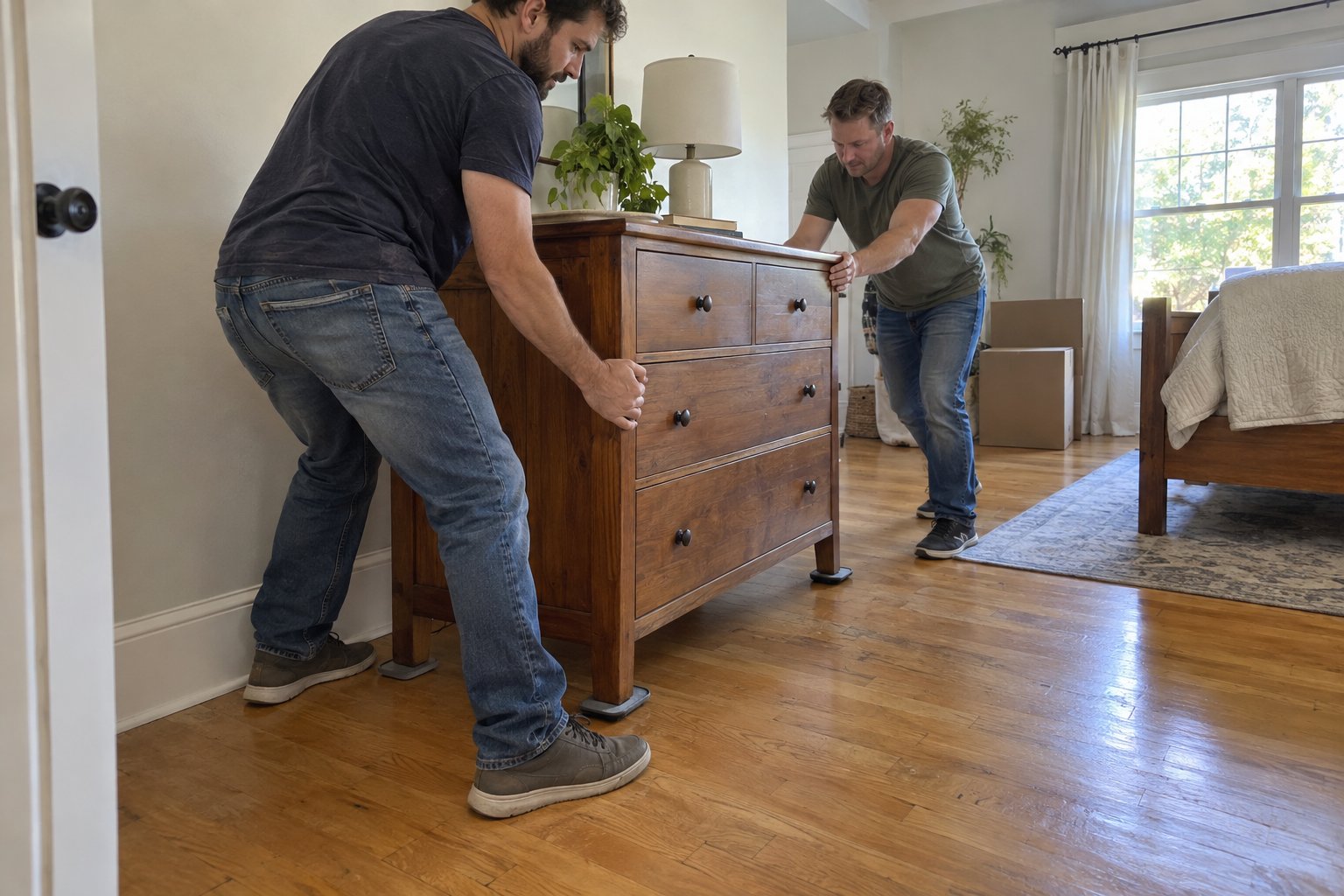
Moving furniture across hardwood floors safely comes down to removing friction, not muscle. Dragging a dresser or sofa directly on wood almost always leaves scuffs, gouges, or deep scratches, even when you go slowly. The fix is simple: get the right gliding tools under the legs, lift instead of drag whenever you can, and plan your path before anything moves an inch.
Hardwood is one of the most common flooring types we see on moving day, and it is also one of the easiest to damage if the crew (or you) rush the job. This guide covers exactly how to protect it, what tools actually work, and when it makes more sense to call in professional help instead of risking a refinishing bill.
Hardwood scratches easily because its finish is a thin protective layer sitting on top of soft wood grain, and any concentrated pressure point (a furniture leg, a metal caster, a dropped corner) can cut straight through it. Unlike tile or vinyl, hardwood shows every mark permanently unless it is sanded and refinished.
The real danger isn't usually the big couch everyone is careful with. It's the bookshelf someone "just scoots over a few feet" or the kitchen table dragged out of the way without a second thought. Grit trapped under furniture feet acts like sandpaper the moment weight shifts, so even a short slide can leave a visible track.
Preventing furniture damage while moving on hardwood means controlling three things: what's touching the floor, how much weight is bearing down at once, and how far you're moving the piece. Get those three right and scratches become very unlikely.
The best furniture sliders for hardwood floors are felt-bottomed sliders for lighter pieces and reinforced plastic or rubber-core sliders for heavier furniture like dressers, sofas, and appliances. The right choice depends on weight, not just floor type.
Adhesive felt pads work for dining chairs, side tables, and lighter bookcases. They're inexpensive and reusable, but they wear out under heavy, repeated use and are not rated for appliance-weight items.
These cup- or disc-shaped sliders sit under each leg and let heavy furniture glide with a fraction of the normal effort. They're the standard choice for couches, china cabinets, and pianos being repositioned a short distance across hardwood.
If you don't have sliders on hand, a folded moving blanket under each leg can work in a pinch for a short push, though it offers less consistent glide and can bunch up if the furniture isn't perfectly balanced.
Skip towels alone (they grip rather than glide), old carpet scraps with exposed backing, and anything with a rough or textured underside. These can trap grit against the floor instead of lifting the weight off it.
Yes, but it takes more people and more caution. Without sliders, the safest method is a full lift-and-carry rather than any sliding motion at all. Two to four people lifting a piece completely off the floor and setting it down in stages avoids contact-based scratching entirely, though it's harder on your back and only practical for shorter distances.
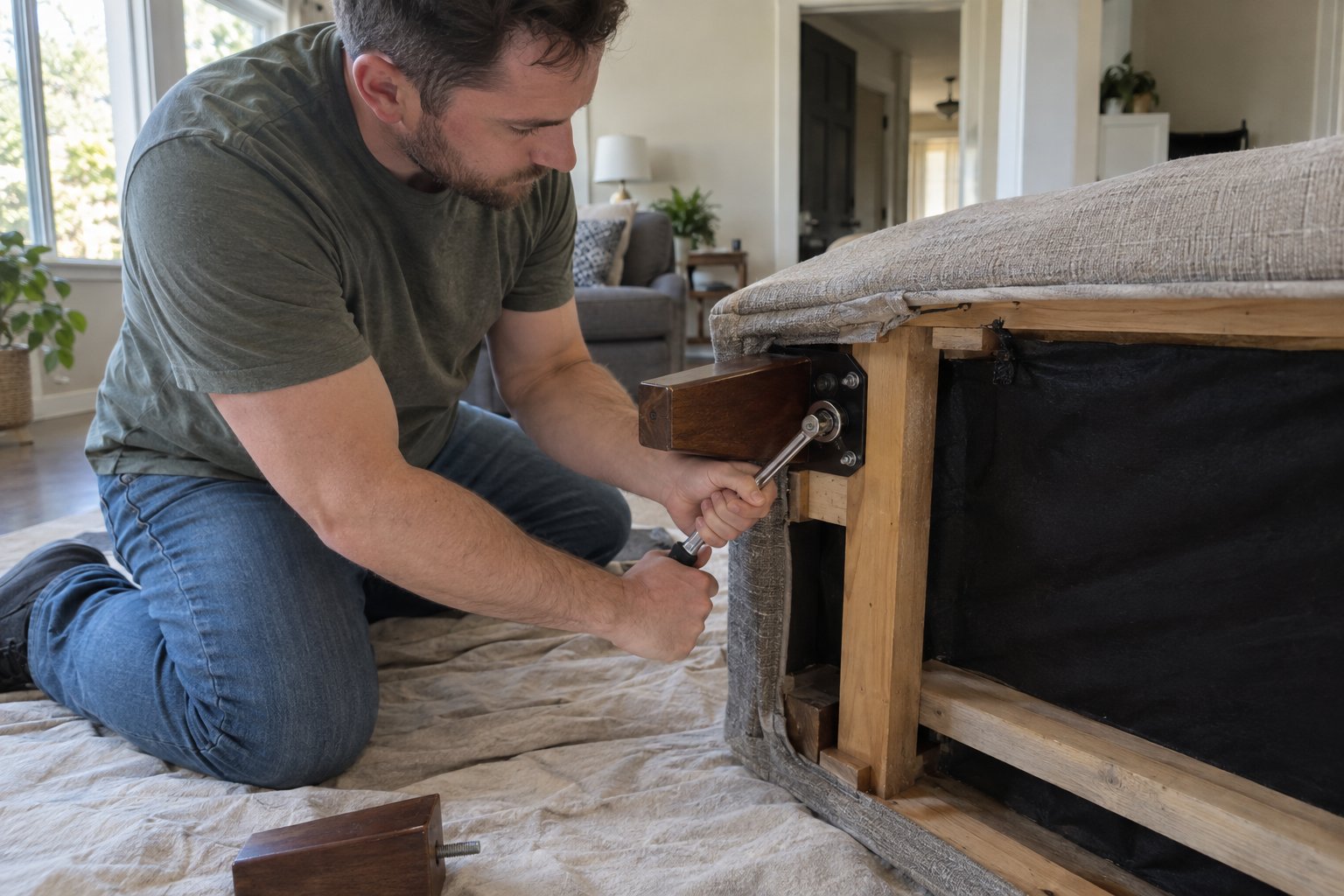
If the piece is too heavy or awkward to lift safely (a china hutch, a loaded bookshelf, a sofa bed), that's a sign to stop and bring in help rather than risk the floor or an injury. This is also where a lot of DIY moves run into trouble on couches that need to be broken down first to clear tight turns without ever touching the floor with the frame.
Pianos, large appliances, and oversized furniture need more than standard sliders because their weight is concentrated on very small contact points. A piano caster or a refrigerator's narrow base can punch through felt padding under normal household pressure.
For pieces like this, plywood "runners" placed under furniture dollies spread weight across a wider surface and protect the finish far better than sliders alone. If you're relocating something in this category, it's worth reading a dedicated guide, like our piece on moving a piano safely, before attempting it solo.
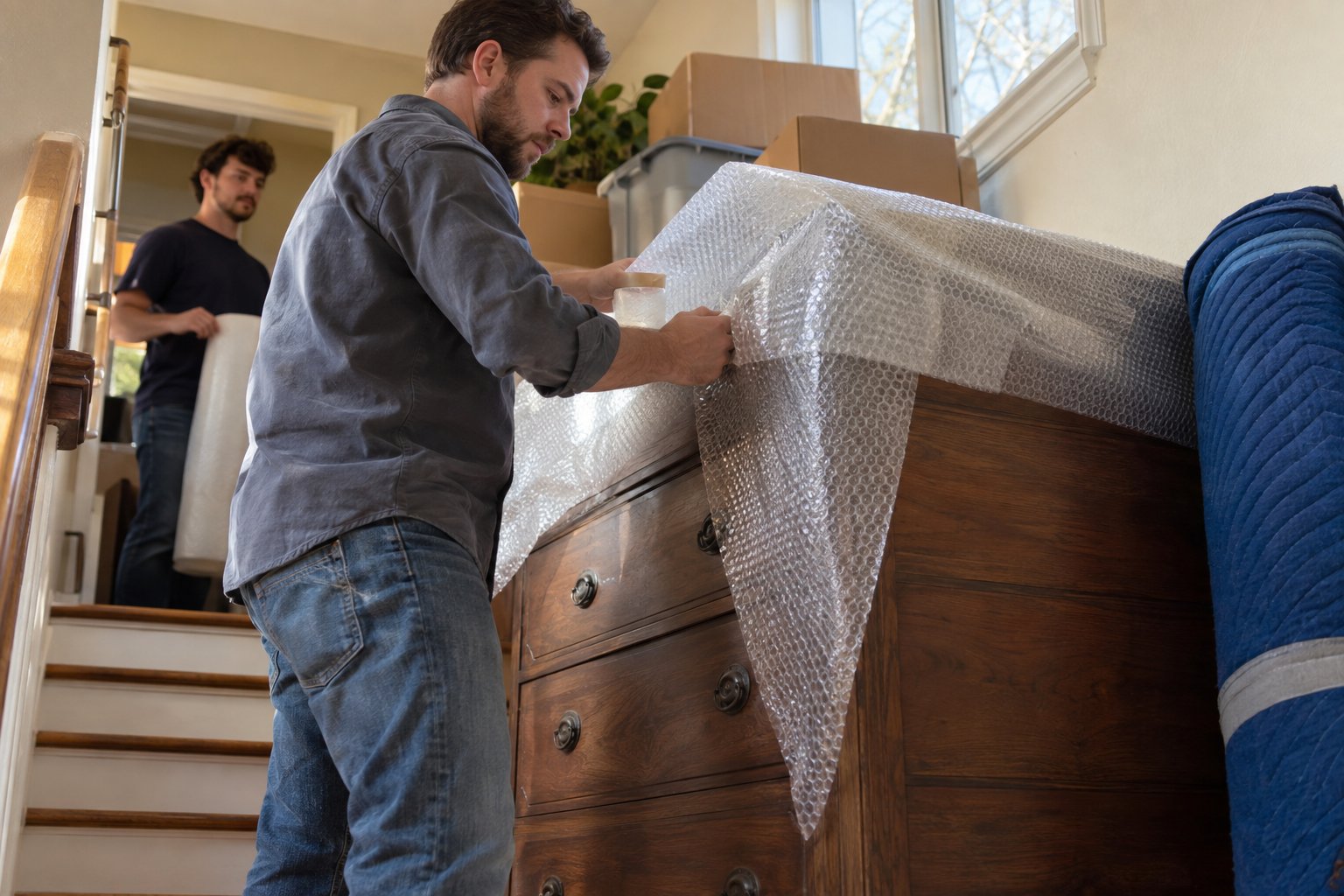
Call professional movers when the furniture is heavy enough that a drop or slip could cause real damage, either to the piece, the floor, or a person. Trained crews carry the right equipment (furniture dollies, floor runners, corner guards) and know how to sequence a move through narrow hallways and doorways without ever dragging a leg across the finish.
This is especially true for whole-home moves where dozens of pieces need to cross the same hardwood hallway in a single day. Our safe moving services are built around exactly this kind of careful handling, using the right tools for each surface so your floors look the same at the end of the day as they did at the start.
Floor protection works best as a plan for the entire move, not a one-off fix for your heaviest item. Lay down runners or rosin paper along main traffic paths before loading starts, keep sliders staged near furniture that will need to move more than once, and designate one person to watch the floor while others carry.
If your move involves a full truck load, it also helps to think about loading order in advance so furniture isn't shuffled around more than necessary once it's already staged near the door. Our guide on packing a moving truck in the right loading order can help you minimize exactly that kind of repeated handling.
Whether you're repositioning a single bookshelf or coordinating a full household move, a little prep before the first piece moves saves a lot of frustration (and sanding) later. If you'd rather have an experienced crew handle it, request a moving quote and let us take the floor protection off your plate.
Folded moving blankets, thick socks, or old t-shirts can work for a short, careful push, but they grip more than true sliders and can bunch under uneven weight. They're a reasonable backup for light pieces, not a substitute for sliders on heavy furniture.
Some rubber pads can discolor or even stick to certain hardwood finishes over time, especially in warm rooms. Felt or hard plastic sliders are generally the safer long-term choice for wood floors.
Lifting is always lower risk when it's practical, since it removes contact with the floor entirely. Sliding with proper sliders is the better option for heavy pieces that aren't safe to lift fully off the ground.
Lay rosin paper or moving runners along main walkways before the crew starts, keep sliders on hand for furniture that gets repositioned more than once, and have someone check high-traffic areas periodically for debris that could scratch the finish.
Yes, if grit or debris gets trapped underneath a slider, it can act like sandpaper once weight is applied. Always sweep the path before placing sliders and check the floor periodically during a long move.

Folded moving blankets, thick socks, or old t-shirts can work for a short, careful push, but they grip more than true sliders and can bunch under uneven weight. They're a reasonable backup for light pieces, not a substitute for sliders on heavy furniture.
Some rubber pads can discolor or even stick to certain hardwood finishes over time, especially in warm rooms. Felt or hard plastic sliders are generally the safer long-term choice for wood floors.
Lifting is always lower risk when it's practical, since it removes contact with the floor entirely. Sliding with proper sliders is the better option for heavy pieces that aren't safe to lift fully off the ground.
Lay rosin paper or moving runners along main walkways before the crew starts, keep sliders on hand for furniture that gets repositioned more than once, and have someone check high-traffic areas periodically for debris that could scratch the finish.
Yes, if grit or debris gets trapped underneath a slider, it can act like sandpaper once weight is applied. Always sweep the path before placing sliders and check the floor periodically during a long move.