Moving heavy exercise equipment is a different problem than packing a home gym room. A home gym move is about boxing up mats, bands, and accessories room by room. Moving the equipment itself, the power rack, the loaded barbell, the treadmill deck, is a weight and geometry problem: most injuries and most equipment damage happen because someone tries to carry an awkward, unbalanced load instead of breaking it down first.
This guide focuses specifically on the heaviest, hardest-to-handle pieces: racks, benches, freeweights, and cardio machines, and how to get them out of one house and into another without hurting your back or your floors.
The short answer is: break every piece down to its smallest safe unit, move weight separately from frames, and use equipment (dollies, straps, sliders) instead of your arms for anything over about 50 pounds. Most exercise equipment injuries during a move happen from lifting a fully assembled machine instead of disassembling it first.
Before you lift anything, walk the route from the equipment's current spot to the truck. Measure doorways, stairwells, and hallway turns against the largest disassembled piece you will be carrying, usually a rack upright or a treadmill deck. If something will not clear a doorway at the current angle, plan the tilt or the alternate exit now, not while you are holding one end of it.
Two people should lift anything over roughly 75 pounds, and the lift should come from the legs with a neutral spine, not the back. Keep the load close to your body and communicate out loud before every lift and every direction change. If you would not trust a stranger to lift it with you safely, it needs a dolly instead.
A power rack should always be fully disassembled before a move; it is too tall, too heavy, and too awkward to move as one piece. Photograph the assembled rack from several angles first, then remove attachments (safety bars, pull-up bar, plate storage pegs, band pegs) before touching the main frame bolts.
Bag and label every bolt by section, and tape each bag to the piece it belongs to so nothing gets separated in transit. Uprights and cross-members should be wrapped in moving blankets and secured together with stretch wrap so the bundle does not shift or scratch itself in the truck. If your rack is bolted to the floor for stability, remove the floor anchors last, after everything else is loosened, so the frame does not tip while you are still working on it.
Most adjustable and Olympic weight benches come apart into a small number of manageable pieces: the bench pad, the frame, and any leg or preacher curl attachments. Take these apart the same way you would a rack, bagging hardware separately, and wrap the padded sections in moving blankets since vinyl and foam tear easily against hard edges in a truck.
If the bench does not disassemble, at minimum remove any add-on attachments to reduce its footprint and weight before two people lift it. A bench left fully assembled is one of the more common ways gym equipment gets scratched, since the padded top has nothing protecting it from the frame of whatever gets loaded next to it.
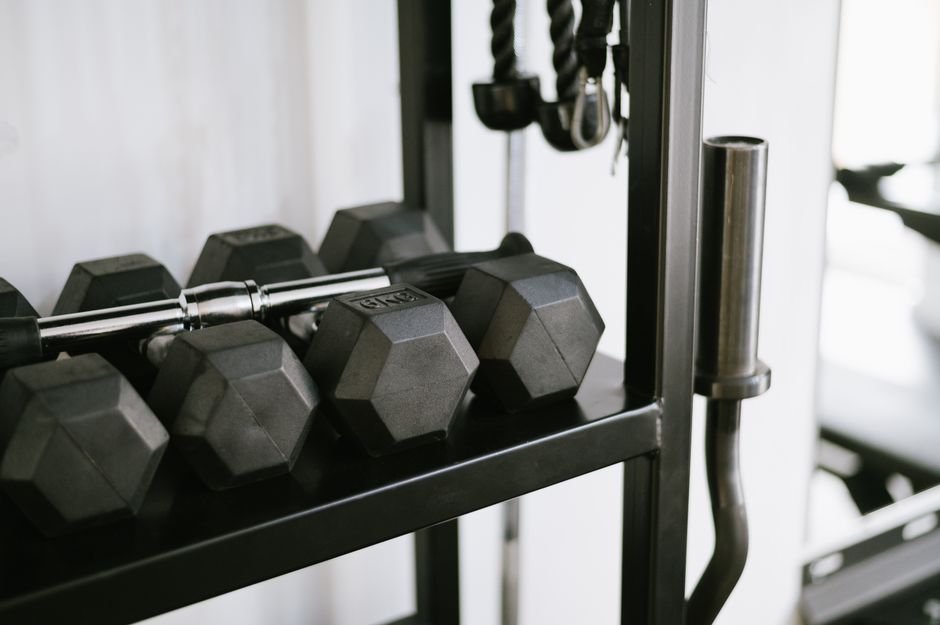
Free weights should never travel loaded on a bar or rack; take plates off, sort them by size, and box or crate them separately from the frames they belong to. A fully loaded barbell is not just heavier than it needs to be to move, it is also unbalanced and prone to rolling, which makes it one of the more dangerous things to carry through a doorway.
Use small, sturdy boxes for plates and dumbbells rather than large ones. It is tempting to consolidate weight into fewer containers, but a box that is small enough to lift comfortably when full of iron is usually smaller than you expect, plates are dense and add up fast. Distribute weight evenly inside the truck, with plates and other dense items low and toward the axles, not stacked high or off to one side where they can shift the load's balance during transport.
Cardio machines are less about raw weight and more about geometry and electronics. Fold the deck if the machine allows it, remove or secure the console on its hinge, and unplug and coil cords before wrapping. Many treadmills and ellipticals have a locking pin or bolt specifically for transport mode; check the manual before you move it, since skipping this step is a common cause of frame damage on the ride over.
Cardio equipment is often top-heavy once folded, so use a hand truck with straps rather than tilting and rolling it freehand, especially on stairs or ramps. If you no longer have the manual, most manufacturers post transport instructions online under the model number, worth a five-minute search before moving day rather than guessing.
Whether to do this yourself comes down to total weight, stairs, and how many pieces need disassembly. A single treadmill down a ground-floor hallway is a reasonable DIY job with a helper and a hand truck; a full rack, loaded bench, and several hundred pounds of plates up or down a staircase is where professional movers earn their fee.
Professional crews bring the right equipment (appliance dollies, ramps, furniture straps) and the experience to sequence a heavy load safely, which matters more for gym equipment than almost anything else in a house because the weight-to-size ratio is so extreme. If your move includes a rack, multiple hundred-pound weight sets, or several cardio machines, it is worth getting a quote before committing to doing it alone. Our safe moving services are built around exactly this kind of careful handling for oversized, heavy, or fragile loads.
Once the heavy equipment is handled, the remaining gym contents (mats, bands, foam rollers, smaller accessories) pack much like any other room. If you want the full room-by-room breakdown for mirrors, mats, and storage, our home gym packing guide covers that ground in detail so this article can stay focused on the equipment itself.
For movers relocating within the Auburn area who want experienced hands on both the heavy equipment and the rest of the house, our Auburn, AL moving team handles specialty and heavy-item loads as part of a standard residential move.
If your equipment list includes several heavy or awkward pieces, get a clear quote before moving day so you know whether DIY or professional help makes more sense for your situation. You can get a free moving quote in a few minutes.
Some compact or foldable treadmills can be moved assembled if they fold flat and fit through your doorways, but most benefit from removing the console and using the transport lock if the manufacturer includes one. Full-size or non-folding treadmills are heavy and awkward enough that partial disassembly is usually worth the extra time.
An empty power rack frame typically weighs somewhere between 150 and 300 pounds depending on the model, and that is before adding attachments or any plates stored on it. This is why racks should always be stripped down to bare frame pieces before a move rather than moved assembled.
Sort dumbbells and plates by size, then pack them in small, sturdy boxes rather than large ones since the weight adds up quickly. Keep these boxes low in the truck near the axles to help balance the overall load during transport.
Many moving companies price heavy or specialty items like racks, safes, and cardio machines differently than standard furniture because of the extra time, equipment, and manpower required. It is worth mentioning specific gym equipment when you request a quote so the estimate reflects the actual job.
No, weights should always be removed from a bench or bar before moving it. A loaded bench or barbell is unbalanced and much heavier than it looks, which increases the risk of dropping it or straining your back during the lift.

Some compact or foldable treadmills can be moved assembled if they fold flat and fit through your doorways, but most benefit from removing the console and using the transport lock if the manufacturer includes one. Full-size or non-folding treadmills are heavy and awkward enough that partial disassembly is usually worth the extra time.
An empty power rack frame typically weighs somewhere between 150 and 300 pounds depending on the model, and that is before adding attachments or any plates stored on it. This is why racks should always be stripped down to bare frame pieces before a move rather than moved assembled.
Sort dumbbells and plates by size, then pack them in small, sturdy boxes rather than large ones since the weight adds up quickly. Keep these boxes low in the truck near the axles to help balance the overall load during transport.
Many moving companies price heavy or specialty items like racks, safes, and cardio machines differently than standard furniture because of the extra time, equipment, and manpower required. It is worth mentioning specific gym equipment when you request a quote so the estimate reflects the actual job.
No, weights should always be removed from a bench or bar before moving it. A loaded bench or barbell is unbalanced and much heavier than it looks, which increases the risk of dropping it or straining your back during the lift.