When homeowners sit down to map out their room-by-room moving strategy, the entryway almost always falls through the cracks. It is too small to feel urgent, yet far too functional to be ignored — and knowing how to pack and move an entryway correctly can save you from a scrambled moving morning, a damaged console table, broken mirrors, tangled hooks pulled from drywall, and a new home where boots, bags, and keys have nowhere to land while everything else gets organized. The entryway is the first space guests see when they walk into your home and the last space you touch before you close the door for the final time. It deserves a dedicated, thoughtful plan.
Whether you are moving a few miles across Auburn or heading across state lines on a long-distance move, this guide walks you through every step of packing and clearing your entryway efficiently, safely, and without leaving anything behind. When you are ready to hand the heavy lifting to a trusted crew, call Wise Guys Moving at (334) 610-1593 or get in touch online today.
The entryway occupies a unique position in your home's moving puzzle. It is both the last room you will finish packing and the first room your movers pass through with every load they carry out the door. That combination creates a real logistical challenge: you need the space functional right up until the final hour, yet you also need it cleared and protected before the foot traffic of moving day begins.
Consider everything a typical entryway holds: a console or accent table that may be fragile or antique; a wall mirror or gallery of framed artwork; a coat rack, hall tree, or built-in bench with cubbies; baskets of hats, scarves, umbrellas, and gloves; a shoe rack or tray loaded with footwear; key hooks, mail sorters, and small decorative objects; overhead lighting fixtures; and sometimes a closet packed with coats, sports equipment, and seasonal gear. Each of these categories carries a specific packing challenge. Mirrors and framed art are among the most commonly broken items in any move. Console tables are often top-heavy and tip easily when carried upright. Hall trees and coat racks, if not disassembled, become awkward to maneuver through doorways and down stairs.
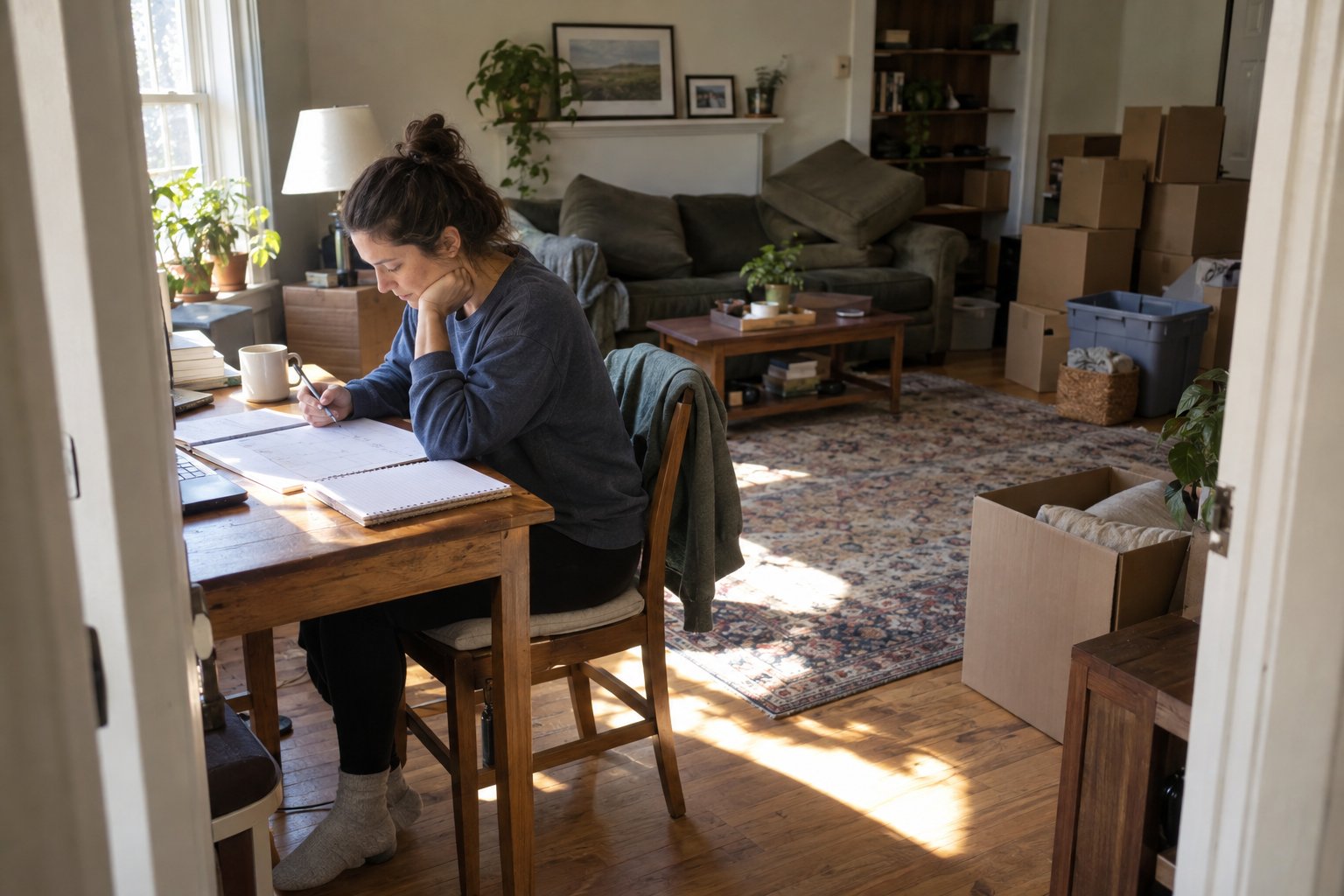
Planning your entryway move in advance — ideally two to three days before moving day — gives you the time to source specialty packing materials, safely remove wall-mounted items, and set the space up as an efficient staging zone for the rest of the move rather than an obstacle course.
Before you pull a single box from the stack, walk through your entryway with a critical eye. Moving is the perfect opportunity to evaluate what is genuinely useful in this space versus what has simply accumulated there over time.
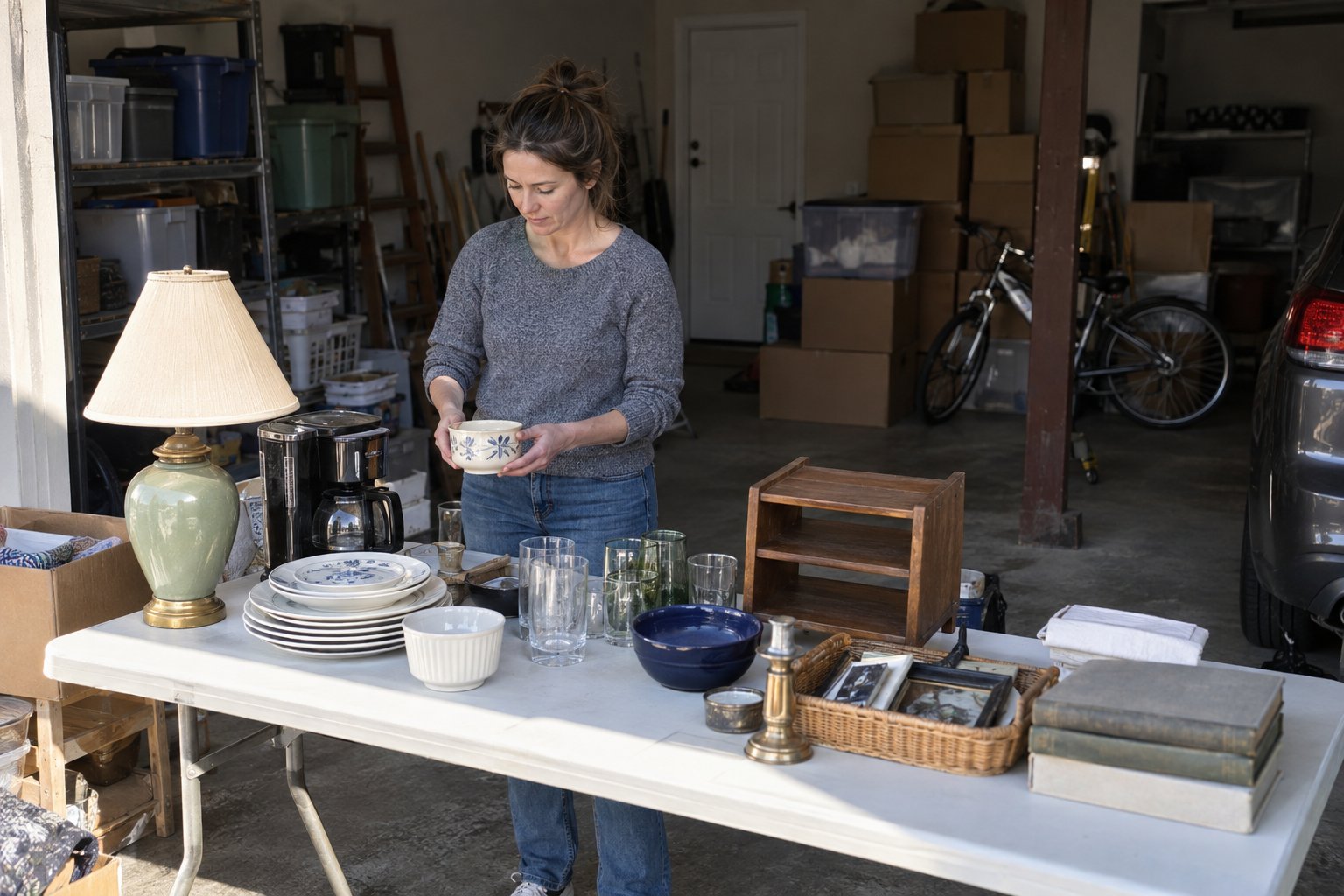
Use the classic four-pile system: keep, donate, sell, and discard. Many entryways hold items that belong to other rooms — sports equipment that belongs in the garage, seasonal décor that belongs in storage bins, mail and paperwork that belongs in a home office. Relocate those items to their proper packing zones rather than packing them from the entryway and confusing your unpacking at the other end. If you need a broader strategy for decluttering before the move, our guide on how to downsize before a move offers a practical framework for reducing what you carry.
Take clear photographs of any gallery walls, built-in shelving arrangements, or accessory groupings on your console table before you begin removing items. These photos serve as a reference when you reassemble the space in your new home and eliminate the guesswork of recreating a curated display from memory.
Mirrors, framed artwork, and wall-mounted hooks or organizers represent the highest-risk items in any entryway. Tackling them first — days before moving day if possible — removes the most fragile and most easily damaged pieces from the active zone before foot traffic and time pressure increase the risk of accidents.
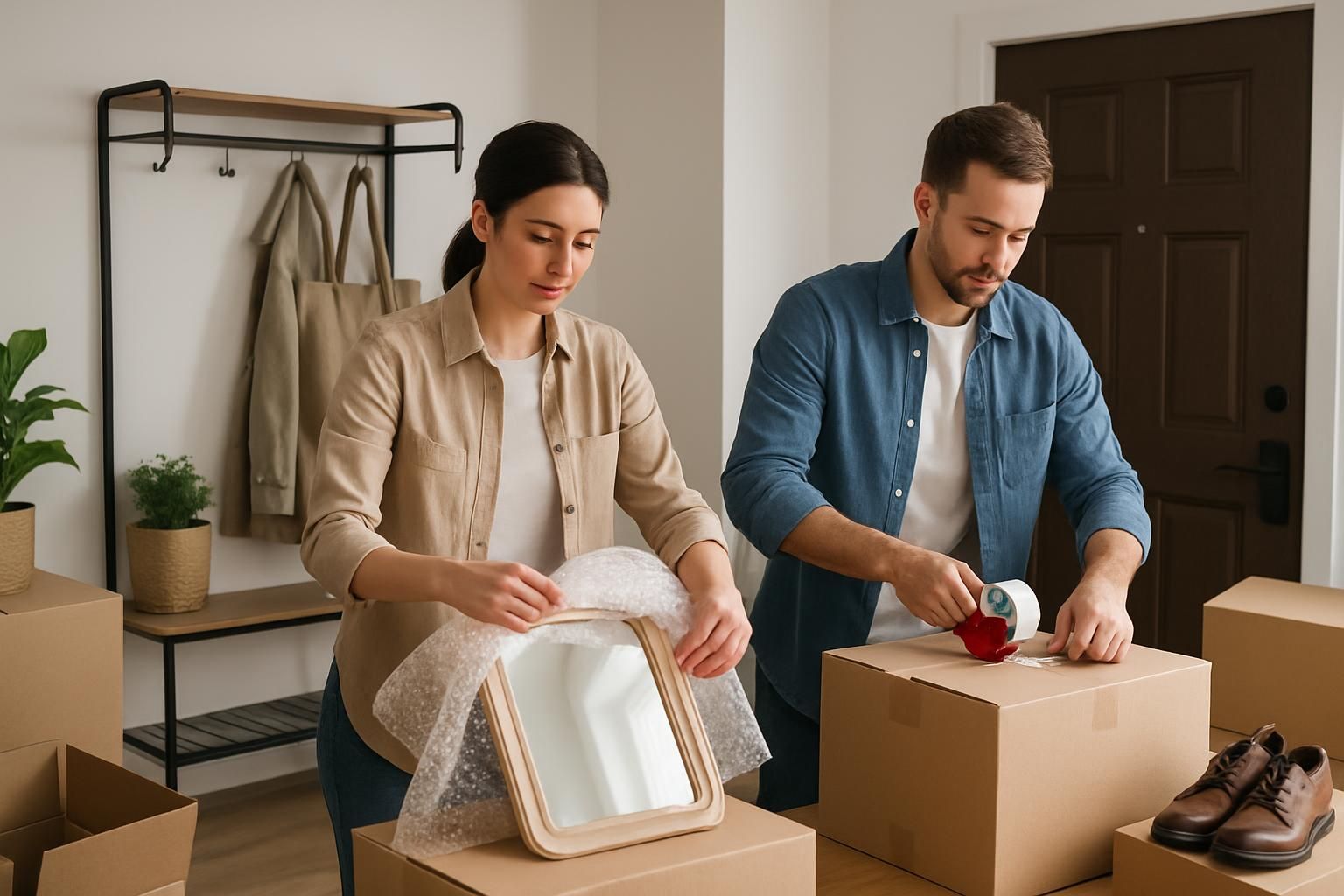
Large mirrors and oversized framed pieces require mirror boxes or custom-cut cardboard sleeves. If you do not have access to specialty mirror boxes, construct a cardboard sandwich: cut two pieces of corrugated cardboard larger than the frame, place the piece between them, and tape the assembly securely. Wrap the entire package in at least two layers of bubble wrap and secure with packing tape. Always store and transport mirrors and artwork vertically on their long edge — never flat. A mirror stored flat on a truck floor is far more likely to crack under the vibration and weight of surrounding items.
For smaller framed photos, wrap each frame individually in packing paper, then group them in a dish pack or sturdy box with crumpled paper between each piece. Label the box FRAGILE — ARTWORK — THIS SIDE UP on at least three sides.
Remove coat hooks, key racks, mail sorters, and mounted shelving carefully to avoid tearing drywall anchors. Use the appropriate screwdriver or drill, and place all hardware — screws, anchors, mounting plates — into a small labeled zip-lock bag taped directly to the item they belong to. This single habit eliminates the most common re-installation headache: arriving at a new home with a dozen small bags of mystery hardware and no idea which screws belong where.
Entryway furniture tends to be narrow, tall, and decorative — a combination that makes it both easy to tip and prone to surface scratches. Giving each piece the right preparation before it goes onto the truck protects your investment and keeps your movers safe.
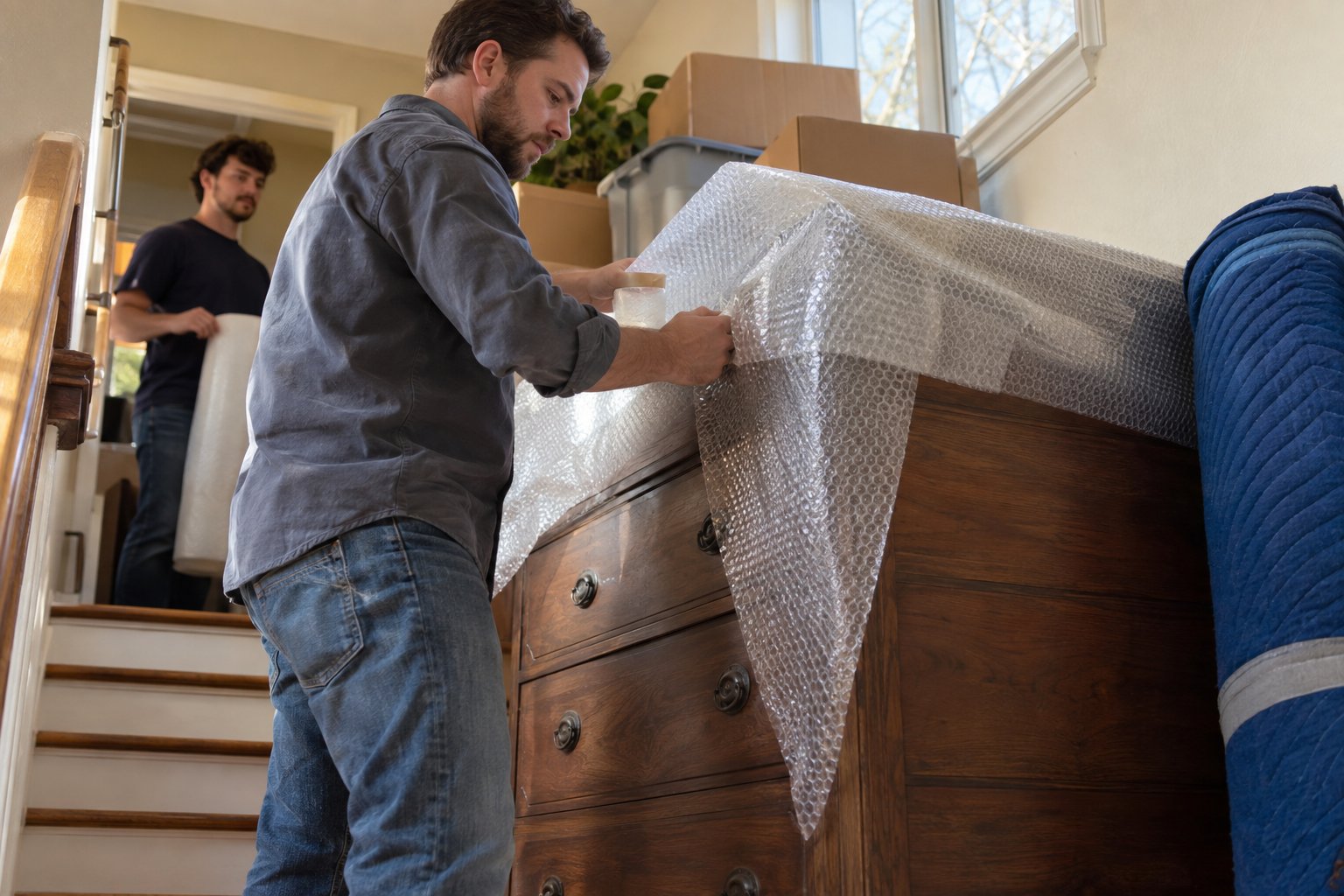
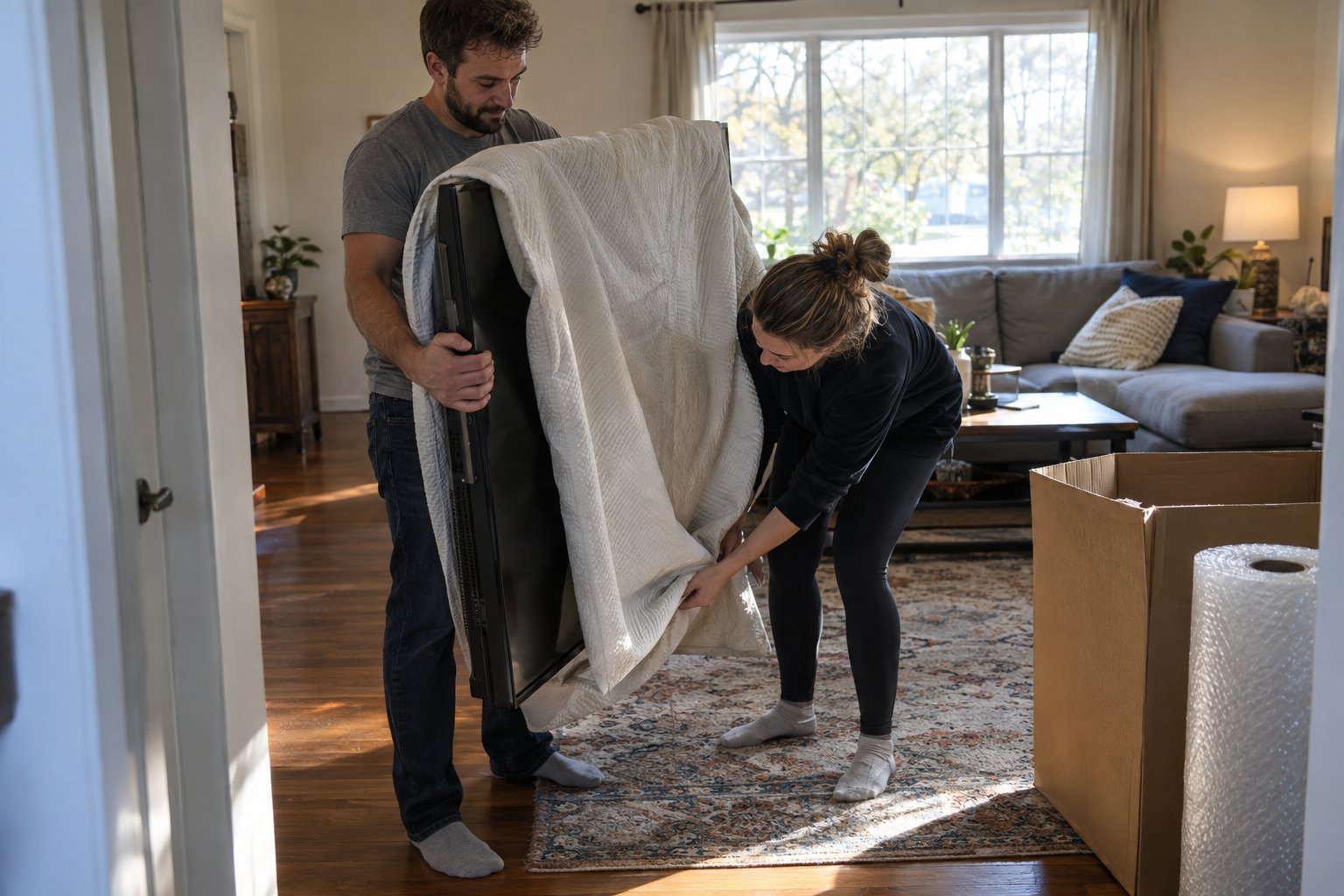
Remove all items from table surfaces and drawers. If the table has drawers, remove them entirely and wrap them separately — this prevents them from sliding out and falling during transport. Wrap table legs and corners with furniture blankets or moving pads, securing the padding with stretch wrap rather than tape directly on the surface. For tables with glass tops, remove the glass, wrap it in bubble wrap, and transport it vertically in a padded sleeve or between furniture blankets just as you would a mirror.
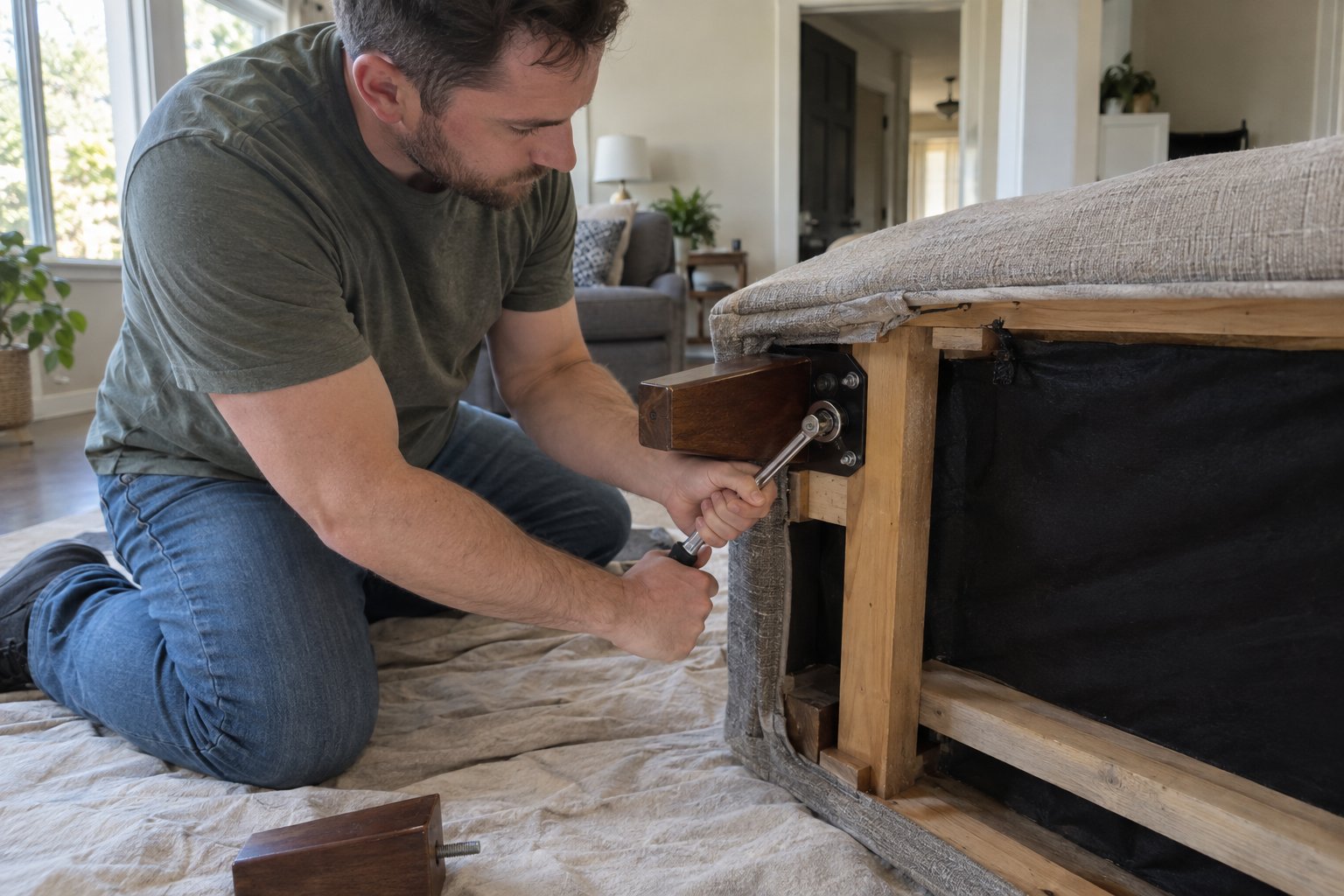
Freestanding coat racks and hall trees are among the most awkward pieces to move in their assembled state. If the unit can be disassembled — hooks removed, benches detached from uprights, cubbies separated from frames — do so. Wrap each component separately and keep all hardware in labeled bags. For solid, non-disassembling units, wrap the entire piece in furniture blankets and carry it horizontally through doorways rather than attempting to navigate corners with a tall vertical silhouette. Always have two people handle a hall tree — one at each end — and communicate clearly through every doorway and staircase turn.
Empty all footwear from shoe racks and storage benches before moving them. Shoes should be packed separately — ideally in their original boxes if you have them, or in individual packing paper sleeves grouped by pair. Overfilling a storage bench with shoes and attempting to move it as a single unit creates unnecessary weight and a high risk of the bench breaking under the load. For a deeper dive into footwear packing, see our dedicated guide on packing shoes for moving.
The entryway accumulates a surprisingly dense collection of small, easily lost items — keys, mail, chargers, sunglasses, pet leashes, umbrellas, and decorative objects. These items require systematic packing to ensure nothing disappears in the chaos of moving day.
Identify the handful of entryway items you will need immediately upon arriving at your new home: a key hook or bowl, a small lamp or nightlight if the new space is dark, a doormat, and any daily-use accessories. Pack these in a clearly labeled box that travels in your personal vehicle or is the very last item loaded onto the truck and the very first unloaded. This prevents you from tearing through a stack of boxes at 9 PM looking for your house keys or your dog's leash.
Wrap each decorative object individually in packing paper, regardless of how hardy it appears. Ceramic vases, glass trays, candle holders, and small sculptures are all vulnerable to the vibration and shifting of a moving truck. Pack small items together in a single box labeled by room and contents, placing heavier items at the bottom and lighter, more fragile items on top with a layer of crumpled paper between each tier. Never leave empty space in a box — fill gaps with crumpled paper or foam packing peanuts so items cannot shift in transit.
If you are taking a pendant light or flush-mount fixture from the entryway ceiling, have a licensed electrician disconnect it before packing day. Once removed, wrap the fixture body in bubble wrap and pack it in a box slightly larger than the fixture with padding on all sides. Remove any glass shades or bulbs and wrap them separately — glass shades are particularly fragile and deserve their own labeled box.
Once the entryway is cleared of its own contents, transform it into the most useful space in the house for moving day itself. A clear, protected entryway becomes the natural staging zone where packed boxes are gathered before being loaded onto the truck, where the moving crew can set down items briefly without blocking interior rooms, and where you can maintain a clear path from the interior of the home to the front door throughout the entire day.
Lay down floor protection — cardboard sheets, moving blankets, or adhesive carpet film — before the first box is carried through. Entryway floors, particularly hardwood and tile, take significant punishment from box corners, furniture legs, and heavy foot traffic on moving day. Protecting the floor now avoids damage you may be responsible for repairing before your lease ends or before closing on the sale of the home.
Keep a small kit in the entryway throughout moving day: a roll of packing tape, a permanent marker, a box cutter, and a bottle of water for your crew. These items get used constantly and having them accessible at the point of exit saves repeated trips back into the house.
A professional moving crew brings the experience, equipment, and materials to handle every element of your entryway efficiently and without damage. When you work with Wise Guys Moving, your crew arrives with furniture blankets, stretch wrap, specialty boxes, and the practiced technique to disassemble, pad, and load entryway furniture without a single scratch on your floors or your pieces.
If you prefer to have your entryway — or your entire home — packed by professionals, our professional packing services cover every room from the entryway to the attic, using proper materials and systematic labeling so that unpacking in your new home is as organized and stress-free as possible. For local moves throughout the Auburn and Opelika area as well as long-distance relocations, our team handles the complexity so you can focus on the transition itself.
Reach out to Wise Guys Moving at (334) 610-1593 to schedule your move and get a free, no-obligation quote. Our team is ready to make your entryway — and every room behind it — the easiest part of your move.
Begin packing your entryway two to three days before moving day. Wall-mounted mirrors, framed artwork, and decorative items can come down first since you will not need them daily. Leave only the bare essentials — keys, shoes, coats — accessible until the morning of the move. This timeline gives you space to source specialty packing materials and protects the highest-risk items well before the rush of moving day.
Use a mirror box or create a cardboard sandwich using two pieces of corrugated cardboard cut larger than the mirror's frame. Wrap the mirror in at least two layers of bubble wrap before placing it between the cardboard pieces, then tape the entire assembly securely. Always transport a large mirror vertically on its long edge — never lay it flat. Store it upright in the moving truck with padding on both sides and nothing stacked on top of it.
Yes, if your hall tree or coat rack can be partially or fully disassembled, doing so before the crew arrives makes the move faster and reduces the risk of damage. Remove hooks, detach bench seats from uprights, and separate any modular cubbies. Keep all screws and hardware in labeled zip-lock bags taped to the corresponding component. If the unit cannot be disassembled, wrap it fully in furniture blankets and plan to carry it horizontally through doorways with two people.
Lay protective covering over your entryway floor before the first piece of furniture or box is carried through. Options include adhesive carpet film for carpeted floors, cardboard sheets laid flat for hardwood or tile, or moving blankets secured at the edges. Entryway floors absorb significant punishment from box corners, boot traffic, and furniture legs throughout moving day, and protection placed early avoids damage you may be held responsible for at the end of your lease or prior to a home sale closing.
Yes. Wise Guys Moving offers full professional packing services that cover every room in your home, including the entryway. Our crew arrives with the right materials — mirror boxes, bubble wrap, furniture blankets, stretch wrap, and specialty cartons — and uses a systematic labeling process so every item is easy to locate and unpack at your new address. Call us at (334) 610-1593 or request a free quote online to discuss your packing needs.

Begin packing your entryway two to three days before moving day. Wall-mounted mirrors, framed artwork, and decorative items can come down first since you will not need them daily. Leave only the bare essentials — keys, shoes, coats — accessible until the morning of the move. This timeline gives you space to source specialty packing materials and protects the highest-risk items well before the rush of moving day.
Use a mirror box or create a cardboard sandwich using two pieces of corrugated cardboard cut larger than the mirror's frame. Wrap the mirror in at least two layers of bubble wrap before placing it between the cardboard pieces, then tape the entire assembly securely. Always transport a large mirror vertically on its long edge — never lay it flat. Store it upright in the moving truck with padding on both sides and nothing stacked on top of it.
Yes, if your hall tree or coat rack can be partially or fully disassembled, doing so before the crew arrives makes the move faster and reduces the risk of damage. Remove hooks, detach bench seats from uprights, and separate any modular cubbies. Keep all screws and hardware in labeled zip-lock bags taped to the corresponding component. If the unit cannot be disassembled, wrap it fully in furniture blankets and plan to carry it horizontally through doorways with two people.
Lay protective covering over your entryway floor before the first piece of furniture or box is carried through. Options include adhesive carpet film for carpeted floors, cardboard sheets laid flat for hardwood or tile, or moving blankets secured at the edges. Entryway floors absorb significant punishment from box corners, boot traffic, and furniture legs throughout moving day, and protection placed early avoids damage you may be held responsible for at the end of your lease or prior to a home sale closing.
Yes. Wise Guys Moving offers full professional packing services that cover every room in your home, including the entryway. Our crew arrives with the right materials — mirror boxes, bubble wrap, furniture blankets, stretch wrap, and specialty cartons — and uses a systematic labeling process so every item is easy to locate and unpack at your new address. Call us at (334) 610-1593 or request a free quote online to discuss your packing needs.